

The director of America’s flagship history museum has been caught saying the quiet part out loud.
In a newly resurfaced video, Anthea Hartig called history a “prime tool of social justice.”
That would be notable coming from any academic activist.
Hartig runs the Smithsonian’s National Museum of American History — an institution funded by American taxpayers and entrusted with telling the country’s story.
The clip lands just weeks after Hartig told Congress that her museum is nonpartisan and “does not take sides” in America’s political debates.
The contradiction is impossible to miss.
Fox News reports that the video came from a February 2025 presentation at UCLA. Hartig described history as a “prime tool of social justice” and spoke of a museum approach that was equity-based, justice-forward, and community-driven.
The presentation also touched on reparations, restorative justice, Black Lives Matter collecting, and displays involving a defaced American flag bearing the words “Defund Police.”
Slides shown during the presentation framed museum work around equity and community power rather than a narrow mission of preserving artifacts and presenting evidence. That context makes the “tool of social justice” line a description of institutional purpose, not an isolated turn of phrase.
The resurfaced footage matters because it captures Hartig explaining that philosophy in her own voice, before congressional scrutiny put the museum’s neutrality at issue.
Those are political choices.
They are not neutral acts of collecting dates, artifacts, and testimony. They reveal a theory of what a national museum is supposed to do: use history to advance a preferred vision of justice.
Congress had already begun asking whether that mission had displaced objective scholarship.
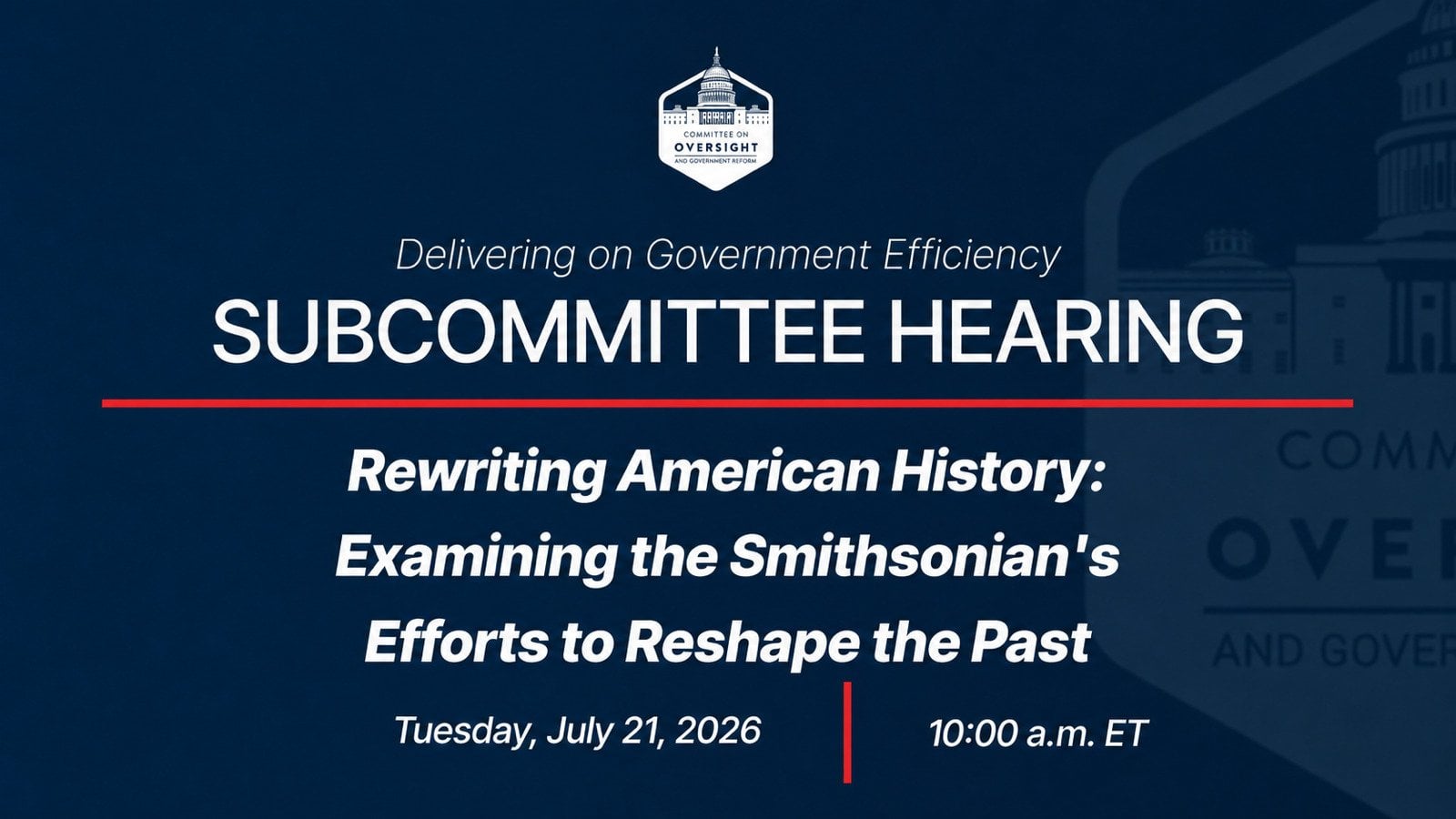
During a July 21 House Oversight hearing, Chairman Tim Burchett played a compilation of Hartig’s prior remarks for the record:
🚨 WATCH: Chairman @RepTimBurchett exposes the Smithsonian’s National Museum of American History Director by playing a compilation of her own remarks implying Americans are illegitimately occupying their own country.
The video speaks for itself. pic.twitter.com/iOxXqenN7F
— Oversight Committee (@GOPoversight) July 21, 2026
The House Oversight Committee’s official hearing record identifies the hearing’s purpose plainly: examining the Smithsonian’s efforts to reshape the past.
Hartig answered that scrutiny by describing the museum’s standards as scholarship, accuracy, independence, and nonpartisanship. She said the institution does not take sides.
The official record also preserves testimony from historians and policy experts who sharply disagreed about the museum’s direction and public obligations. The hearing therefore gave Hartig a full opportunity, under oath and before lawmakers from both parties, to explain where historical interpretation ends and political advocacy begins.
Members questioned specific exhibits, educational materials, mission language, and the standards used to decide how the museum presents the nation’s founding and current political movements.
The committee also placed the museum’s taxpayer funding and its responsibility to visitors from every political background at the center of the discussion.
That testimony now has to be measured against her own words at UCLA.
If history is a tool for a political or social project, the person holding the tool decides where to point it. She decides which facts become central, which heroes are diminished, which grievances define the national story, and which conclusions visitors are expected to carry home.
That is exactly why objectivity matters.
It is also why another moment from the hearing deserves attention.
Rep. Brandon Gill questioned Hartig about a “MASS Action Toolkit” promoted through the museum that treated objectivity and politeness as features of “white supremacy culture”:
The Smithsonian's "MASS Action Toolkit" said that politeness is a "defining aspect of white supremacy culture."
I asked the Director of the National Museum of American History if that means she's a white supremacist. pic.twitter.com/VUrIeUEZWt
— Brandon Gill (@realBrandonGill) July 21, 2026
Hartig said the museum did not create the toolkit. Congressional concern focused on why an institution claiming nonpartisanship promoted material that treated basic scholarly and civic norms as suspect.
The Trump White House had already documented the larger pattern.
The White House argues in its “Saving America’s Story” report that the National Museum of American History has marginalized the country’s founders and founding documents, replaced historical scholarship with political activism, and weakened the idea of America as a coherent nation and heritage.
The report does not argue that museums should hide slavery, injustice, or the mistreatment of Native Americans. It argues that the full American story can be told honestly without reducing the nation to oppression and grievance.
Its findings cover the museum’s mission statement, exhibit labels, public programming, collecting practices, and planning for America’s 250th anniversary. The administration’s case is cumulative: political language appears across the institution rather than in one disputed display.
That is a distinction worth defending.
A national history museum should confront America’s failures. It should also explain the principles, sacrifices, inventions, movements, and people that made the country exceptional.
It should present evidence and let citizens wrestle with it.
It should not treat the past as raw material for today’s ideological campaigns.
Hartig’s resurfaced remarks give Congress a concrete reason to keep asking questions. Taxpayers deserve to know whether “nonpartisan” is the museum’s operating rule or merely the word its director uses under oath.
History belongs to the American people.
It is not a political tool for museum officials to wield.
This is a Guest Post from our friends over at 100 Percent Fed Up. View the original article here.

Join the conversation!
Please share your thoughts about this article below. We value your opinions, and would love to see you add to the discussion!