

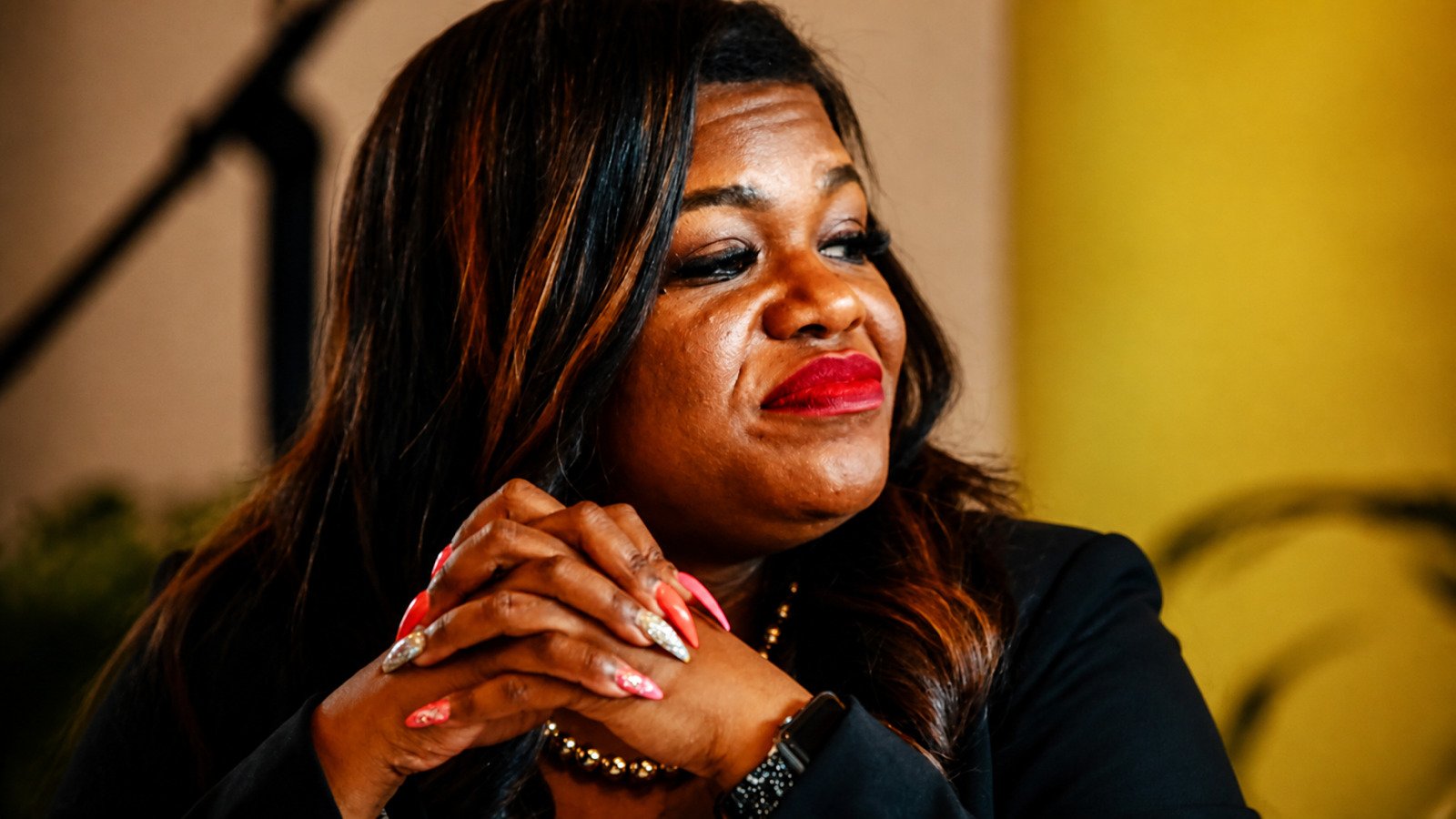
Cori Bush asked St. Louis voters for a do-over.
They gave her an answer that was even more decisive than the first one.
Rep. Wesley Bell defeated the former “Squad” member in Tuesday’s Democratic primary for Missouri’s 1st Congressional District, ending Bush’s attempt to reclaim the House seat she lost to him two years ago.
This time, there was no late-night suspense and no narrow margin to explain away. Current results put Bell at roughly 60 percent of the vote, turning what had been a competitive race in 2024 into a lopsided rejection of Bush’s comeback bid.
Spectrum News St. Louis captured Bush’s response after the race was called:
U.S. Rep. Wesley Bell defeated former U.S. Rep. Cori Bush in the Missouri primary election. Despite the loss, Bush said it won't deter her from fighting for the people. pic.twitter.com/J1lXsIWlKH
— Spectrum News St. Louis (@SpectrumNewsSTL) August 5, 2026
The result was especially brutal because Bush had spent months presenting the rematch as a chance to reverse history.
She lost to Bell by fewer than six percentage points in 2024, a defeat she blamed heavily on spending by the American Israel Public Affairs Committee and its allies. Bush returned in 2026 arguing that the political ground had shifted and that voters were ready to send her back to Washington.
Hours before the polls closed, she predicted that her movement would overcome the financial forces aligned against her.
I’m so proud to have the support of leaders from across St. Louis and the country as we fight to abolish ICE, build a Medicare for All system, and deliver a Green New Deal.
Today, we’ll show organized money that they can’t beat organized people. pic.twitter.com/G2krj3l4tL
— Cori Bush (@CoriBush) August 4, 2026
But the rematch did not resemble the close fight Bush nearly survived two years earlier.
The Associated Press called the race for Bell and described the contest as a direct choice between his pragmatic pitch and Bush’s activist-driven approach. Bell argued that his work in the district—not the national fight over Israel—was the reason voters kept him in office.
Bush had served two terms in the House before Bell knocked her out of Congress in 2024. Both candidates rose politically from the Ferguson protest movement, but their paths diverged sharply: Bell emphasized constituent service and legislative results, while Bush remained closely identified with the progressive “Squad” and democratic socialist groups.
After losing again, Bush attacked Bell’s campaign and insisted she would keep fighting without a title. The sharper rhetoric could not disguise the central fact of the night: voters who had narrowly removed her in 2024 rejected her return by a much wider margin in 2026.
The AP election results page identifies Bell as the winner in the St. Louis-area district. The live results are compiled from local election officials, with the AP making a race call only when its election analysts determine that no trailing candidate still has a path to victory.
The primary was also Missouri’s first under a new congressional map adopted by Republican state lawmakers ahead of the 2026 midterms. That map changed the broader House battlefield, but Bell’s 1st District remains anchored in heavily Democratic St. Louis, making the Democratic nomination the decisive contest for who is overwhelmingly likely to hold the seat after November.
The scale of the defeat also undercut Bush’s argument that changing attitudes toward Israel would be enough to power her comeback.
Axios reported that Bell had support from House Democratic leadership and the Congressional Black Caucus, while Bush was backed by Sen. Bernie Sanders, the Democratic Socialists of America and Justice Democrats. The divide turned the St. Louis primary into a national test of the Democratic establishment against its socialist flank.
United Democracy Project, AIPAC’s super PAC, spent more than $3 million on Bell’s side of the race. Two other outside groups supporting Bell added roughly $1.35 million, while progressive organizations backing Bush spent only a little more than $200,000 combined.
The financial gap extended to the campaigns themselves. Bell raised nearly $3.6 million and spent more than $2.9 million through mid-July, compared with roughly $1.3 million raised and $1.2 million spent by Bush.
Those numbers gave Bell a major organizational advantage—but voters still had to cast the ballots, and they did so decisively.
Missouri’s official candidate list placed Bush and Bell among five Democrats seeking the nomination. What was billed as a nationally watched rematch ended with Bell far ahead of the entire field and Bush once again outside Congress.
Bell celebrated the result by thanking district voters for trusting him a second time.
I am honored and grateful that the people of Missouri's First Congressional District have continued to put their trust in me to represent them in Congress. Two years ago, St. Louis voted for better and more accountable representation. We have kept that promise, whether it's… pic.twitter.com/qenJJJDX1S
— Wesley Bell for Congress (@bell4mo) August 5, 2026
Bush wanted the rematch to prove that 2024 was an aberration.
Instead, it made the verdict louder.

Join the conversation!
Please share your thoughts about this article below. We value your opinions, and would love to see you add to the discussion!