
Completely gone.
For decades, the IRGC used a surveillance tower at Chah Bahar to watch commercial vessels moving through the Strait of Hormuz and help turn civilian ships into targets.
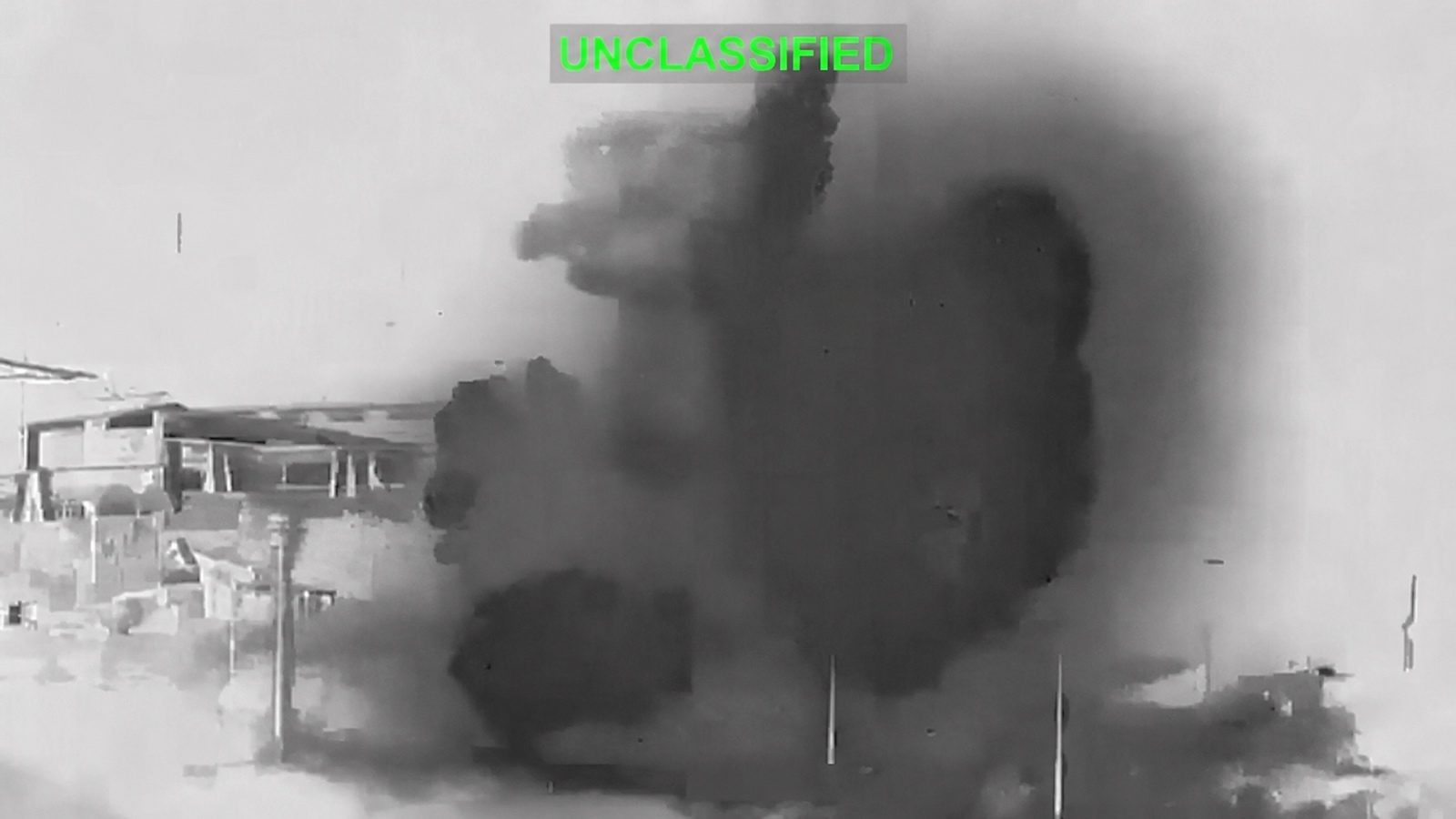
On July 16, U.S. forces erased it.
CENTCOM announced the successful strike Friday morning and released 35 seconds of unclassified infrared footage showing the tower disappear inside a violent blast and rolling plume of smoke.
The target was the Chah Bahar Shahid Kalantari Port surveillance tower.
Chah Bahar sits on Iran’s Gulf of Oman coast, east of the narrow Strait itself. The tower belonged to the wider coastal network the IRGC used to monitor vessels transiting Hormuz.
CENTCOM says that network had been used for decades to track and target commercial shipping.
The command also made the human stakes explicit: destroying the tower degrades the IRGC’s ability to coordinate attacks on innocent civilian crew members.
A surveillance tower is one link in a targeting chain.
It finds ships, fixes their position, follows their movement and feeds that information to commanders who can direct missiles, drones or armed boats toward them.
The strike ripped one of the eyes out of the IRGC’s maritime attack network.
Whatever weapons Iran still has near Hormuz, they just lost a long-standing source of surveillance data on the Gulf of Oman approach.
The tower was destroyed during a sixth consecutive night of U.S. operations against Iran:
At 2 p.m. ET today, U.S. forces began conducting a new wave of strikes against Iran for the sixth consecutive night to further degrade Iranian military capabilities.
— U.S. Central Command (@CENTCOM) July 16, 2026
The official CENTCOM operational release from July 14 shows the scale of the campaign surrounding this strike. At 10 p.m. Eastern that night, American forces hit dozens of military targets near the Strait of Hormuz and along Iran’s coast.
Fighter aircraft, drones and U.S. naval vessels all took part. CENTCOM said they launched precision munitions against Iranian missile and drone sites, naval capabilities and coastal defense systems during a seven-hour wave.
The stated objective was direct: further degrade Iran’s ability to threaten commercial shipping and civilian crews. That puts the Chah Bahar tower in the same operational category as launch sites and weapons systems because surveillance data can be what makes an attack possible.
The July 14 strikes also coincided with the resumption of the American naval blockade against vessels transiting to or from Iranian ports and coastal areas. CENTCOM said the blockade went into effect at 4 p.m. Eastern that day.
American forces are enforcing that blockade at sea as the strikes remove Iran’s coastal military infrastructure.
CENTCOM released video of Marines boarding the M/T Wen Yao in the Gulf of Oman on July 16:
U.S. Marines from the 11th Marine Expeditionary Unit conduct a verification boarding aboard M/T Wen Yao in the Gulf of Oman, July 16.
As of today, American forces have redirected 3 commercial vessels trying to run the blockade, disabled 1 that didn’t comply, and boarded 1 to ensure full compliance with the ongoing U.S. naval blockade against Iran.
The Strait of Hormuz and the surrounding waters remain free and open, except for vessels attempting to violate America’s steel wall blockade. 🇺🇸 pic.twitter.com/vbjArHuLaO
— U.S. Central Command (@CENTCOM) July 16, 2026
CENTCOM says American forces have redirected three commercial vessels that tried to run the blockade, disabled one that refused to comply and boarded another to verify compliance.
At the same time, the command says Hormuz and surrounding waters remain open to vessels that are not attempting to enter or leave blocked Iranian ports.
That combination explains why the tower mattered. The U.S. is trying to preserve navigation for ordinary shipping while stripping the IRGC of the systems it used to watch and threaten those ships.
The economic stakes reach far beyond the Gulf. The latest U.S. Energy Information Administration chokepoint analysis estimates that 20.9 million barrels per day of oil moved through Hormuz in the first half of 2025.
That volume was equal to roughly 20 percent of global petroleum liquids consumption and one-quarter of all maritime-traded oil. A threat to ships in those waters can move energy prices around the world before a single cargo is lost.

Bypass options are limited. EIA estimates that Saudi and Emirati pipelines together could move about 4.7 million barrels per day around the Strait, only a fraction of the oil normally carried through it.
Hormuz is also a major route for liquefied natural gas. About 11.4 billion cubic feet per day moved through the Strait in the first half of 2025, representing more than 20 percent of global LNG trade.
That is how a single surveillance tower can carry consequences far larger than its concrete footprint.
A sensor that helps the IRGC identify and follow civilian vessels can support an attack, terrify crews, raise insurance costs and squeeze energy markets thousands of miles away.
Iran retains other sensors, weapons and coastal positions. Danger around Hormuz remains.
This tower will never feed another targeting report.
For decades, it watched the sea for the IRGC.
Now it is completely gone.

Join the conversation!
Please share your thoughts about this article below. We value your opinions, and would love to see you add to the discussion!