

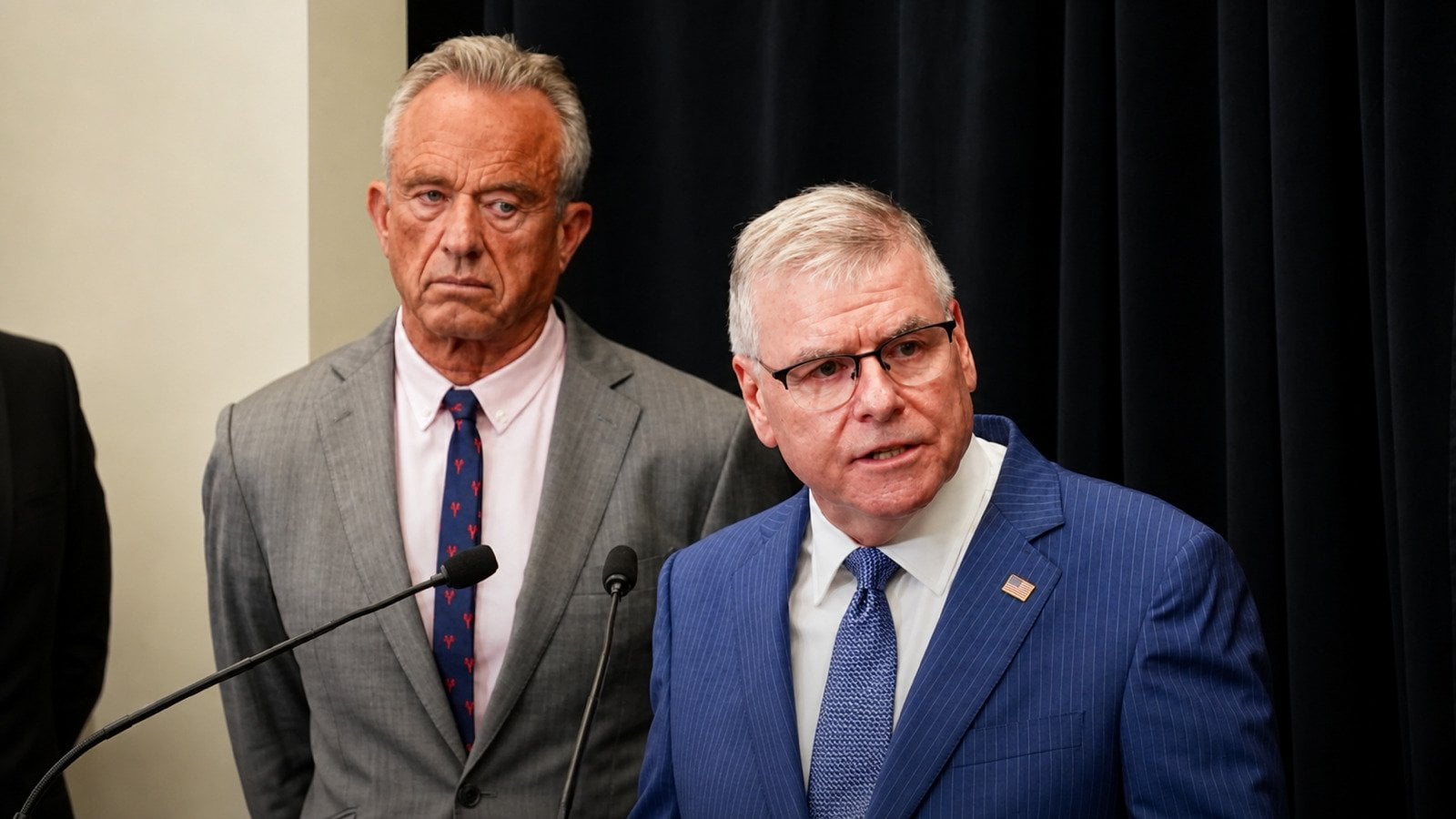
HHS Secretary Kennedy is moving to strip federal certification from the organ-procurement organization serving Kentucky and parts of three neighboring states.
And the reason is not a paperwork dispute.
HHS says repeated federal reviews found patient-safety failures so serious that some prospective donors showed neurological signs that should have stopped the donation process cold.
The department announced Wednesday that it had begun decertifying Network for Hope, the federally designated organ procurement organization for Kentucky and portions of Indiana, Ohio and West Virginia.
HHS is taking action to protect patients and restore trust in the nation's organ procurement system.
Today, HHS announced the decertification of Network for Hope after multiple federal reviews found persistent patient safety failures that put prospective organ donors and… pic.twitter.com/4RPXKVHfSU
— HHS (@HHSGov) August 5, 2026
The numbers released by the department are staggering.
HHS said the Health Resources and Services Administration reviewed 351 cases from 2021 through 2024 in which organ donation had been authorized but was not completed across the Kentucky-area network serving hospitals in four states, including patients who had reached the final stages of the donation process. Federal reviewers found 103 of those cases concerning.
In 73, the patients displayed neurological signs that reviewers said were incompatible with moving forward as though death had been established.
The department said the failures included poor neurological assessments, misclassification of prospective donors, weak coordination with hospitals and problems surrounding consent.
That does not mean 73 conscious people had organs removed. The procedures at the center of the most alarming cases were stopped.
But a system this sensitive cannot depend on a last-second rescue after obvious warning signs have already appeared.
The review also described failures in coordination with hospitals and families. Those findings raise direct questions about medical judgment, consent and whether end-of-life decisions received the rigor the law demands.
One case became the symbol of the entire scandal.
In 2021, Kentucky resident Thomas “TJ” Hoover II was taken to a hospital after a drug overdose and later prepared for organ donation. His family has said he showed signs of awareness.
What are your thoughts?

Medical workers ultimately refused to proceed, and Hoover is alive today.
🚨 BREAKING: Secretary RFK Jr. has DECERTIFIED Kentucky’s organ procurement organization Network for Hope after they IGNORED signs of life from SEVERAL patients scheduled for organ donations
This is BEYOND evil. People should be LOCKED UP over this.
Despite signs of life, the… pic.twitter.com/fcdTTrAD33
— Nick Sortor (@nicksortor) August 5, 2026
WKYT previously reported that federal investigators found the organization involved in Hoover’s case pushed to continue the donation process despite signs of life. The station also documented the finding that hospital physicians—not the procurement organization—ultimately stopped the procedure.
That distinction matters. The safeguards worked only because individual doctors refused to cross the line.
HHS says it did not jump straight to decertification. The department ordered corrective action in 2025, followed with independent reviews through HRSA and the Centers for Medicare and Medicaid Services, and gave Network for Hope repeated opportunities to fix the problems. A May 2026 review found that the safety concerns persisted.
Kennedy called the organization a “bad apple” and said the action was necessary to restore public trust in organ donation.
Network for Hope strongly disputes that conclusion.
The Associated Press reported that the nonprofit plans to appeal. The organization says its policies comply with federal requirements and that it has procedures requiring a pause whenever a patient shows unexpected signs of life.
It also warns that closing the organization could hurt people waiting for transplants.
Network for Hope is one of roughly 55 organ procurement organizations operating across the country. Kentucky has since enacted a law requiring a pause when a prospective donor shows unexpected signs of life, while national transplant officials work on a similar safeguard for every OPO.
That concern deserves to be heard. So does the reality that organ donation saves thousands of lives every year and depends on families believing the system will protect the donor first.

The U.S. Department of Health and Human Services is decertifying an organ procurement organization serving Kentucky Secretary Robert F. Kennedy Jr. announced Wednesday ⬇️
Read more: https://t.co/VP7O9fc7LY pic.twitter.com/6vcqglJYuy— WKYT (@WKYT) August 6, 2026
But trust cannot be protected by lowering the standard.
Before anyone talks about saving the recipient, the government has an absolute duty to make certain the donor is dead, the family’s consent is informed and every warning sign has been resolved. No quota, timetable or institutional reputation outranks that obligation.
Kennedy’s move will now face an appeal and a formal federal process. If Network for Hope can disprove the government’s findings, it should get that opportunity.
If it cannot, HHS is right to shut the door.
This is a Guest Post from our friends over at 100 Percent Fed Up. View the original article here.

Join the conversation!
Please share your thoughts about this article below. We value your opinions, and would love to see you add to the discussion!