

Five police officers in Georgia have been fired and arrested after an internal audit exposed repeated searches inside one of the country’s most powerful license-plate surveillance networks.
The officers were not following stolen vehicles.
They were not looking for a kidnapping suspect or trying to find someone connected to an active criminal investigation.
According to the police chief, they were allegedly searching for people they personally knew.
The Georgia Bureau of Investigation announced that five former Albany Police Department officers were arrested after investigators found they had accessed retained license-plate data for non-law-enforcement purposes. All five were booked into the Dougherty County Jail on July 6 and are no longer employed by the department.
The former officers were identified as Tytianna Davis, 27; Jade Jackson, 32; Nicholas Richardson, 30; Brittney Smith, 23; and Issac Whitus, 24.
Each was charged with violating the oath of office. The number of alleged license-plate-data violations varied sharply: Davis faces five counts, Jackson and Whitus face two each, Smith faces one, and Richardson faces eleven.
That is at least 21 alleged misuses spread across five people who had been trusted with access to a system capable of reconstructing where a vehicle had traveled.
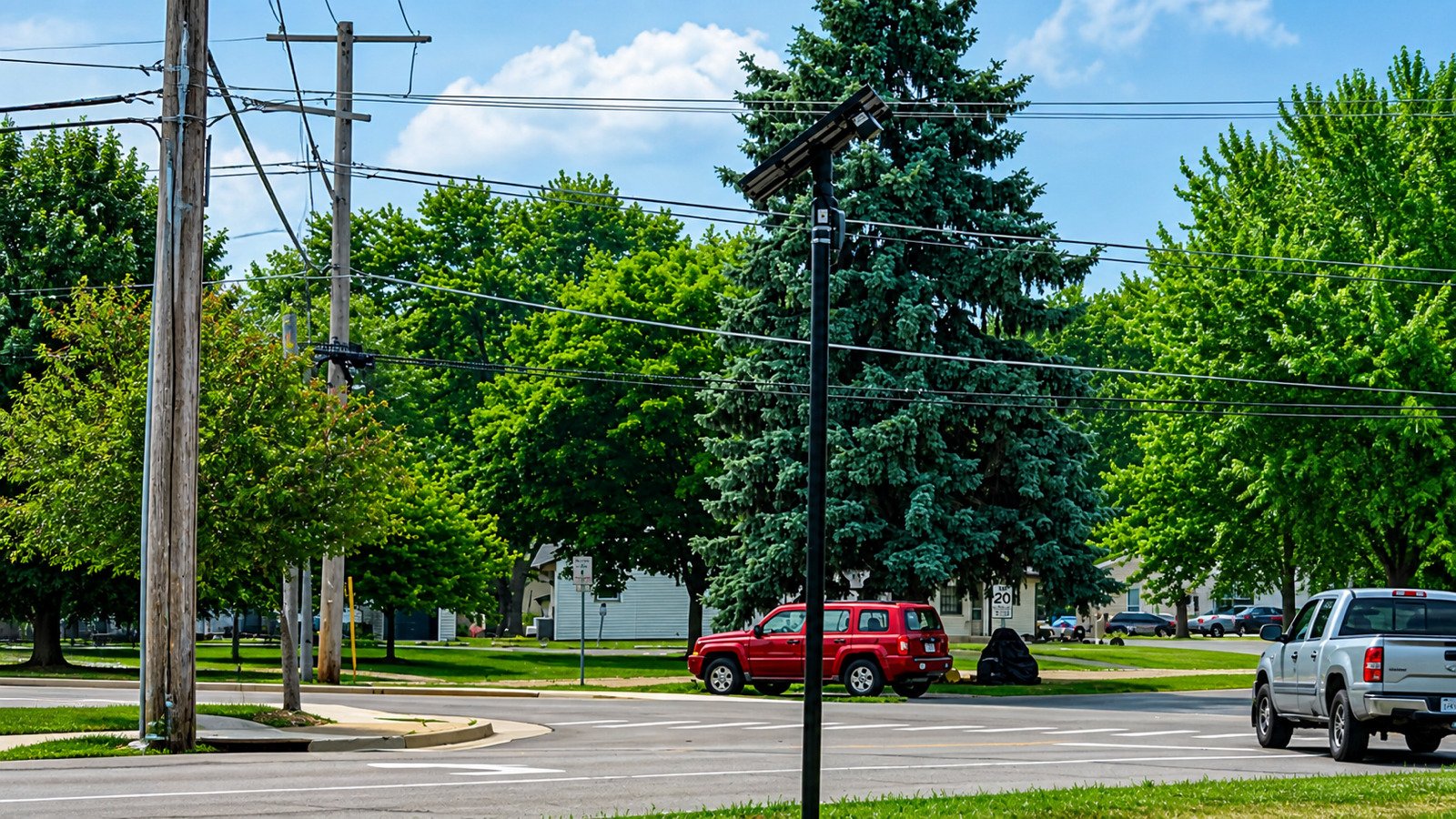
Flock Safety’s automated license-plate readers are mounted along roads, near businesses, and throughout neighborhoods. They photograph passing vehicles, record identifying details, and place those observations into a searchable network used by law enforcement.
When the system works as intended, it can help police locate stolen vehicles, identify cars connected to violent crimes, and find missing people.
But the same feature that makes the system useful also makes abuse so dangerous: a person with authorized access may be able to search where someone else’s vehicle has appeared and when it was seen.
The Albany arrests began drawing fresh attention across social media Thursday morning:
Five Police Officers Arrested and Fired After Abusing Flock Surveillance Cameras
Five officers with Albany P. D. in Georgia were arrested for abusing Flock cam.
The P.D. had audit of the Flock cameras, which auto. read license plates and capture other vehicle details
— Rudeco (@MvRudeco) August 6, 2026
The Albany investigation began after the police department audited its Flock camera system and found searches that did not appear to have a legitimate law-enforcement purpose.
WALB reported that Albany Police Chief Michael Persley said the system’s upgraded monitoring tools detected search activity outside normal parameters. Supervisors received an alert, the department opened an internal investigation, and the GBI was contacted for a criminal investigation.
Persley said the people whose license plates were searched were personally known to the officers. He also said those individuals were not connected to any active investigation or call for service.
The public announcement did not identify those people or explain the relationships involved. The GBI says the case remains active, and the file will be sent to the Dougherty Judicial Circuit District Attorney’s Office for review when the investigation is complete.
The official findings have continued circulating through local coverage this week:
https://t.co/NSLzsGIYcf and another….
— Damon. (@damontorrey) August 5, 2026
The allegations cut straight to the central fear surrounding large surveillance networks.
It is one thing to tell the public that cameras are watching the roads to catch criminals. It is another thing entirely when officers with access to that data are accused of using it to look up people from their own lives.
Public opposition to Flock cameras has already intensified in communities where residents believe the network has grown faster than the oversight surrounding it.
The issue reaches beyond Albany. Six Savannah Police Department employees are now under investigation for possible misuse of that city’s Flock camera system:
"A half-dozen employees with the Savannah Police Department are under investigation for possibly misusing the city's Flock camera system, Mayor Van Johnson says.
In a Facebook post on Friday, the mayor said that the four officers and two civilian employees have been placed on… https://t.co/AgLi0eKk21
— BeeBeeSunshine (@BeeBeeSunshine) August 3, 2026
Flock argues that the Albany case also demonstrates why audit trails matter.
In its own explanation of officer misuse, Flock Safety says every search is attached to an individual user, requires a standardized offense type, and remains in a permanent audit record. Agencies can review usage histories, and the company says an improper search cannot simply be erased after someone makes a bad decision.
Flock says its newer Audit Assistance tools are designed to identify unusual patterns more quickly so supervisors can investigate suspicious activity before it grows. Those records can document who searched for a plate, when the search happened, and the reason entered by the user.
In Albany, the upgraded monitoring system reportedly alerted supervisors to activity outside normal parameters and gave investigators a trail to review.
The company reports more than 140,000 monthly active users across more than 6,000 agencies. It says those users conduct millions of lawful searches each month involving violent crimes, missing people, emergency responses, and stolen property.

Flock also acknowledges that safeguards can improve further and says it continues investing in stronger oversight and tools that make misuse easier to detect.
Both arguments can be true at the same time.
The audit logs appear to have helped expose these alleged abuses. Without those logs, the searches might have gone unnoticed.
But the logs did not prevent the alleged searches from happening in the first place.
That distinction matters. An accountability system that catches misconduct after private movement data has already been searched is valuable, but it is not the same thing as a safeguard that stops an unauthorized search before someone’s whereabouts are exposed.
What are your thoughts?

The Albany Police Department moved quickly once the activity surfaced. Persley said termination proceedings began within days, and state investigators were brought in rather than leaving the case inside the department.
That response deserves recognition.
It should also become the minimum standard anywhere this technology is deployed: individual accounts, mandatory case numbers, automated alerts, frequent independent audits, immediate suspension of suspicious access, and criminal referrals when the evidence warrants them.
Communities are being asked to trust systems that can quietly build a record of where millions of vehicles have traveled.
That trust cannot rest on promises that only the right people will use the data for the right reasons.
Five former officers in Albany now stand accused of proving why promises alone will never be enough.

Join the conversation!
Please share your thoughts about this article below. We value your opinions, and would love to see you add to the discussion!