

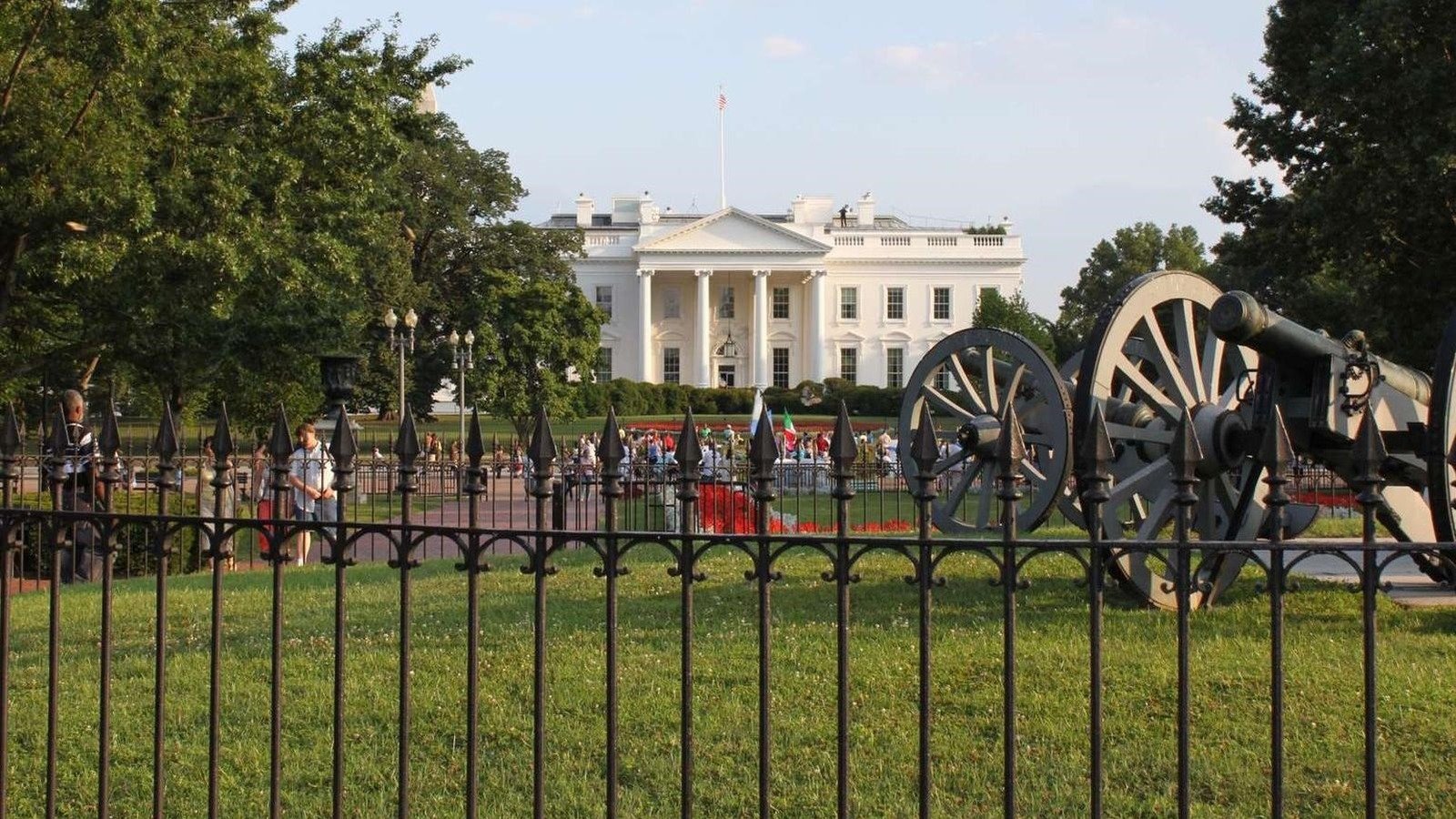
President Trump spent Sunday morning walking the grounds of the city he is determined to fix.
He started at Lafayette Square, the seven-acre park sitting directly across from the White House.
One detail from the reporting stands out. The plan calls for 47 trees, one count for each number of his presidency.
He is the 47th president of the United States.
It is a small touch with a clear message. The 47th president intends to leave a visible mark on the capital, right outside his own front door.
The Washington Times reported on June 28, 2026, that Trump toured sites tied to his broader makeover of the nation’s capital, starting with the park outside the White House.
The paper said he began the morning inspecting Lafayette Square, the seven-acre park directly north of the White House, before moving to another site tied to his D.C. plans.
The beautification effort traces back to May 2025, when Trump signed an executive order aimed at restoring the square and improving the public space around the executive mansion.
The Washington Times said that order covered restoring fountains, upgrading infrastructure, and raising the tree count to 47, the number that now makes the landscaping plan a presidency marker.
That last number is the political signature in the landscaping plan, because it matches Trump’s place in the line of American presidents.
The report also places the park visit inside a larger capital-improvement push, which makes the Sunday inspection more than a casual walk outside the White House gates.
The details are concrete: fountains, infrastructure, trees, and the public space directly across from the executive mansion.
That is why the story feels different from normal Washington chatter. It is about the visible condition of the capital, and Trump is tying that condition to his presidency.
The Washington Post reported the same 47-tree goal, citing people familiar with the matter and placing the detail inside Trump’s hands-on interest in Lafayette Square and its redesign project.
The outlet framed the tree count as a deliberate nod to Trump’s 47th presidency, rather than an ordinary landscaping decision made by park staff.
It also reported that Trump personally inspected the renovations that morning, an account relayed through the White House and the press pool after he visited the site.
For now the 47 trees are the plan, not finished work. The news is the goal, the symbolism, and the president showing up in person to check on a visible project outside the White House.
That kind of detail is why this story has legs. It is small enough to notice and clear enough for everyone to understand.
The Washington Post angle also explains why the tree count became the hook: the landscaping number is easy to dismiss until you remember how often presidents leave their marks on the White House grounds and the capital around them.
Here, the mark is being reported as intentional, visible, and tied directly to the number 47.
Lafayette Square carries more history than most parks in America. The National Park Service says the seven-acre park sits directly north of the White House.
The NPS says the land has been used as a race track, a showplace for caged animals, a graveyard, a slave market, a soldier encampment, and a site for political protests and celebrations.
The park was planned by architect Charles Bulfinch in 1821 and later named for the Marquis de Lafayette, the French ally of the American Revolution and the first foreign guest of state to stay at the White House.
The surrounding area once included homes tied to vice presidents, members of Congress, foreign ambassadors, naval hero Stephen Decatur, and former First Lady Dolley Madison, which gives the square a deep Washington footprint.
The NPS also notes that the area was designated a National Historic Landmark in 1970.
So the square Trump is reshaping carries real history. He is putting his stamp on ground that has stood at the center of American life for two centuries.

That history is why the park matters beyond landscaping. Lafayette Square has been a front-row seat to power, protest, ceremony, and public memory since the early republic.
When the area changes, people notice, because it sits in the camera shot every time the country looks toward the White House.
The park had already appeared in his capital plans before Sunday’s inspection. Earlier reporting from the Washington Times on June 17, 2026, said Trump planned permanent fencing around Lafayette Square.
That earlier report put the park inside a larger debate over White House security, public access, and whether the nation’s capital should look cared for or neglected.
Seen together, the fencing report and the new 47-tree detail show the same instinct from two angles: protect the space, improve the space, and make the area around the White House look like it belongs to a serious country.
You do not have to agree with every design choice to see the pattern. Trump keeps treating the physical condition of Washington as part of the job.
Put it all together and the picture is simple. Even the park across the street from his office is being pulled into the America First restoration of the capital.
The fountains, the infrastructure, the fencing, and yes, the 47 trees. A president who shows up on a Sunday morning to inspect the work himself is a president who means to finish it.
This is a Guest Post from our friends over at 100 Percent Fed Up. View the original article here.

Join the conversation!
Please share your thoughts about this article below. We value your opinions, and would love to see you add to the discussion!