

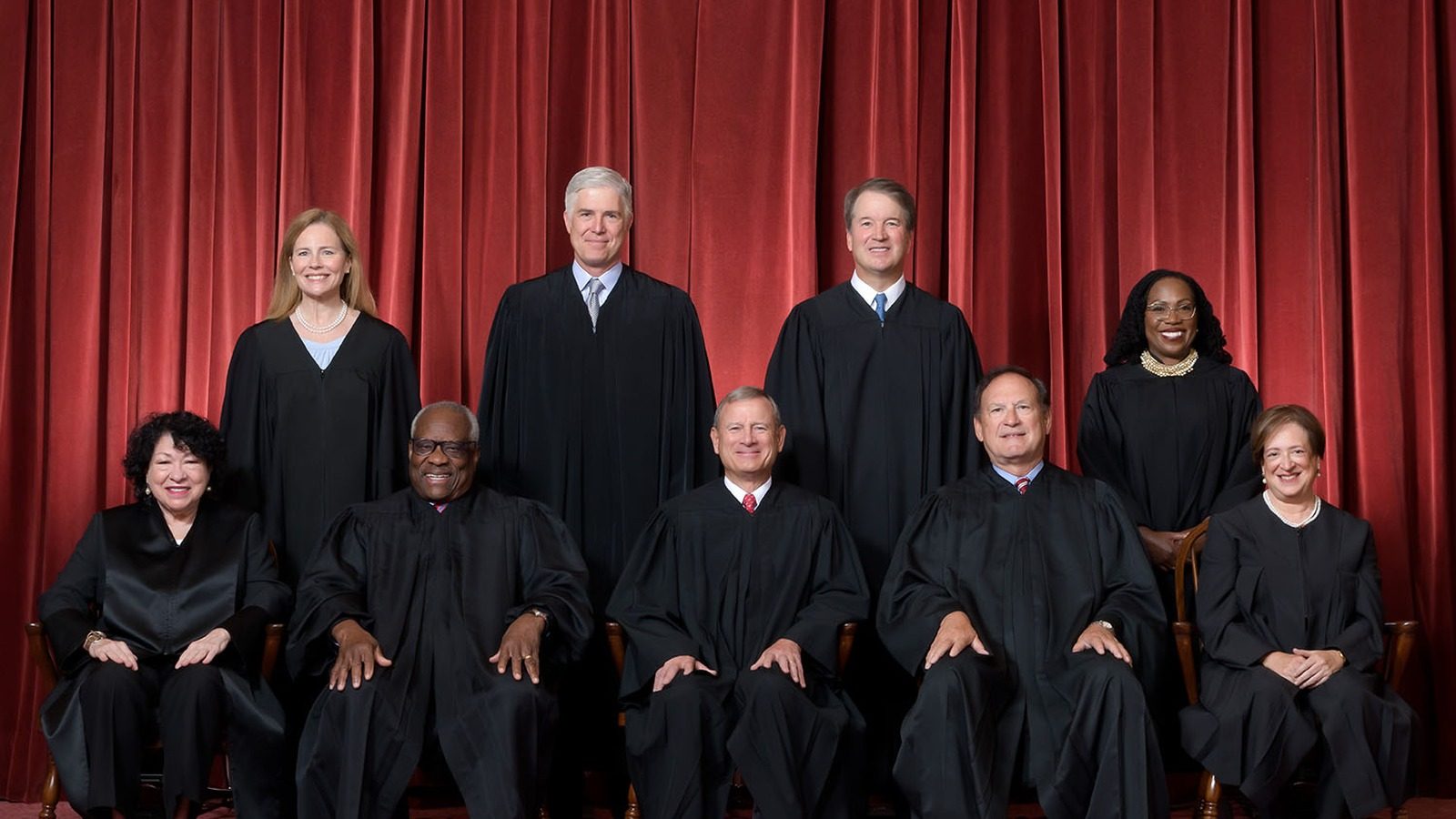
The Supreme Court just handed President Trump one of the biggest immigration wins of his second term.
And it was not close.
In a 6-3 decision released June 25, 2026, the Court ruled that the administration’s move to terminate Temporary Protected Status for Haiti and Syria can go forward, reversing the lower-court orders that had been freezing those terminations in place.
The three liberal justices dissented. The conservative majority cleared the way for the administration to do what voters elected it to do.
🚨 IT'S OFFICIAL: The Supreme Court rules that Democrats COULD NOT challenge President Trump and DHS ending TPS legal status for Haitian and Syrian migrants
The court SMACKED DOWN Democrats' claim that ending TPS was "racially-based"
Huge!!!
The Supreme Court is stacking Ws!… pic.twitter.com/aWL51ncKbY
— Eric Daugherty (@EricLDaugh) June 25, 2026
Here is what actually happened.
The cases are Mullin v. Doe, docket 25-1083, decided together with Trump v. Miot, docket 25-1084. The Court’s 49-page opinion holds that the TPS statute bars judicial review of the non-constitutional claims the challengers brought.
The majority also held that the equal-protection claim alleging Haiti’s designation was ended because of race was unlikely to succeed. That matters because the lower-court orders had kept the protections frozen while litigation dragged on.
The justices reversed and remanded, taking away the courtroom roadblock that had slowed the administration’s termination notices. That reset is the practical victory: the administration no longer has to leave those TPS terminations on ice while challengers pursue the same claims.
The opinion walks through the history. Congress created TPS in 1990 as short-term humanitarian relief for aliens who cannot safely return home.
Syria got TPS in 2012. Haiti got it in 2010 after an earthquake.
The Court notes these supposedly temporary designations have often stretched on for decades, which is exactly the kind of mission creep President Trump’s team has been trying to unwind.
The opinion also ties the ruling to the DHS termination notices issued in 2025: Syria in September and Haiti in November. That is the key timeline, because those notices are now free to move forward without the same lower-court freeze.
Justice Samuel Alito announced the judgment and wrote the opinion of the Court except for one part.
Chief Justice John Roberts and Justices Clarence Thomas and Brett Kavanaugh joined in full. Justices Neil Gorsuch and Amy Coney Barrett joined except for Part III-A.
Justice Elena Kagan dissented, joined by Justices Sonia Sotomayor and Ketanji Brown Jackson.
Translate that out of court-speak: the liberal wing wanted to keep blocking the administration. They lost.
MASSIVE WIN
Supreme Court rules the Trump admin can END Temporary Protected Status (TPS) for Syrians and Haitians
Roughly 330,000 Haitians and 3,800 Syrians now face deportation.
The three liberal justices dissented. pic.twitter.com/cslgA2zaX1
— Libs of TikTok (@libsoftiktok) June 25, 2026
The numbers here are real.
The New York Post reports the ruling lets the administration strip deportation protections from more than 350,000 Haitians and more than 6,000 Syrians, making them eligible for removal. The Post notes that lower courts had been keeping those protections alive while the lawsuits played out.
The report also tracks the key legal line: the high court said judges cannot review these TPS termination decisions on the non-constitutional grounds the challengers used. The plaintiffs claimed racial bias over the Haiti decision, but the majority said that equal-protection claim was unlikely to succeed.
This is the Trump enforcement agenda working exactly as designed.
DHS gave public notice in September 2025 that Syria’s designation would end, and in November 2025 that Haiti’s would end. The opinion explains the administration objects to dragging out these temporary programs for decades, and that the Secretary of Homeland Security has terminated every single TPS designation that has come up for renewal under President Trump’s second term, 13 in all.
Every one.
A little legal background helps. The pre-decision framing from Cornell Legal Information Institute laid out the core fight clearly.
The government argued that the TPS statute’s Section 1254a(b)(5)(A) bars judicial review of these decisions. The challengers argued courts could still review whether DHS followed required procedures, and the Haiti challengers pressed the racial-animus claim.
Cornell’s framing showed why the case carried stakes beyond these two countries: TPS policy, national security judgments, and the power of judges to second-guess immigration enforcement decisions were all on the table. The majority sided with the government on the question that decided the case.
To be precise about what the ruling does: it does not instantly deport every TPS holder. It clears the lower-court roadblocks, limits the kinds of claims judges can use to freeze these decisions, and lets the administration’s terminations move forward.
That is exactly the relief the administration needed.
And it was not the only win that day.
BREAKING: The Supreme Court handed President Trump two major immigration victories in separate 6-3 rulings, allowing his administration to revive a policy turning away certain asylum seekers at the U.S.-Mexico border.
In a second ruling, the court backed the administration’s… pic.twitter.com/o0ZPxUzVVX
— Breaking911 (@Breaking911) June 25, 2026
As the Court showed in a separate 6-3 immigration ruling the same day, the justices also backed the administration’s revival of a border metering policy that turns away certain asylum seekers at the U.S.-Mexico border.
That companion case was Mullin v. Al Otro Lado, No. 25-5, also decided June 25, 2026. The Court reversed and remanded the Ninth Circuit, holding that an alien standing in Mexico does not “arrive in the United States” for the relevant asylum and inspection statutes until he crosses the border.
The opinion said the case was still live because the lower-court declaration continued to block the government from using metering during border surges in the Ninth Circuit. The government told the Court metering remains an important tool when border conditions warrant it.
That is why the two-win point matters: TPS authority and border-processing authority both moved toward President Trump’s administration on the same morning.
Two major immigration victories. One day.
Same 6-3 split.
The pattern is clear, and it favors enforcement.
For years the playbook was simple: pass a temporary humanitarian program, then let it run forever, then dare anyone to end it. The Trump administration finally said no, and now the Supreme Court has said the courts cannot keep tying the administration’s hands on non-constitutional grounds.
The American people voted for a President who would secure the border and enforce immigration law. This ruling lets him do exactly that.
The protections that were supposed to be temporary will finally be treated as temporary, and the law gets to mean what it says again.
Read the full Supreme Court ruling here: Mullin v. Doe / Trump v. Miot.

Join the conversation!
Please share your thoughts about this article below. We value your opinions, and would love to see you add to the discussion!