
While the “Make America Healthy Again” agenda encountered a recent hurdle when a federal judge blocked efforts to ban EBT card purchases of sugary junk foods, it’s clear that the food industry itself is increasingly interested in complying with the Trump administration’s recommendations.
Health and Human Services Secretary Robert F. Kennedy Jr., the driving force behind the MAHA movement, has several more reasons to celebrate, starting with a key decision from the maker of M&M’s and other popular snacks.
Here’s the report from The Hill:
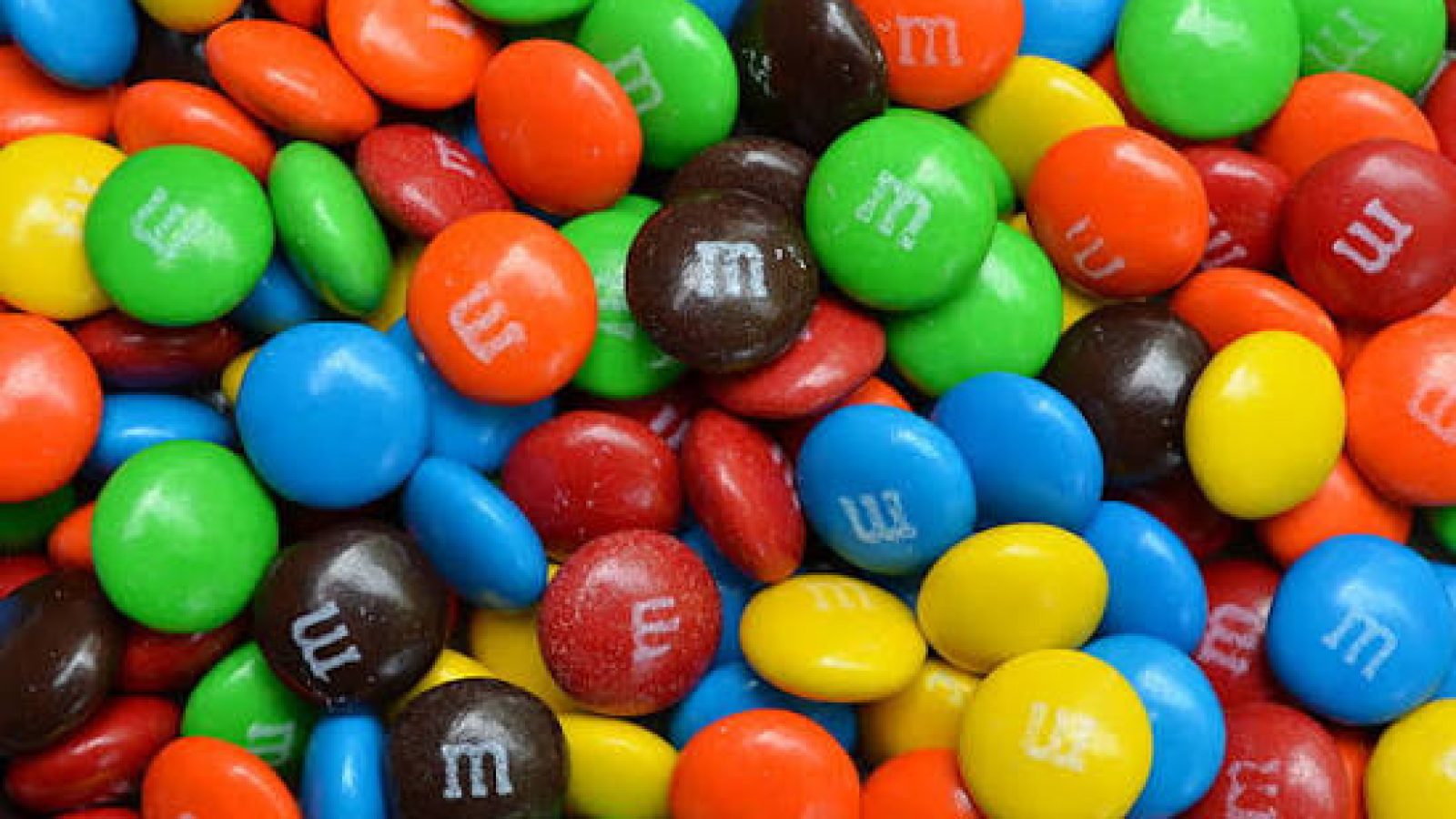
Mars recently announced that M&M’s made without artificial dyes will soon be available, though two iconic colors won’t be included.
ADVERTISEMENTThe candy maker is one of several companies that have taken steps to produce products without artificial dyes following a call from Health and Human Services Secretary Robert F. Kennedy Jr. last year.
Later in the same article:
In addition to Mars (which will also produce naturally-colored Skittles, Extra Gum, and Starburst fruit chews), other major companies that announced plans to ditch synthetic colors are General Mills, PepsiCo, ConAgra, McCormick, JM Smucker, Hershey, and Kraft Heinz.
Campbell’s agreed to stop producing food or beverages, like Lane Crackers and V8 Splash, with the above dyes this year, according to a tracker from the FDA. McKee Foods, the maker of Little Debbie and Sunbelt Bakery snacks, has agreed to remove artificial dyes by the end of 2027.
Some brands have already completed their move to ditch artificial food dyes.
In-N-Out removed artificial colorings from its strawberry shakes and pink lemonade last spring. Sam’s Club has also removed synthetic colors from products sold under its Member’s Mark label. Cereal sold under Target’s private label no longer includes synthetic colors.
The latest developments have fueled some social media discussion:
I totally voted for this.
There is no need for weird dyes on food. As long as it taste good it doesn't need to be bright colors.
— Alfa Mike (@AlfaMikeNS) June 19, 2026
Mars, Inc. is rolling out a temporary update to one of its iconic candies as the company works to phase out artificial dyes. The revised version will be missing blue and brown coloring for now, as part of a broader “MAHA” (Make America Healthy Again) reformulation effort.#mars… pic.twitter.com/DUtUqaLeTt
— Tomson (@TomsonWoo) June 20, 2026
Cry harder retards, they are taking away your carcinogens and now M&M’s won’t be as brightly colored anymore, the horrors
— Bobby (@B0WERMAN) June 19, 2026
Today provided additional details:
For now, the naturally colored M&M’s will be sold only on Amazon, while the original, artificially colored M&M’s will remain where they are currently sold.
According to the report, while Mars has already replicated its red, orange, yellow and green M&M’s with at-scale natural dyes, it is having significant trouble re-creating the vibrant “cerulean” blue, introduced in 1995, that would make Miranda Priestly recoil. And its brown shade is made with a significant amount of blue dye as well.
The candy company uses Blue No. 1 for the two temporarily-benched candy colors, and it chose spirulina, a blue-hued, high-protein superfood, as its natural replacement. But the company said it’s having problems with the texture, thickness and consistency of the ingredient, which has led to the upgrade and replacement of some production machines and the current disappearance of the shades.
“When we have identified fully effective, scalable solutions across the entire portfolio, we will share additional item commitments and timelines,” Mars said. The company also told WSJ that it’s aiming to offer its naturally colored M&M’s in all six colors by 2028, but wouldn’t say whether it’s getting rid of artificially dyed M&M’s once it does.
Of the 36 food dyes approved for use in the U.S., nine are artificial and made from petroleum, according to the FDA. The rest are made from natural sources.
And here’s some more evidence that the MAHA agenda is catching steam across the broader population:
A new Fox News poll suggests the MAHA movement is gaining broad bipartisan support, with 91% of voters backing clearer food labeling and 87% supporting a ban on harmful food additives. As public pressure grows, major companies including Walmart, Coca-Cola, and In-N-Out have begun… pic.twitter.com/U10gaPDNP8
— Breaking911 (@Breaking911) June 23, 2026

Join the conversation!
Please share your thoughts about this article below. We value your opinions, and would love to see you add to the discussion!