

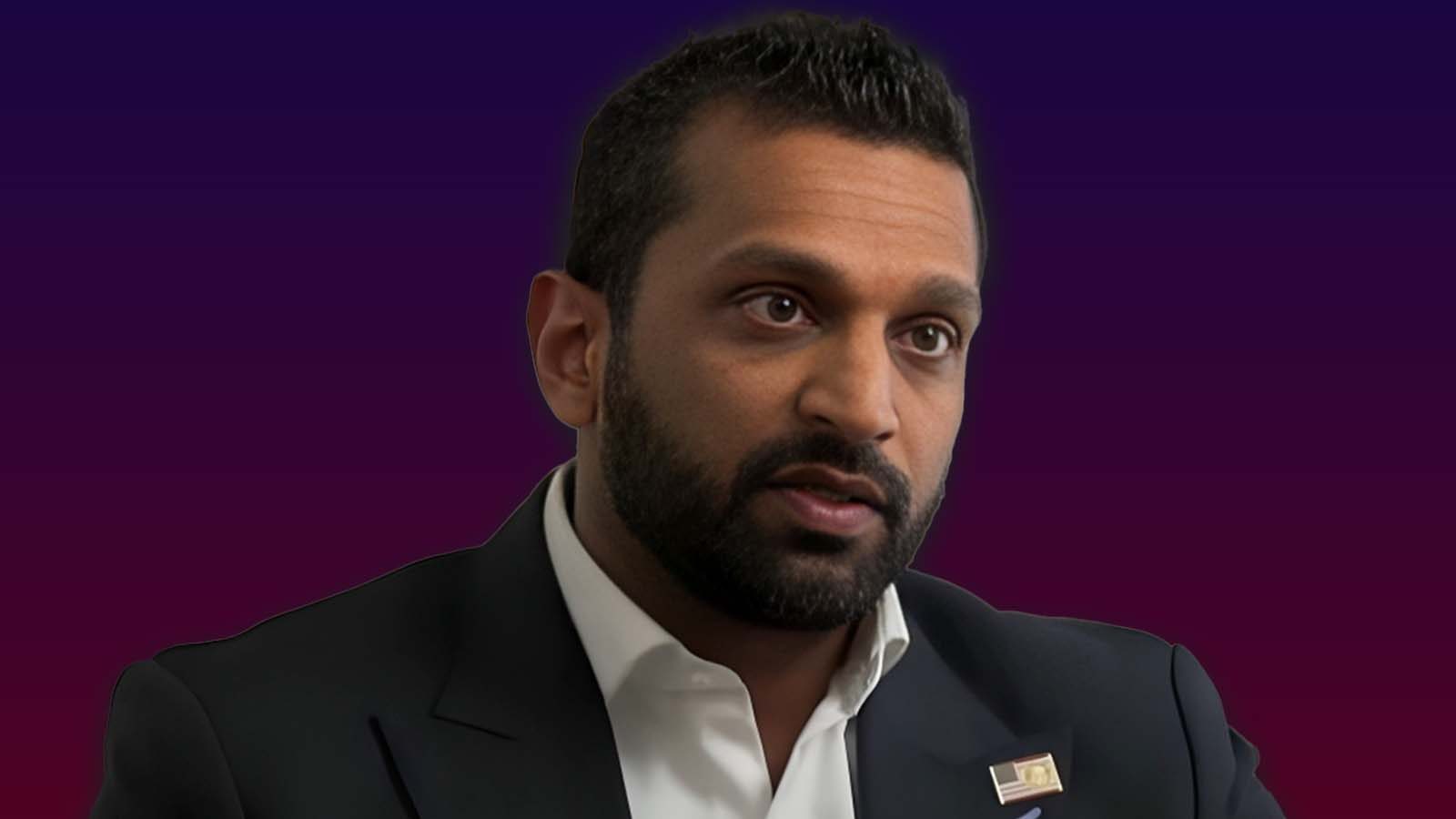
FBI Director Kash Patel sat down with Sean Hannity this week and laid out a string of counterterrorism wins that received almost zero mainstream coverage: four terrorist plots stopped in four weeks during the holiday season, a 9/11-style attack still on the bureau’s radar, and an AI upgrade to the FBI’s tipline that he says already prevented a school massacre.
The interview aired as the story was picking up traction on social media, where the lack of press attention became a story of its own.
ICYMI: From national security to flying saucers, it was a big week on Hang Out With Hannity.
Watch the full episodes featuring FBI Director Kash Patel and Luigi Vendittelli on YouTube, Spotify, and Apple Podcasts. pic.twitter.com/tXY6BJEsQ3
— Sean Hannity 🇺🇸 (@seanhannity) May 8, 2026
According to Fox News, Patel laid out the holiday-season terror-warning and the FBI’s new AI tip-triage details this way:
Patel told Hannity that FBI agents stopped four terrorist attacks in a four-week holiday window while still watching for a possible large-scale strike modeled on 9/11. He pointed to the Michigan “Pumpkin Day” case and attacks he described as targeting Texas, Florida, and New York. The Michigan reference centered on an ISIS-inspired case in which “pumpkin” allegedly appeared as coded language for a planned mass shooting. Patel also warned that terrorist groups are patient and disciplined, which is why the pressure of missing one warning sign keeps him up at night.
The same interview tied the counterterrorism warning to the bureau’s newer use of artificial intelligence in criminal-justice databases and tipline triage. Patel said AI is helping the FBI move faster through tips that once took longer to sort manually. He gave Hannity a concrete example from North Carolina, saying an AI-triaged tip helped the bureau act fast enough to stop a planned school massacre before it could happen. That detail matters because it connects the counterterrorism posture to the bureau’s wider school-threat response.
Patel’s Hannity comments expand on sworn testimony he gave the Senate in March. Speaking before the Intelligence Committee on March 18, Patel described a broader set of foiled holiday-season cases and offered operational detail about how the FBI detected and disrupted them.
The official transcript published by Senator Susan Collins’ office gives the broader Senate testimony behind those comments:
Senator Collins opened that exchange by saying there had been more than 52 jihadist-inspired cases across 30 states since April 2021, then pressed Patel about ISIS recruitment through social media, gaming platforms, and encrypted messaging apps. Patel responded that terrorist organizations had moved much of their recruitment online, making groups such as ISIS more powerful. He said the FBI had expanded the Threat Screening Center, increased biometric collection and intelligence production, and placed more agents and analysts online to detect threats through interagency intelligence.
Patel told the committee those changes helped the FBI stop four December terrorist attacks in California, Texas, North Carolina, and Pennsylvania, three of which were ISIS-inspired. He added that suspects were detected both online and in person through covert platforms. In the same answer, he said the bureau shuttered a Southern California bombing campaign and stopped two New Year’s Eve mass-casualty events.
The state lists Patel cited in the two appearances are not identical. His March Senate testimony named California, Texas, North Carolina, and Pennsylvania. His May Hannity comments, as reported by Fox, referenced Michigan, Texas, Florida, and New York. Taken together, they paint a picture of a wider set of foiled holiday-season plots rather than a single fixed roster of four.
The case that started it all publicly was the Michigan “Pumpkin Day” takedown. The story was still circulating Friday evening as conservative outlets picked up Patel’s latest warning.
Kash Patel Details How the FBI Stopped Four Suspected Terror Attacks Recently [WATCH]https://t.co/dUNyP1WTHB
— LifeZette (@LifeZette) May 8, 2026
A detailed Fox News report from November 2025 laid out the scope of the Michigan case:
The Michigan Halloween case allegedly involved an ISIS-inspired attack that federal authorities stopped before it unfolded. Mohamed Ali and Majed Mahmoud of Dearborn, Michigan, were charged in federal court on allegations involving firearms, ammunition, terrorism-support knowledge, and material support to ISIS. The government alleged five people were involved, including a minor. Patel described coordinated arrests tied to Detroit, Newark, Seattle, and overseas-linked investigative work, while federal officials framed the takedown as a broader terrorism-disruption operation.
Agents seized semiautomatic rifles, a shotgun, handguns, tactical gear, and more than 1,600 rounds of 5.56 mm ammunition. Surveillance allegedly showed suspects practicing at a Michigan gun range. The affidavit described alleged inspiration from the Pulse nightclub shooting and the 2015 coordinated Paris terror attacks. Dan Bongino warned during coverage of the case that people would have died if agents had not moved first. The alleged facts also showed why the case drew national attention: firearms practice, tactical equipment, a minor suspect, and inspiration from prior mass-casualty attacks all appeared in one investigation.
The Southern California case Patel referenced in his Senate testimony also ended in federal charges.
AP described the New Year’s Eve bombing allegations in detail:
Federal authorities said they foiled a plan to bomb multiple sites tied to two U.S. companies on New Year’s Eve. Four suspects were arrested in the Mojave Desert east of Los Angeles while authorities said they were rehearsing the plot. Prosecutors identified the alleged plan as “Operation Midnight Sun” and said it involved backpacks filled with complex pipe bombs that were supposed to detonate at midnight across five locations in Orange County and Los Angeles.
Audrey Illeene Carroll, Zachary Aaron Page, Dante Gaffield, and Tina Lai were named in a complaint connected to conspiracy and destructive-device allegations. Authorities said the suspects had materials including PVC pipes, potassium nitrate, charcoal products, sulfur powder, and fuse material. Prosecutors also alleged that two members had discussed future pipe-bomb attacks targeting ICE agents and vehicles, giving the case a second layer beyond the New Year’s Eve targets. The arrests came before the holiday deadline, while investigators said the group was still in the rehearsal stage in the remote desert east of Los Angeles.
In North Carolina, a separate plot allegedly targeted everyday civilians at the places they shop and eat.
WFAE reported these details about the Mint Hill case:
Christian Sturdivant, 18, of Mint Hill, North Carolina, was charged with attempting to provide material support to ISIS after authorities alleged he planned a New Year’s Eve attack with knives and hammers at a grocery store and fast-food restaurant. U.S. Attorney Russ Ferguson and FBI Charlotte Special Agent in Charge James C. Barnacle Jr. described a case involving alleged communications with a covert law-enforcement officer and handwritten notes titled “The New Years Attack 2026.”
Authorities said Sturdivant wanted to attack civilians and had discussed allegiance to ISIS. Prosecutors also said seized notes indicated intended targets included Jews, Christians, and LGBTQ individuals. The case fits the same pattern Patel described in his Senate testimony: online radicalization, holiday timing, mass-casualty intent, and federal agents moving before the public ever saw the threat unfold. It also underscored the ISIS-inspired thread running through Patel’s warning.
Four plots. Four weeks. Guns, pipe bombs, knives, and hammers. ISIS inspiration running through nearly all of them. And almost none of it led the evening news.
That last point is what makes Patel’s Hannity interview land so hard. The FBI under his leadership is doing exactly what Americans expect it to do: finding threats, shutting them down, and keeping the homeland safe. The bureau is deploying AI tools that actually work, expanding biometric collection, and placing more agents in the digital spaces where terrorists now recruit. These are tangible results from a Trump-era FBI that has refocused on its core mission after years of political distraction.
But Patel’s warning should not be lost in the victory lap. He told Hannity that terrorist organizations are patient and that a 9/11-scale attack remains a live concern. The plots stopped over the holidays were real. The next ones will be, too. Vigilance is not optional, and neither is paying attention.

Join the conversation!
Please share your thoughts about this article below. We value your opinions, and would love to see you add to the discussion!