

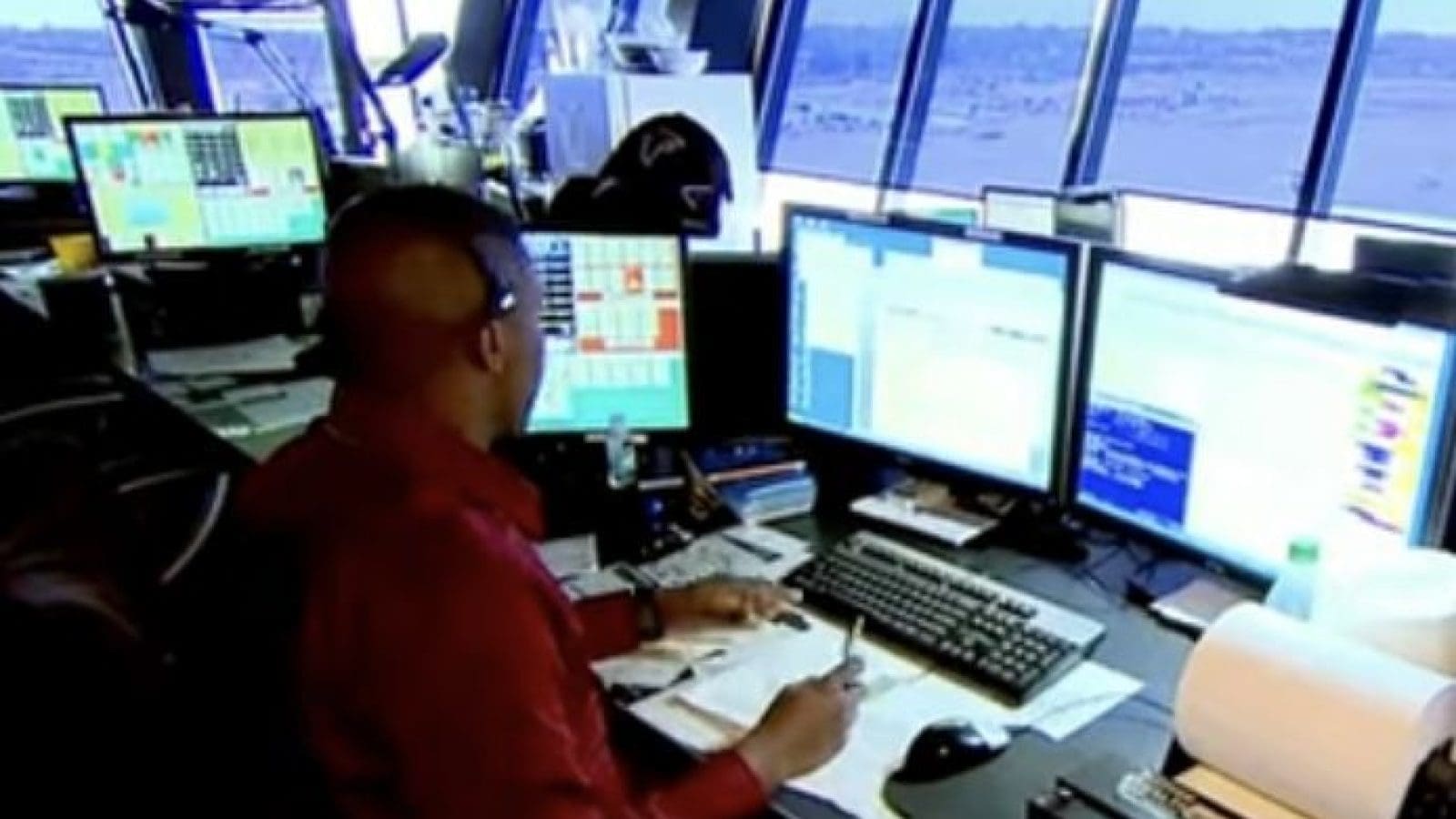
According to a Bloomberg report, air traffic controllers at Newark Liberty International Airport lost radar and radio communication for nearly 90 seconds early last week, causing flight delays and cancellations.
The incident occurred on April 28th, contributing to widespread chaos at the busy travel hub.
Following the outage, several air traffic controllers took “trauma leave” of up to 45 days.
Newark air traffic controllers lost radar and comms for 90 seconds in horrifying FAA outage https://t.co/kAjwbh8Sn2 pic.twitter.com/OOJaWoeW7i
— New York Post (@nypost) May 5, 2025
Per Bloomberg:
The incident and resulting reduction in staffing contributed to a week of flight delays and cancellations at Newark airport that pushed United Airlines Holdings Inc. to cut 35 daily round trips at the key hub, its biggest for international departures and a primary gateway for domestic flights. On Monday, Delta Air Lines Inc., which has about 30 departures a day at Newark, said it is also canceling a “small number” of flights due to air traffic control restraints.
The details, which haven’t previously been reported, paint a dire picture of the problems plaguing the Federal Aviation Administration operation in Philadelphia that guides flights into and out of Newark, which handled more than 48 million passengers last year. The facility there has experienced a number of technology failures, said the people.
When radar or radio frequencies stop working, there are no fail-safes, one of the people said, meaning controllers must simply wait for the system to come back online. Left unchecked, some controllers are concerned that issues at the facility could result in a tragic accident, the people said.
In a statement Monday, the National Air Traffic Controllers Association confirmed that on April 28 controllers in the Philadelphia facility “temporarily lost radar and communications with the aircraft under their control, unable to see, hear, or talk to them.”
Air traffic control screens reportedly went dark for up to 90 seconds at Newark Airport.
Airplanes were disconnected from air traffic controllers, which is crucial for flight safety. pic.twitter.com/9KhYV3Ki28
— FactPost (@factpostnews) May 5, 2025
The situation at Newark is so dire that one air traffic controller reportedly said the airport is “not safe” for travelers and that they should avoid the hub “at all costs.”
According to the New York Post, a “fried piece of copper wire” caused the nearly 90-second technology failure.
A single burnt wire caused horrifying 90-second Newark airport air traffic control outage https://t.co/F7UDPWsovR pic.twitter.com/kpRQAtlW0F
— New York Post (@nypost) May 5, 2025
From the New York Post:
At least five employees took leave under the Federal Employees Compensation Act, which covers all federal employees that are physically injured or experience a traumatic event on the job, according to CNN.
Newark airport has experienced more than 400 cancelled flights and nearly 2,000 delays since Friday.
At a press conference Monday, Sen. Chuck Schumer (D-NY) called for an Inspector General investigation into the travel nightmare at an airport which served 49 million travelers last year.
“The technology is old and must be updated. One of the things that happened at Newark is a copper wire burnt. Why are we using copper wire in 2025? Have they heard of fiber?” the Senate minority leader said.
Transportation Secretary Sean Duffy also pinned the glut of delays at Newark airport on the outdated air traffic management system.
“We use floppy disks. We use copper wires,” he said. “The system that we’re using is not effective to control the traffic that we have in the airspace today.”
In a letter to customers, United CEO Scott Kirby said Newark airport’s air traffic control center — which was moved to Philadelphia last summer in an effort to ease congestion at other New York-area airports — has been “chronically understaffed for years,” and also pointed to the technology failure as the culprit for the cascading delays.

Join the conversation!
Please share your thoughts about this article below. We value your opinions, and would love to see you add to the discussion!