

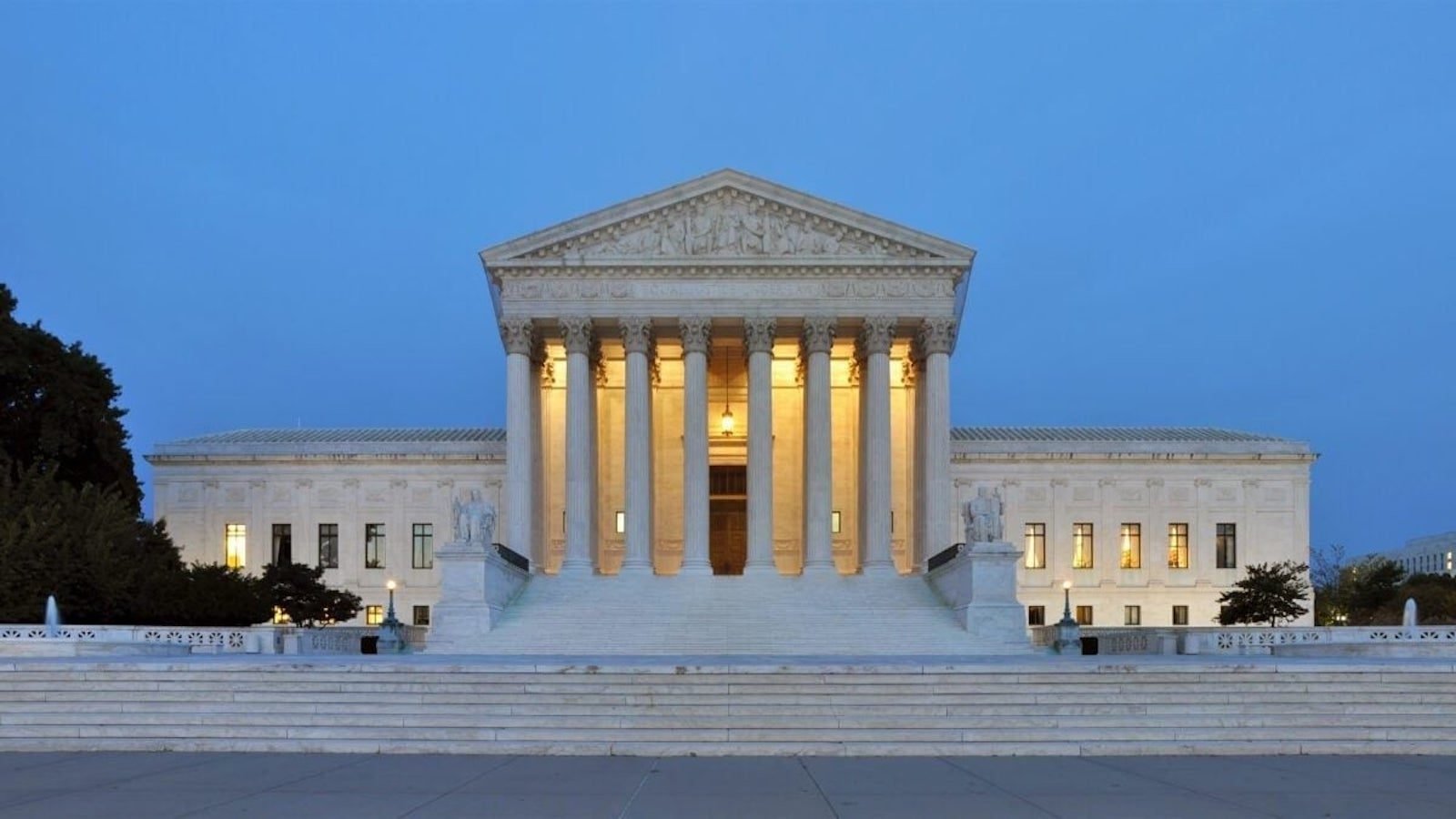
This just in: President Trump is asking the Supreme Court to review birthright citizenship.
Specifically, the Trump administration has requested that SCOTUS limit three rulings from lower courts that prevent a nationwide ban on birthright citizenship.
If this happens, it would pave the way towards banning birthright citizenship in the United States.
Here are the details:
BREAKING: The Trump administration is asking the Supreme Court to limit three lower court orders that prevent the birthright citizenship ban from taking effect nationwide.
"Universal injunctions have reached epidemic proportions since the start of the current Administration,"… pic.twitter.com/wxEDSWQBan
— Katelynn Richardson (@katesrichardson) March 13, 2025
JUST IN: Pres. Trump's administration has asked the Supreme Court to intervene on nationwide injunctions issued by three different federal judges blocking his executive order redefining birthright citizenship in the U.S. https://t.co/y3TcB54XQW pic.twitter.com/NEzNgOOQGl
— ABC News (@ABC) March 13, 2025
Well its official, the question surrounding BIRTHRIGHT CITIZENSHIP is now at the Supreme Court level.
As of now the Trump Admin is asking that the injunctions against it be removed. pic.twitter.com/iNWUrM9Vck
— America First Insight (@AF_Insight) March 13, 2025
🚨JUST IN: Trump's birthright citizenship order has reached the Supreme Court.
Will Barrett and Roberts do the right thing? pic.twitter.com/8Vcoq4Olof
— Pro America Politics (@Pro__Trading) March 13, 2025
Fox News has the details:
The Trump administration asked the Supreme Court on Thursday to intervene and allow a narrow version of his executive order banning birthright citizenship to move forward, challenging three nationwide injunctions brought in Maryland, Massachusetts and Washington state.
Judges in those states immediately moved to block President Donald Trump’s order banning birthright citizenship, which he signed on his first day in office.
All three courts blocked the ruling nationwide – something lawyers for the Trump administration argued in their Supreme Court filing is overly broad.
In the court filing Thursday, acting U.S. Solicitor General Sarah Harris said the courts had gone too far, and asked the Supreme Court justices to limit the scope of the rulings to cover only individuals directly impacted by the relevant courts.
“These cases – which involve challenges to the President’s January 20, 2025 Executive Order concerning birthright citizenship – raise important constitutional questions with major ramifications for securing the border,” Harris wrote.
ADVERTISEMENT“But at this stage, the government comes to this Court with a ‘modest’ request: while the parties litigate weighty merits questions, the Court should ‘restrict the scope’ of multiple preliminary injunctions that ‘purpor[t] to cover every person in the country,’ limiting those injunctions to parties actually within the courts’ power.”
The executive order in question sought to clarify the 14th Amendment, which states, “All persons born or naturalized in the United States, and subject to the jurisdiction thereof, are citizens of the United States and of the State wherein they reside.”
NBC News added:
The Trump administration asked the Supreme Court on Thursday to narrow nationwide injunctions that have blocked the president’s plan to end automatic birthright citizenship.
Acting Solicitor General Sarah Harris said in three concurrently filed emergency applications in different cases that it was a “modest” request.
Notably, she is not asking the court to issue a decision on the merits of the plan that would apply nationwide. Instead, the government wants to the court to limit lower court injunctions to individuals or groups that sued over President Donald Trump’s order, and potentially to people who live in the Democratic-led states that challenged it.
She also asked that the court allow agencies to be able to work on how the executive order issued by Trump on his first day in office could be implemented, if it ever does go into effect.
If the request is granted, the administration could move forward with developing its policy and try to implement it in some form.
ADVERTISEMENT

Join the conversation!
Please share your thoughts about this article below. We value your opinions, and would love to see you add to the discussion!