

President Trump’s Justice Department just put a staggering number on the fraud eating away at taxpayer-funded programs across the South.
Roughly $350 million.
That is the total tied to a coordinated enforcement package spanning 17 matters in Alabama, Florida, Georgia, Louisiana, Mississippi, North Carolina and South Carolina.
The alleged schemes reach into food benefits, pandemic-era business loans, housing subsidies, Medicare and the tax system.
One crooked operator in one vulnerable program would be bad enough. These cases map how deeply fraud can spread when agencies hold pieces of the same puzzle but fail to put them together.
The White House rapid-response account put the headline in front of the country Thursday:
DOJ Uncovers $350 Million In Alleged Fraud https://t.co/wjymjFYwxN
— Rapid Response 47 (@RapidResponse47) July 30, 2026
The Daily Caller reported that the Justice Department’s National Fraud Enforcement Division assembled the seven-state package with state and federal partners. The 17 matters collectively involve roughly $350 million in alleged fraud.
The largest figure identified in the report is tied to Louisiana: $174 million in allegedly fraudulent Medicare claims for medically unnecessary cancer and cardiovascular genetic testing.
North Carolina authorities are pursuing a separate case involving eight people accused of using false tax returns and COVID-era credits to generate nearly $25 million in losses.
In Mississippi, one highlighted scheme involved an attorney who also worked for the Small Business Administration. Prosecutors said the operation used kickbacks and co-conspirators to generate millions of dollars in fraudulent loan payments.
Florida’s piece of the package includes a former Tallahassee Housing Authority manager accused of using tenants’ personal information to obtain about half a million dollars in federal rent subsidies.
Another matter involves an alleged $70 million tax-fraud scheme.
Those figures do not describe convictions across the board. Charges and complaints are allegations, and every defendant is entitled to the presumption of innocence unless proven guilty.
But the scale is exactly why the new division matters.
The real breakthrough may be the machinery built around the cases, beyond the dollar total attached to them.
According to the report, the seven states agreed to share corporate-registration records and public-benefit payment data with the Justice Department. That gives federal analysts a better chance to spot the same names, companies, addresses and payment patterns appearing in more than one system.
Fraud thrives in the gaps between agencies.
A business can look ordinary in one database, collect benefits in another, obtain a government-backed loan through a third and quietly send money through a network that no single investigator can see.
Connecting those records can turn a suspicious payment into a pattern—and a pattern into a case.
The Justice Department also brought together 18 U.S. Attorney’s Offices, seven state attorneys general, five federal law-enforcement partners and more than 50 state officials for the Southeastern effort.
That is the kind of coordination Washington talks about constantly and rarely delivers.
White House Press Secretary Karoline Leavitt’s account amplified the announcement as well:
DOJ Uncovers $350 Million In Alleged Fraud
— Karoline Leavitt (@PressSec) July 30, 2026
The Justice Department says President Trump announced the National Fraud Enforcement Division in January with a mandate to pursue fraud targeting federal programs, benefits, businesses, nonprofit organizations and private citizens. The division operates as a national litigating component rather than a temporary task force, giving it authority to build cases across judicial districts and follow schemes that cross state lines.
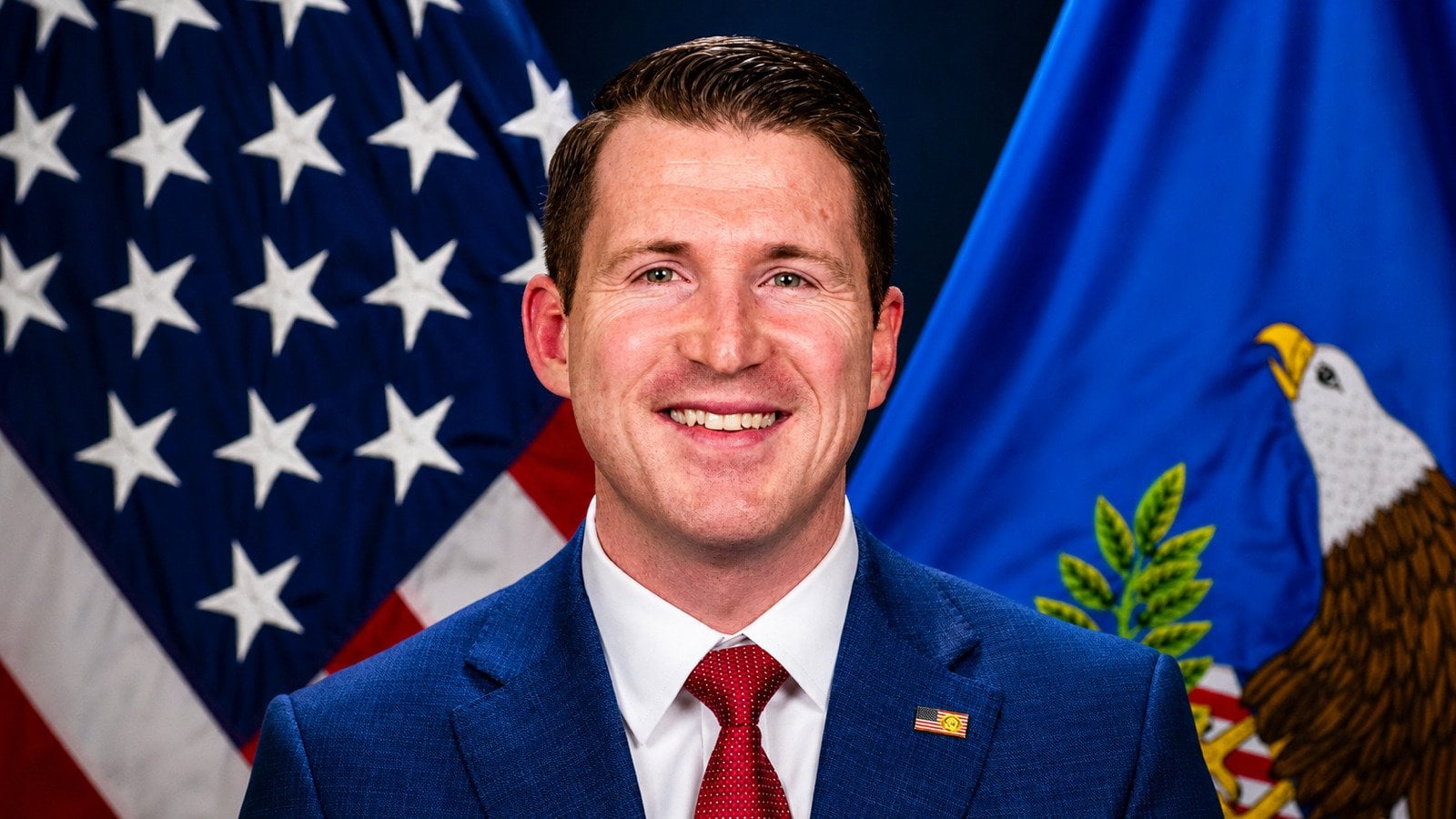
Assistant Attorney General Colin McDonald became the division’s first leader in April. Its mission combines prosecutors with data analysts, investigators and agencies that administer taxpayer-funded programs.
That structure is important because old-fashioned casework alone cannot keep pace with industrial-scale fraud.
When billions of dollars move through Medicare, disaster programs, tax credits, housing assistance and small-business loans, criminals can use shell companies and stolen identities faster than isolated offices can compare notes.
The division is also charged with recovering stolen money, coordinating nationwide enforcement priorities and helping agencies harden programs against the next scheme. That turns prosecutors and analysts into part of the same operation instead of leaving program administrators to discover losses after the money has vanished.
The official memorandum establishing the division made that problem explicit. It said the department had never adopted a truly comprehensive and coordinated approach to fraud against taxpayer dollars and taxpayer-funded programs. The order placed nationwide fraud enforcement inside one dedicated Justice Department division so investigators could set priorities, combine intelligence and move resources toward schemes causing the greatest losses.
The order called for a litigating division capable of pursuing schemes large and small, setting national priorities and proposing reforms to close the holes fraudsters exploit.
That is a major shift from chasing one defendant after the money is gone.
The goal is to detect the pattern sooner, freeze assets where the law allows, prosecute the people responsible and make the system harder to rob the next time.
The memorandum also directed the new division to work with state attorneys general and other enforcement partners, pursue civil and criminal remedies, and recommend legislative or regulatory changes when an exploited weakness cannot be fixed by prosecution alone. That wider mandate is what made a seven-state operation possible only months after the division opened.
The new division has already shown that it is not thinking small.
In May, an official Justice Department enforcement roundup detailed matters representing nearly $1 billion in alleged or proven fraud. Those cases included health-care billing, payroll-tax losses, business-relief fraud and stolen Treasury checks.
The May package stretched from a guilty plea in a $45 million Medicare scheme to charges involving fraudulent Employee Retention Credit claims, pandemic-relief money and hundreds of stolen U.S. Treasury checks. Prosecutors also announced civil enforcement and asset-recovery work, showing that the division is using more than one legal tool to claw money back and disrupt the networks behind it.
The seven-state operation is different because it pairs the case announcements with a regional data-sharing network.
That gives the effort a life beyond Thursday’s headlines.
If the agreements work as intended, investigators will not have to wait for a whistleblower or an accidental discovery to connect suspicious companies across state lines.
They can follow the data.
For honest taxpayers, this fight is not abstract.
Every dollar stolen from Medicare, housing assistance or disaster relief is a dollar taken from people who paid into the system or genuinely need the help. Every fake claim also makes it easier for Washington to demand more money from the public without first protecting what it already collects.
President Trump created the division to attack that cycle.
Now the Justice Department has put seven states, 17 matters and roughly $350 million on the board in one coordinated move.
The fraudsters may have learned to cross agency lines.
The government is finally learning to cross them too.
This is a Guest Post from our friends over at 100 Percent Fed Up. View the original article here.

Join the conversation!
Please share your thoughts about this article below. We value your opinions, and would love to see you add to the discussion!