

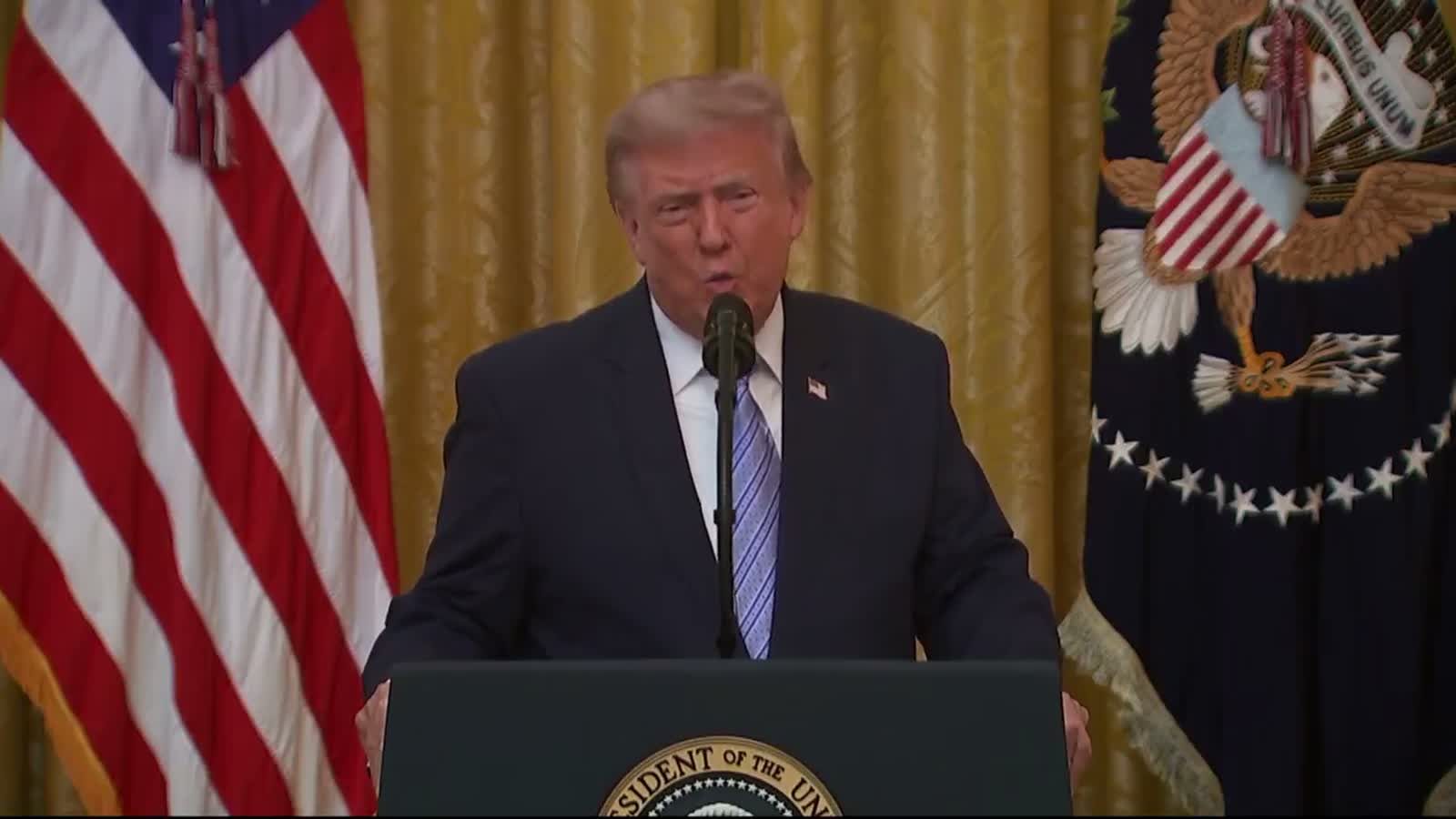
President Trump just put America’s election-security debate on an entirely new footing.
In his address to the nation, President Trump said newly declassified intelligence assessments show that foreign adversaries possess the capability to compromise critical pieces of U.S. election infrastructure.
Then he unveiled CIA reporting about alleged electronic vote manipulation in Venezuela that may be the most explosive disclosure of the night.
President Trump said the assessments identify Russia, China, Iran, North Korea, and nonstate groups as actors capable of targeting election infrastructure.
He singled out centralized voter-registration databases, electronic pollbooks, and official election websites as particularly exposed systems that could be used to disrupt an election.
The President also said the newly released material spans more than six years, from January 2020 through June 2026.
What The White House Put On The Record
The White House Election Integrity portal now includes a downloadable document package devoted specifically to vulnerabilities in electronic voting and ballot-counting systems.
The administration says the files contain previously classified intelligence-community assessments and reports about foreign capabilities, centralized election databases, voting equipment, and possible routes for cyber exploitation.
The White House also says the CIA obtained reporting about a plot by Nicolas Maduro’s government to digitally manipulate Venezuela’s 2020 election. According to President Trump, that reporting described methods designed to alter vote totals in a way that could evade detection even during an audit.
That is a serious allegation about Venezuela, and the administration has now placed the underlying document package in public view. It is not, by itself, proof that the same method was used to change certified vote totals in the United States.
Images from the newly declassified material quickly began circulating after the speech, including a summary of intelligence reporting about Venezuelan officials’ interest and alleged capability involving electronic voting systems and Smartmatic technology.
How CISA Describes The Attack Surface
The Cybersecurity and Infrastructure Security Agency already treats election systems as critical infrastructure that requires active protection against phishing, ransomware, denial-of-service attacks, malware, and unauthorized access.
CISA’s election-security toolkit warns that threat actors may try to compromise or manipulate electronic pollbooks and voter-registration databases to create confusion or delay voting. It also identifies election websites, email systems, and state or local networks as common targets.
The agency warns that ransomware can expose or block access to voter-registration data and unofficial results-reporting systems during critical election periods. Its defensive guidance urges election offices to assess their risks, harden networks, protect credentials, preserve backups, and prepare for continuity when systems go down.
That official guidance confirms that election technology presents a real attack surface.
It also draws a crucial line between a vulnerable system, an attempted intrusion, a successful compromise, and an actual change to a certified vote total. Those are four different findings, and each requires its own evidence.
The CIA Director Weighs In
CIA Director John Ratcliffe said the agency declassified the records as part of President Trump’s transparency initiative.
Ratcliffe said the material includes intelligence reporting that Venezuela developed capabilities to manipulate electronic voting systems, as well as additional insight into China’s efforts surrounding the 2020 election.
What The Prior Public Assessment Said
The Office of the Director of National Intelligence’s March 2021 assessment remains an important baseline for judging the new disclosures.
That assessment said the intelligence community found no indication that any foreign actor attempted to alter a technical aspect of the 2020 voting process, including voter registration, ballot casting, vote tabulation, or the reporting of results.
It separately concluded that foreign powers conducted influence operations aimed at American voters and public confidence. In other words, the earlier assessment distinguished information warfare from a technical attack on vote infrastructure.

The documents released tonight raise a different question: what capabilities did foreign governments possess, what weaknesses did U.S. officials know about, and what reporting existed about methods developed abroad?
These records do not independently settle every dispute about the 2020 election.
They do demand a serious investigation into which systems were exposed, whether any were accessed, what agencies knew, and what safeguards have been put in place since.
President Trump has now forced those questions into the open, and the public has the documents needed to begin testing the claims.

Join the conversation!
Please share your thoughts about this article below. We value your opinions, and would love to see you add to the discussion!