

Debates over casting choices and historical portrayals have been making headlines in recent years, particularly as filmmakers and creators experiment with reimagining well-known figures.
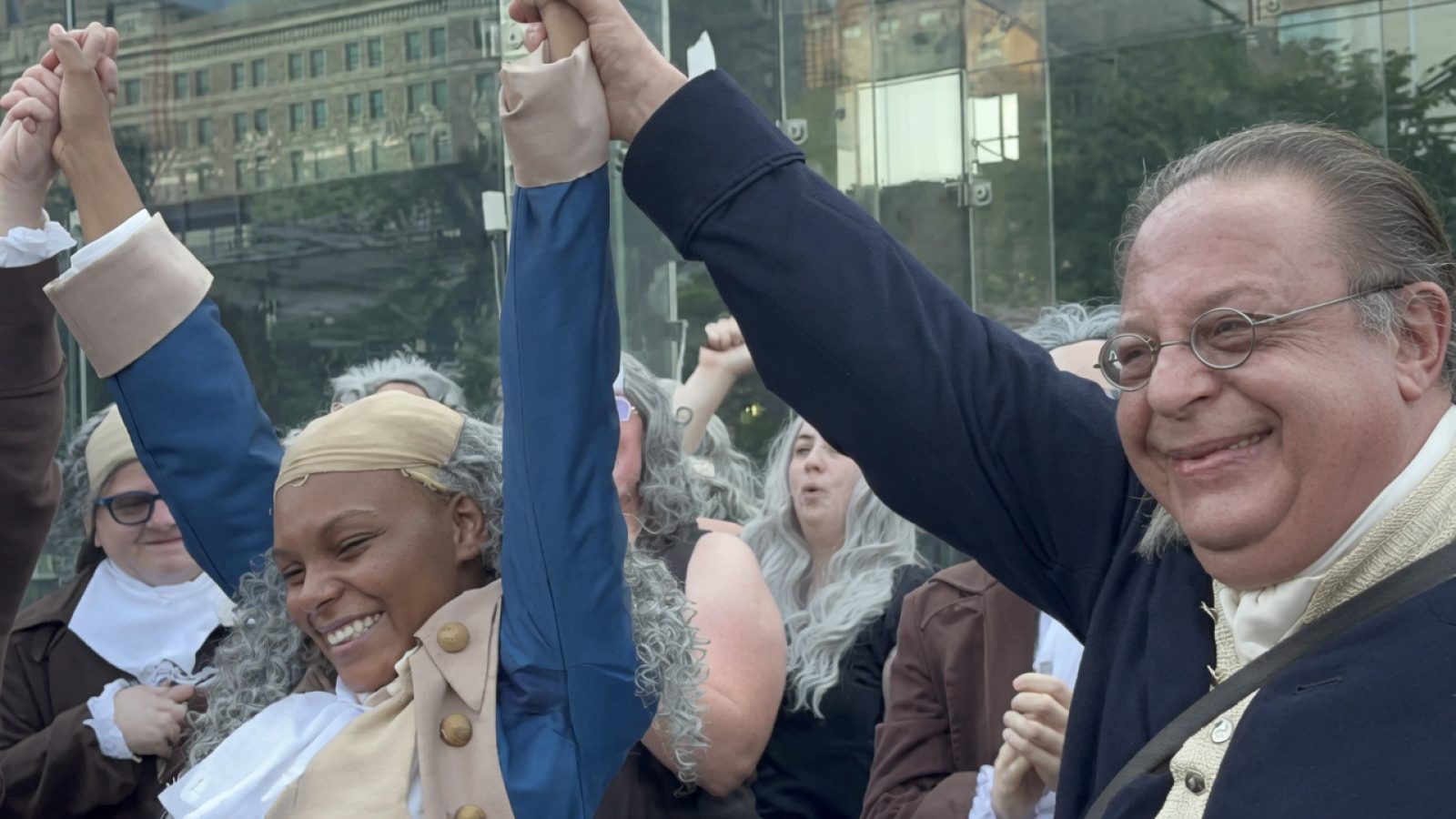
Some observers say a similar conversation is now playing out outside of Hollywood — this time at a Benjamin Franklin look-alike contest in Philadelphia.
Here’s the clip:
The moment quickly sparked reactions online:
How is the left this fucking stupid? I am truly confused at this point at the level of retardation we see daily.
— Matt (@Matthew197315) July 4, 2026
So it wasn’t a look a like contest after all.
— Deion (@0xD24590) July 4, 2026
Welcome to Philadelphia
Land of make & believe 😏— Gary (@Garytiug) July 4, 2026
I watched this 9 times before I realized that wasn't actually Ben Franklin.
— Lyle (@bacon_bagel_) July 4, 2026
KYW reported on the contest:
With a kite in hand, Kiya Burgess, 25, from Philly, beat out all the other look-alikes with her handmade costume and wig.
“I love cosplay. I love dressing up, and I already had this costume, so I just wanted to come and show everyone what I made because I like to sew, and this is one of my first costumes,” Burgess said.
All the look-alikes paid $1 to enter the contest, and Burgess took home the pot of money.
The outcome has fueled a broader debate about how historical figures are portrayed — and whether similar trends seen in entertainment are beginning to show up in other spaces.
Some critics argue that changing or reimagining well-known figures can feel forced, while others see it as a natural evolution of creative expression and participation.
A past opinion piece in Newsweek captured part of that divide:
Sunday’s episode of the HBO hit series “The Last of Us” was supposed to be a great one. All the others have been great thus far, earning the show plaudits from viewers and critics alike as the best video game adaptation of all time. I, too, had been enjoying the show—unsurprisingly; The Last of Us video game is my favorite video game. But I was deeply disappointed to see the latest episode feature a white character from the game, Maria, played by a Black actress.
And this despite being Black myself. I simply object to using the race of an actor as a sign and standard for what constitutes progress. It’s an insult to my community—both to the long-fought struggle for representation and to the recent successes on that front.
Think about it: Disney made not one but two “Black Panther” films. “Black Panther,” a comic book series about the (Black) leader of the most powerful and wealthy nation in the world, was brought to the big screen on two separate occasions—something that would have seemed like a pipe dream to Black people in the 60s. That was some serious progress.
Yet after that massive milestone, Disney decided that what we needed was the token representation of palette switching, announcing a Black Ariel in their live action remake of “The Little Mermaid,” out in May of this year.
We are told our little sisters are jumping for joy across the nation because of this, that Black moms are telling their children it’s so great that Disney gave us this amazing bounty of mana from on high. Videos across the internet show little Black kids celebrating that “a princess looks like me” as if that’s some kind of gift.
The discussion highlights an ongoing cultural divide over how history, identity, and representation intersect — both on screen and beyond.
Here’s additional commentary:
What are your thoughts?


Join the conversation!
Please share your thoughts about this article below. We value your opinions, and would love to see you add to the discussion!