

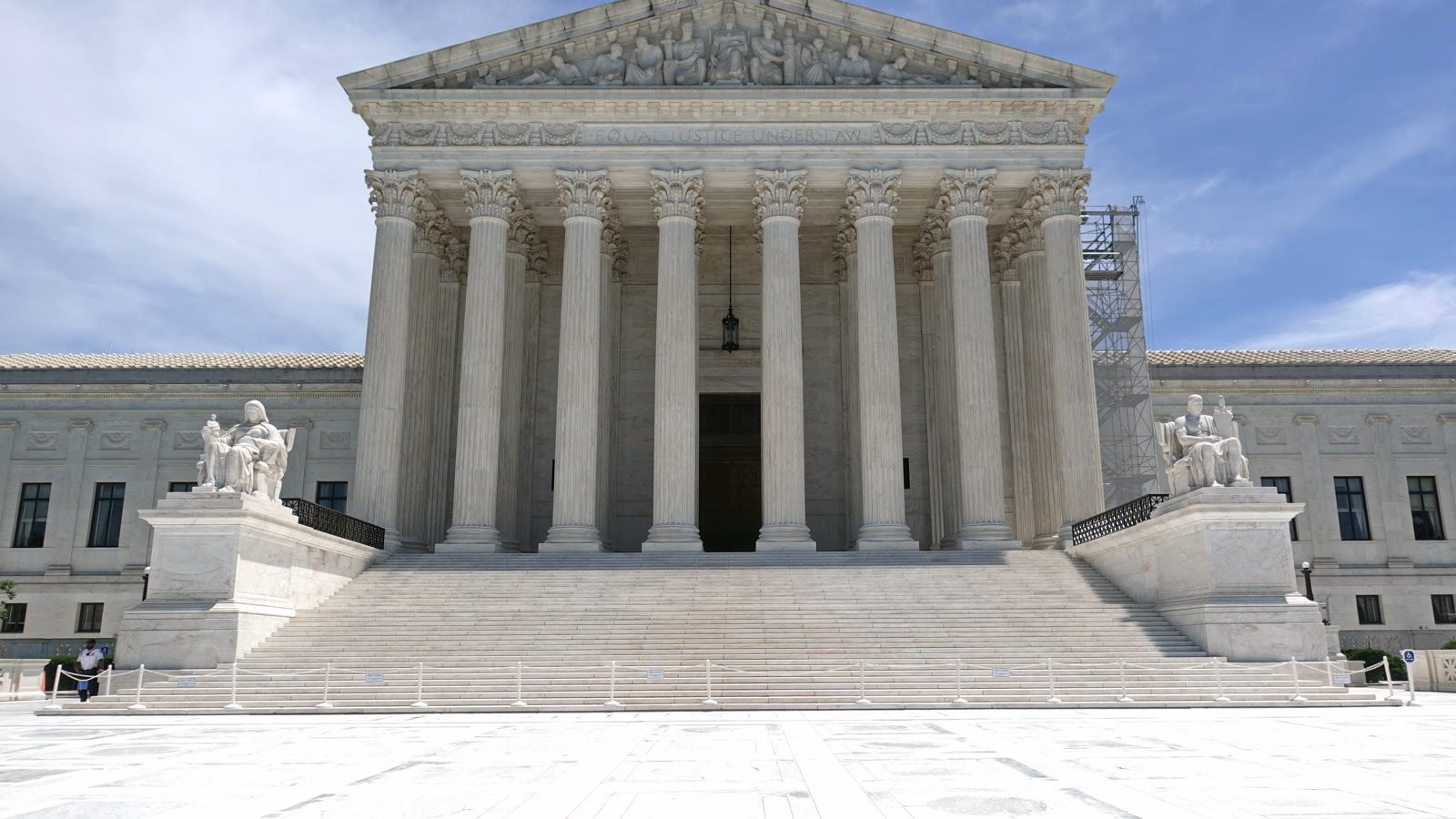
The Supreme Court handed down a decisive win for federal enforcement on June 4, 2026, ruling 8-1 against AT&T and Verizon in a fight over how the FCC collects penalties.
Two of the biggest telecom companies in the country tried to shut down the FCC’s forfeiture process on Seventh Amendment grounds. They lost almost across the board.
Chief Justice John Roberts wrote the opinion of the Court. Justice Clarence Thomas was the lone dissent.
The consolidated cases were FCC v. AT&T, No. 25-406, and Verizon Communications v. FCC, No. 25-567.
The first outside read was simple: the Court rejected the constitutional challenge from the two carriers:
The Supreme Court on Thursday rejected a challenge by AT&T and Verizon to the constitutionality of the process that the FCC uses to impose sanctions for violations of federal telecommunications laws.https://t.co/9GLx1uaXdj
— SCOTUSblog (@SCOTUSblog) June 4, 2026
The dispute traces back to FCC forfeiture orders of roughly $57 million against AT&T and about $47 million against Verizon. The agency tied the penalties to alleged failures to protect customer location data.
That is real money and a real accountability question. Cell carriers sit on some of the most sensitive data Americans generate, and the FCC moved to enforce the rules meant to guard it.
The majority held that FCC forfeiture orders under 47 U.S.C. 503(b)(4) do not definitively resolve a company’s legal obligations.
The agency’s factual findings, the Court said, are not conclusive.
The Supreme Court described the Communications Act process this way:
The Communications Act authorizes the Federal Communications Commission to investigate regulated parties for suspected violations of the communications laws. The Commission does so in an administrative process in which no jury is available.
But before the Government can collect a penalty, it must prove its case to a jury in a trial de novo.
AT&T and Verizon (collectively, the carriers) are cellular service providers. Cellular service allows customers, using cell phones connected to the carriers’ networks, to talk, text, and exchange data with one another.
To receive cellular service, the phone must periodically connect to—or “ping”—the nearest cell site in the carrier’s network. Every ping registers the phone’s location.
ADVERTISEMENTCarriers know the locations of their cell sites, so they can be reasonably confident about the location of any given customer’s cell phone at any given time.
Location data, by its nature, implicates serious privacy concerns. But it can also provide significant benefits.
These services, like roadside assistance, require accurate location information; a tow truck is not much good if it cannot find the broken-down car. Access to location data thus enhances the quality of the providers’ service.
That distinction is what saved the process. Because the order itself does not finally decide the case, the Court found no Seventh Amendment violation in how the FCC operates.
But the justices drew a clear line on what comes next. Before the government can actually collect a penalty, it has to prove its case to a jury in a trial de novo.
So the FCC keeps its enforcement tool, and the companies keep their day in court if they want to force one. The agency cannot simply issue an order and treat it as a final bill.
The broader point is that the statutory process survived the constitutional attack:
The Supreme Court says that the statutory schemes allowing the FCC and SEC to impose penalties do not violate the Constitution.
I explain today’s decisions in FCC v. AT&T/Verizon v. FCC and Sripetch v. SEC. pic.twitter.com/We2Xk8HYIv
— Zack Smith (@tzsmith) June 4, 2026
Thomas saw it differently. In dissent, he argued AT&T and Verizon paid under protest after receiving orders they reasonably understood as obligatory.
His point was practical. When a federal agency sends a company a forfeiture order, most companies do not read it as an optional invitation to litigate.
Still, eight justices including the Court’s conservatives sided with the FCC’s authority to run the process. That is the headline result, and it strengthens the federal government’s hand against two corporate heavyweights.
The win lands with the FCC under the President Trump administration, and it keeps Washington’s enforcement machinery intact while protecting the right to a real trial before any money moves.

Join the conversation!
Please share your thoughts about this article below. We value your opinions, and would love to see you add to the discussion!