

Imagine facing Federal crimes for going on a trail you had no clue was off limits.
That’s the case for a mountain runner who went on an unauthorized trail at Grand Tetons National Park.
Michelino Sunseri, a mountain runner, is facing significant fines and possibly time in federal prison after going on a trail off limits.
Still, Sunseri claims he didn’t see any signs that the trail was prohibited for runners.
Fox News reported on the story exclusively:
Picture this: you lace up your shoes, take a breath of fresh mountain air, and hit the trail in the Grand Tetons National Park. You complete a legendary speed record in the world of ultra-running, and fellow runners are celebrating you. Then, you’re slapped with a federal crime.
Sounds like a joke, right? Sadly, it’s real—and it’s happening now to Michelino Sunseri, a 32-year-old bartender and record-setting mountain runner.
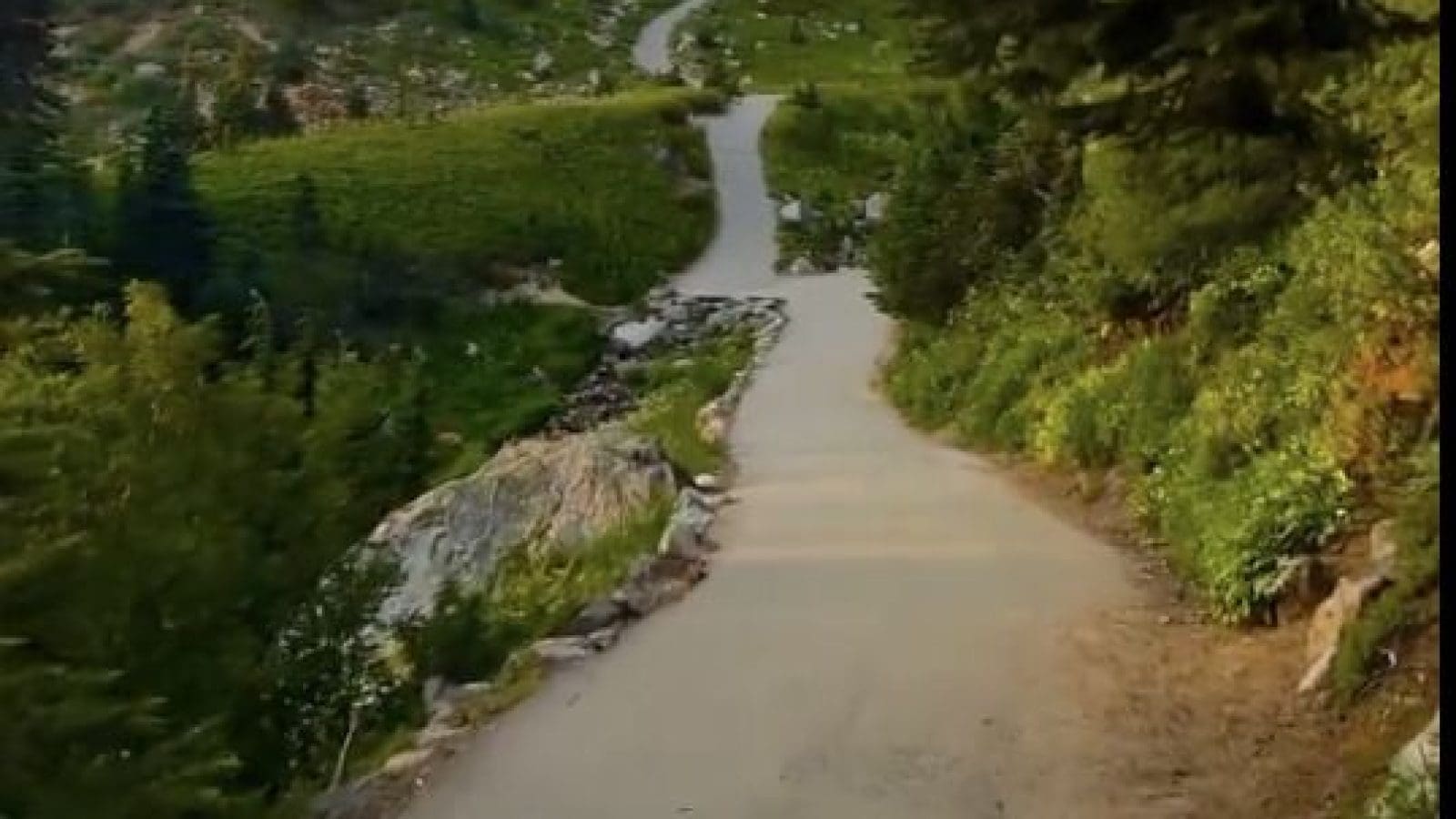
Sunseri ran a trail that hundreds if not thousands before him had done: he took a well-worn trail, one that’s been used for decades by hikers, climbers, and runners alike. There was no gate. No park ranger stopping people. Just a tiny sign about “erosion” half-hidden in the sagebrush. But that was enough for the National Park Service to charge him with a federal crime.
Now, Sunseri is looking at up to $5,000 in fines, a possible six months in federal prison, and worst of all—a permanent criminal record. To add insult to injury, he could also be banned from the Grand Tetons National Park, the mountains he loves, for the next five years.
This isn’t justice. This is overcriminalization.
A sign for Grand Teton National Park with mountains in the background
Sunseri should not be a criminal. He didn’t vandalize or hurt anyone. He ran a trail. He did not damage the trail, and he was open about it. He posted his record-breaking run on a digital app, and that’s when government bureaucrats decided to make an example of him.
When federal bureaucrats act as lawmaker, judge, and jury, there’s little any of us can do. As a former federal prosecutor, I can tell you that the Department of Justice wins 90% of its cases. And too often, there is no common sense, no grace, no understanding. Just raw, unchecked power.
Running the wrong trail in the Grand Tetons is a FEDERAL CRIME!
Facing $5K in fines, a permanent criminal record, and a 5-year ban from the mountains he loves, record-setting runner Michelino Sunseri is in the sights of federal bureaucrats and potentially facing a lifetime… pic.twitter.com/RJwSkERRIo
— Right On Crime (@RightOnCrime) June 6, 2025
Look forward to officially assisting Michelino Sunseri on his pending criminal trial in U.S. District Court
Taking a step back from my docuseries Racing Grand Teton with @CONNORBURKESMTH while the case is ongoing pic.twitter.com/NPYOvkfV65
— Alex Rienzie (@AlexRienzie) March 20, 2025
Here’s what Reason reported:
When the federal government decided to prosecute mountain runner Michelino Sunseri for using an unapproved trail while setting a record for ascending and descending Grand Teton in September 2024, it seemed like a good example of a problem that President Donald Trump decried in an executive order last month: “overcriminalization in federal regulations.” The National Park Service (NPS) ultimately agreed, saying it was “withdrawing its criminal prosecution referral” after “further review” in light of the president’s order. But the Justice Department proceeded with the case anyway, resulting in a two-day bench trial that ended on May 21.
That disagreement, revealed in an email chain that Sunseri’s lawyers obtained through a Freedom of Information Act request, raises questions about whether prosecutors met their constitutional obligation to share information that would have been helpful to the defense. It also casts doubt on whether the Justice Department is complying with the policy described in Trump’s order, which said federal prosecutors should eschew charges involving regulatory crimes unless they have evidence indicating that the defendant knowingly violated the law.
That point always seemed doubtful in Sunseri’s case. For one thing, he publicized his route up and down Grand Teton with a map that he posted on social media. According to the NPS and the Justice Department, that map showed Sunseri had committed a federal misdemeanor punishable by up to six months in jail. And as WyoFile reporter Katie Klingsporn noted during Sunseri’s trial before U.S. Magistrate Judge Stephanie Hambrick in Jackson, Wyoming, the route that the NPS said he should not have taken, known as the “old climber’s trail,” is “a historic trail so well-used that it’s become a skinny singletrack.”
In fact, Cato Institute legal fellow Mike Fox noted in March, “record holders before Sunseri had used the same trail, and tour guides who charge hefty sums frequently lead hikers up the same route. Only two tiny and ambiguous signs inform the public that the trail is off-limits.”
One of those signs, at the top of the trail, said “shortcutting causes erosion.” The other sign, at the bottom of the trail, said “closed for regrowth.” Ed Bushnell, Sunseri’s defense attorney, argued that his client was not “shortcutting,” since he was using a long-established trail. Bushnell added that it was unclear whether the “closed” notice referred to the area around the sign or the trail beyond it. “There is no clear prohibition there,” Bushnell said. “This is not conspicuous signage.”
Given the evidence that Sunseri did not deliberately violate park rules, the criminal referral was puzzling and controversial. As is typical with regulatory crimes, his prosecution was based on the interaction between the Code of Federal Regulations—a body of law so vast and obscure that even experts can only guess at the number of criminal penalties it authorizes (at least 300,000, they think)—and a more general statute enacted by Congress.
ADVERTISEMENTWhat do you think?

Join the conversation!
Please share your thoughts about this article below. We value your opinions, and would love to see you add to the discussion!