
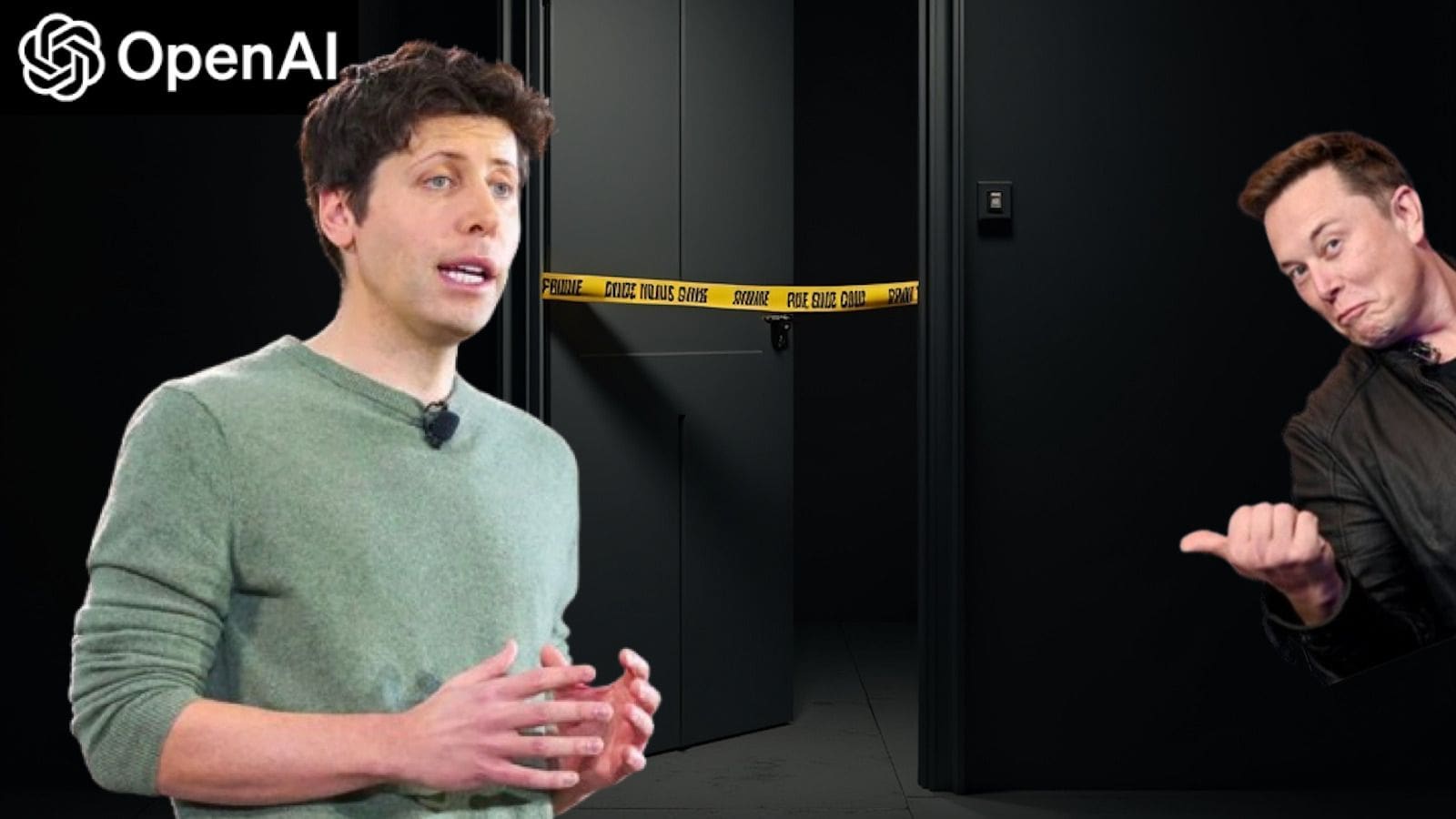
The biggest names in artificial intelligence are racing to get close to President Trump, and one of them just floated an idea that would put the federal government inside the ownership structure of a leading AI lab.
OpenAI CEO Sam Altman is reportedly considering an offer to hand the United States a 5% stake in his company.
There is a catch. Altman reportedly wants his competitors to do the same before he moves.
That single condition tells you how much leverage the Trump administration now holds over an industry that wants federal blessing more than it wants to admit.
OpenAI's Sam Altman wants to negotiate a 5% stake in company for US if competitors agree to key provision https://t.co/smahvpDlWS
— Fox News AI (@FoxNewsAI) July 4, 2026
Fox News reported on July 4 that Altman is weighing a deal, negotiated directly with President Trump, that would give the U.S. a 5% share of OpenAI if rival labs agree to the same approach.
According to the report, which cites the Financial Times, Altman met with Trump, Commerce Secretary Howard Lutnick, and Treasury Secretary Scott Bessent about taking OpenAI public in some form.
He also reportedly met with Sen. Bernie Sanders, who has pushed his own plan for broader public ownership of AI companies.
The proposal would ask competitors like Meta, Google, and Anthropic to also contribute 5% of their companies to the public. OpenAI and Anthropic are both reportedly preparing to go public soon.
So the timing is not an accident. These companies are heading toward massive listings, and the question of who holds a piece of them is suddenly worth a fortune.
OpenAI CEO Sam Altman, in the Financial Times:
"Democratic institutions must not cede their responsibilities to AI labs. The labs develop the technology, but citizens and their elected representatives must make the rules."
Also via the FT: OpenAI has reportedly floated giving… pic.twitter.com/Pk1mjRfJVZ
— The Rundown AI (@TheRundownAI) July 2, 2026
Axios reported that the conversations are very preliminary and nowhere near a signed deal.
It also flagged the obvious strategic angle. A government stake would give Washington a vested interest in decisions about limiting the release of OpenAI’s models.
Axios noted the idea could run through Trump accounts or a similar vehicle, giving American households direct exposure to AI investments. It also pointed to the policy tension sitting underneath the pitch: Washington is already weighing how and when the most powerful OpenAI models should be released.
Critics and some investors questioned whether the plan is more political than practical. Their concern is easy to see: a company that makes the government a shareholder may also be trying to make the government a friend.
And any government stake in an AI lab would likely require an act of Congress, which means nothing happens on a handshake.
The Guardian described the plan as conceptual and early-stage, modeled in part on a public-wealth-fund idea like the Alaska Permanent Fund.
It reported that OpenAI and Anthropic policy papers have floated public or sovereign wealth funds as a way to distribute shares to the public down the road.
The Guardian also noted that the plan would depend on other major AI players joining in, including names like Anthropic, Google, and Meta. That is a massive condition, because none of those competitors has agreed to give up the same slice.
With OpenAI and Anthropic potentially eyeing trillion-dollar valuations, a 5% public slice would be no small thing. Depending on valuation, the number could run into tens of billions of dollars before the public ever sees a dime.
The plan still has three locked doors in front of it: the White House, rival companies, and Congress.
But the direction is clear enough. The most powerful AI companies in the world now understand that the road forward runs through this White House, and they are offering equity to prove it.
The real fight will be over who benefits, who writes the rules, and who gets squeezed out. When the government becomes a shareholder in the very companies it is supposed to police, ordinary Americans deserve to know they are the ones who come out ahead, not the insiders cutting the deal.
This is a Guest Post from our friends over at 100 Percent Fed Up. View the original article here.
Join the conversation!
Please share your thoughts about this article below. We value your opinions, and would love to see you add to the discussion!