

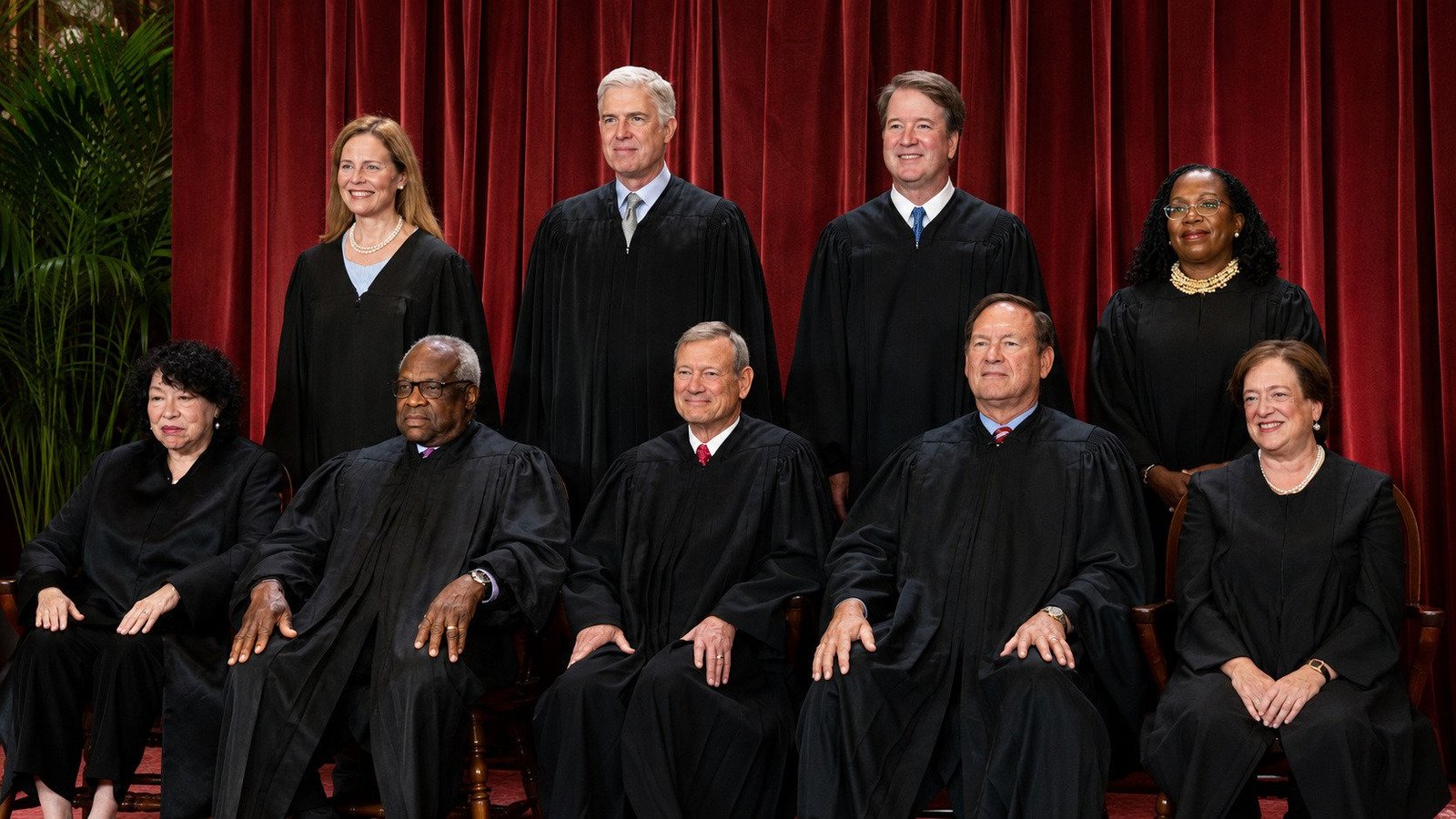
The Supreme Court has ruled against President Trump’s executive order on birthright citizenship.
In Trump v. Barbara, decided June 30, 2026, the Court held that children born in the United States to parents who are here unlawfully or only temporarily are still citizens at birth under the Fourteenth Amendment.
The vote split the conservative wing wide open.
Chief Justice John Roberts wrote the opinion and was joined by Justices Sonia Sotomayor, Elena Kagan, Amy Coney Barrett, and Ketanji Brown Jackson.
🚨 BREAKING: The US Supreme Court has BLOCKED President Trump’s executive order barring birthright citizenship for anchor babies and children of illegals
Democrats will now RAMP UP their facilitation of the invasion of our country.
An absolute TRAVESTY.
Roberts and Barrett… pic.twitter.com/prXrakhArE
— Nick Sortor (@nicksortor) June 30, 2026
That lineup is the headline. Roberts and Barrett crossed over to side with the three liberal justices and hand conservatives a major defeat on one of President Trump’s signature immigration moves.
The official Supreme Court opinion says the question presented was whether the Constitution guarantees citizenship to children born in the United States to parents who are unlawfully or temporarily present in the country.
The Court’s answer was yes. The syllabus states that those children are subject to the jurisdiction of the United States and are citizens at birth under the Fourteenth Amendment’s Citizenship Clause.
The opinion also says the executive order used words like mother, father, lawful, and temporary, while those words are absent from the Citizenship Clause itself and its text.
The case reached the Court before judgment from the First Circuit after a district court provisionally certified a nationwide class of children covered by the order.
The lower court had blocked enforcement of the order nationwide, and the Supreme Court affirmed, keeping that defeat in place for the Trump administration.
President Trump issued Executive Order No. 14160, titled Protecting the Meaning and Value of American Citizenship, on January 20, 2025, his first day back in office.
The order said certain children born in the U.S. would not qualify for citizenship if the mother was here unlawfully or only on a temporary lawful status and the father was not a citizen or lawful permanent resident.
The question before the Court was whether the Constitution guarantees citizenship to those children. The majority said yes.
The Court ruled that children born here to parents unlawfully or temporarily present are subject to the jurisdiction of the United States, and therefore citizens at birth under the Citizenship Clause. It affirmed the lower court.
🚨 JUST IN: Justice Clarence Thomas SLAMS the Supreme Court decision strike down President Trump's birthright citizenship executive order
Thomas writes that the 14th Amendment "was enacted in the wake of the Civil War with the ONE pervading purpose of securing equal citizenship… https://t.co/KHTpEHAGPX pic.twitter.com/evSUjB8pqO
— Nick Sortor (@nicksortor) June 30, 2026
The White House order described citizenship as a priceless and profound gift and argued that the Fourteenth Amendment has never extended citizenship universally to everyone born inside the United States under every immigration circumstance.
It directed federal agencies not to issue citizenship-recognition documents to covered children born more than 30 days after the order’s signing date on January 20, 2025, across federal documentation systems.
The covered categories included children whose mothers were unlawfully present, or lawfully but temporarily present, when the father was not a U.S. citizen or lawful permanent resident.
The order also said it did not affect children of lawful permanent residents, narrowing the fight to illegal-alien and temporary-status birthright citizenship documentation. That was the policy line at stake.
That was the line President Trump tried to draw. The Court just erased it, at least under the majority’s reading of the Citizenship Clause and federal immigration law.
Roberts delivered the opinion of the Court joined by Sotomayor, Kagan, Barrett, and Jackson.
Jackson filed a concurrence, joined by Sotomayor for the introduction and Part I.
Justice Brett Kavanaugh concurred in the judgment and dissented in part.
Justice Clarence Thomas dissented, joined by Justice Neil Gorsuch. Justices Samuel Alito and Gorsuch also filed their own dissents.
BREAKING: The Supreme Court has ruled that the children of illegal aliens and foreign nationals born in the U.S. count as American citizens.
Roberts and Barrett joined all the liberals.
Disgusting. pic.twitter.com/FStIm0J3R3
— Greg Price (@greg_price11) June 30, 2026
The syllabus made the majority’s reasoning plain. It noted that the executive order leaned on words like mother, father, lawful, and temporary, and pointed out that none of those words appear anywhere in the Citizenship Clause itself.
🚨 The Supreme Court ruled that the Fourteenth Amendment guarantees birthright citizenship to children born in the United States, including those whose parents are in the country unlawfully or only temporarily, striking down President Trump's executive order. pic.twitter.com/iDns5rmqJF
— SCOTUS Wire (@scotus_wire) June 30, 2026
For conservatives who have argued for years that automatic citizenship was never meant to cover the children of illegal aliens or temporary foreign nationals, this is a hard loss with a conservative-majority Court delivering it.
Chief Justice Roberts delivered the opinion of the Court joined by Justices Sotomayor, Kagan, Barrett, and Jackson. Kavanaugh concurs in part in the judgment and dissents in part. Thomas, Alito, and Gorsuch dissent.
Read the ruling here: https://t.co/iNncshRMuF
— SCOTUS Wire (@scotus_wire) June 30, 2026
The dissents from Thomas, Gorsuch, and Alito signal this fight is not finished as a matter of law or politics. The argument they raised over how far the Citizenship Clause was ever meant to reach is the same argument millions of Americans have been making, and it now has three justices on the record carrying it forward.
Read the full Supreme Court ruling here: Trump v. Barbara

Join the conversation!
Please share your thoughts about this article below. We value your opinions, and would love to see you add to the discussion!