
Secretary of State Marco Rubio drew a hard line in Bahrain on Wednesday, and it was aimed straight at Tehran.
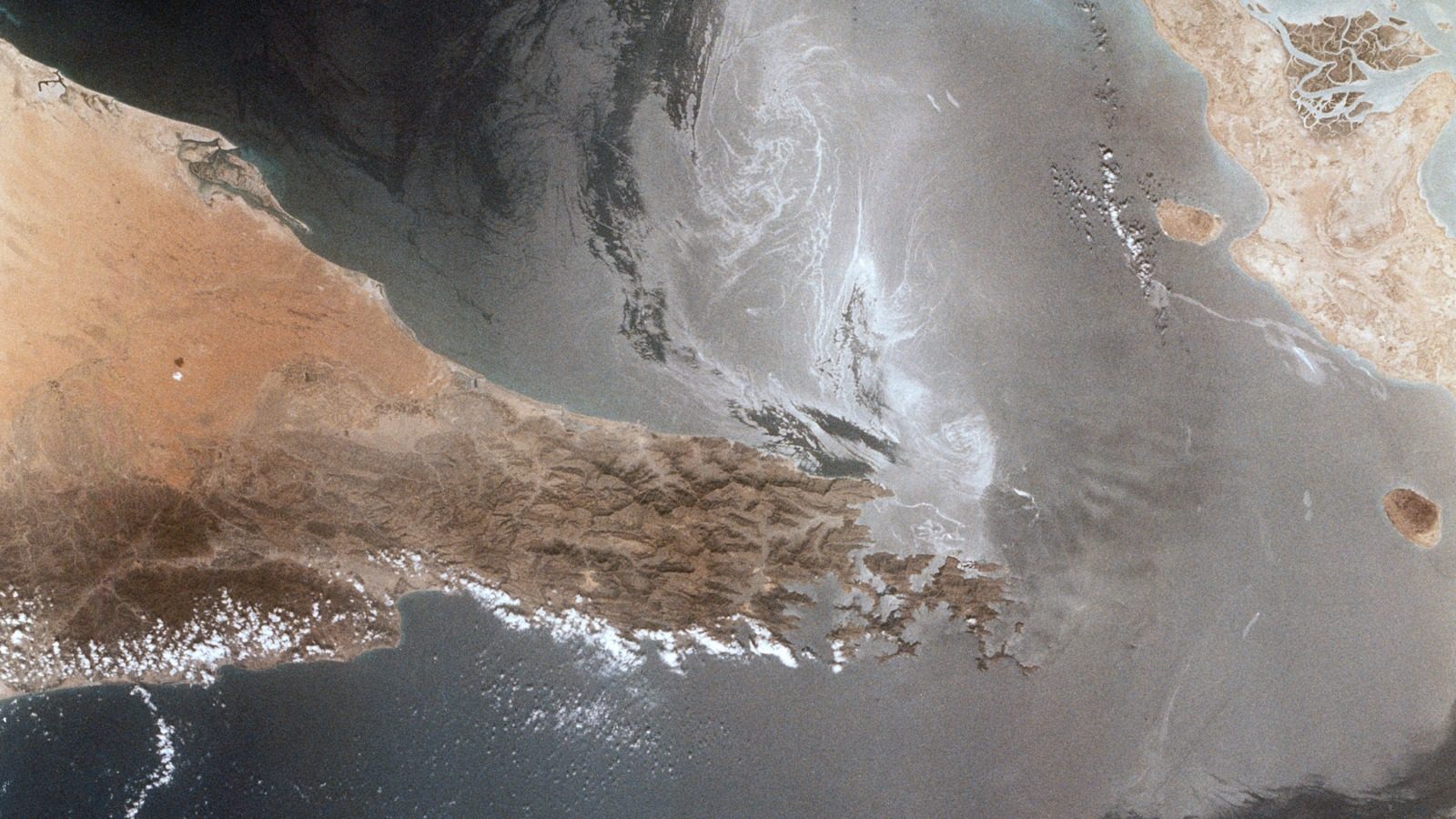
Iran wants to start charging ships to pass through the Strait of Hormuz. Rubio told them to forget it.
Speaking to press on June 25, Rubio said there is “zero support” among Gulf countries for any tolls or fees on the world’s most important oil chokepoint.
He did not leave Iran any wiggle room on the wording either.
Call it a toll, call it a fee, call it a donation, call it a payment for “security” or “environmental” services. Rubio said the United States views all of it as the same thing: a demand for money to use international water.
And the answer is no.
The reason this matters is the number behind it.
The New York Post reports Iran is eyeing a scheme that could pull in roughly $40 billion a year by charging vessels for security and environmental-related services tied to passage through the strait.
Tehran has reportedly been studying fee models from other international waterways to build a framework it could try to impose.
The Post notes that President Trump’s MOU with Iran guarantees toll-free safe passage through the Strait of Hormuz for 60 days while broader talks continue, and that Rubio warned a toll scheme could imperil that emerging peace arrangement.
The report also places Rubio’s warning inside the broader pressure campaign around the Iran talks, where shipping access, nuclear limits, and regional stability are all tied together.
That context turns the toll idea into more than a technical maritime fee. It is a negotiating weapon aimed at global trade.
In short, Iran is trying to bolt a $40 billion tollbooth onto a deal that explicitly promised free passage.
Rubio’s warning about enforcement was blunt.
This would not look like a highway toll where you skip payment and get a ticket in the mail. If a ship refuses to pay, Rubio said, the consequence could be that ship getting shot at or sunk.
That is the real cost of letting Iran turn a global shipping lane into a protection racket.
The official State Department transcript lays out the full position from Rubio’s June 25 Bahrain press remarks after regional meetings with Gulf partners.
He said the United States will not support, tolerate, or allow money to be charged for use of the strait, no matter whether Iran labels it a toll, fee, donation, or service payment for moving ships through a key energy artery.
Rubio also made the security risk plain: enforcing that kind of demand at sea would not be a normal road-toll dispute, it could mean commercial vessels being threatened, fired on, or sunk in one of the world’s most sensitive waterways.
Rubio said Gulf partners share that view, which matters because those countries would live with the immediate fallout if Iran tried to enforce a payment demand at sea and energy markets would feel it quickly.
He stressed that Washington wants diplomacy to work and will give the talks every chance, while drawing a bright line around free passage.
His message carried two conditions at once: Iran cannot get a nuclear weapon, and Iran cannot use Hormuz as a paid checkpoint.
The line he kept returning to was simple: the Strait of Hormuz does not belong to Iran, and it never will.
This is leverage, plainly stated, while the talks are live.
🇺🇸 U.S. Secretary of State Marco Rubio said Washington remains open to negotiations with Iran but insisted any agreement must rule out what he called Iranian transit charges in the Strait of Hormuz and guarantee that Iran never acquires a nuclear weapon.
🔸 Speaking at the… pic.twitter.com/URkmGrH4VQ
— Drop Site (@DropSiteNews) June 25, 2026
Rubio also explained why the United States cannot let even a small version of this slide.
If Iran is allowed to charge for the Strait of Hormuz, the practice spreads.
Rubio warns if Iran is allowed to toll the Strait of Hormuz, the practice could spread to other waterways "like a contagion"
"No country on earth has the right to charge for the use of international water, and that will never be an acceptable condition of any deal"
— Robbie Gramer (@RobbieGramer) June 25, 2026
That is the whole point. Let one regime put a price tag on open water, and every chokepoint on earth becomes negotiable.
The Bahrain remarks did not come out of nowhere.
Rubio has been working the region. The day before, he met UAE President Mohamed bin Zayed in Abu Dhabi to discuss President Trump’s MOU with Iran, full and safe transit through the strait, and regional stability.
Met with UAE’s President @MohamedBinZayed in Abu Dhabi, where we discussed President Trump’s MOU with Iran, efforts to secure full and safe transit through the Strait of Hormuz, and regional stability. I thanked the UAE leadership for their unparalleled support, praised their… pic.twitter.com/J3u6bAKR2W
— Secretary Marco Rubio (@SecRubio) June 24, 2026
Tehran is testing how much it can grab while the talks run. President Trump’s team just told them the answer in front of the entire Gulf.
The 60-day window is supposed to keep ships moving while the talks continue. It is not permission for Tehran to build a cash register in the middle of international water.
The United States holds the cards here. The world’s navies, the Gulf partners, and the open water itself are not Iran’s to sell.
Rubio told Tehran to abandon the fantasy now, and he meant it.

Join the conversation!
Please share your thoughts about this article below. We value your opinions, and would love to see you add to the discussion!