

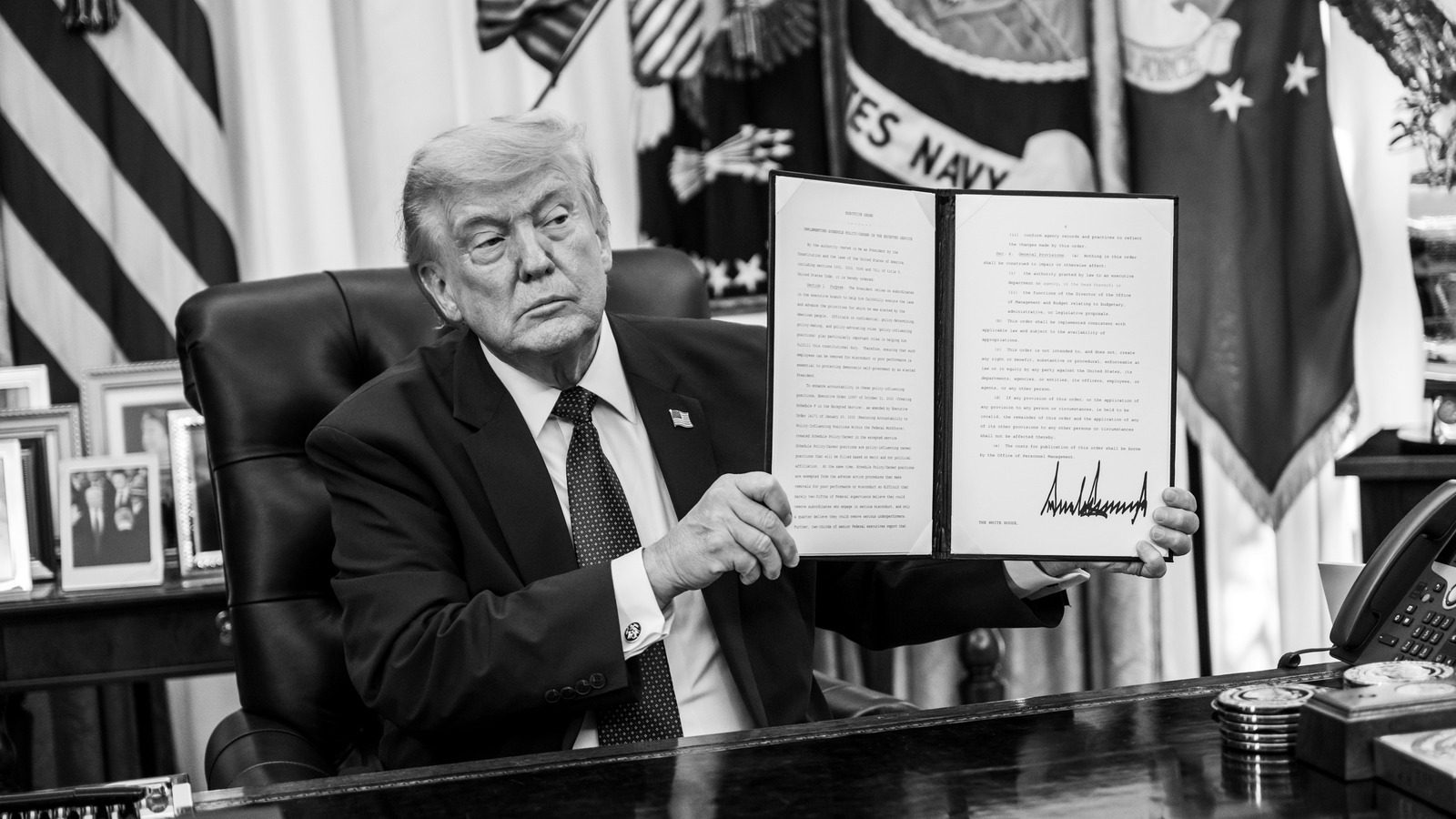
A federal jury in Chicago convicted a suburban Illinois man for posting a violent online video that threatened President Trump and a long list of public officials.
Trent Schneider, 58, of Winthrop Harbor, was found guilty in March 2026 after a three-day trial in U.S. District Court.
The charge was making a true threat in interstate commerce to injure a person. Prosecutors said the threats hit federal and state officials, including judges, doctors, lawyers, and police.
One of his targets was the President of the United States.
Trent Schneider, 58, threatened judges, doctors, lawyers and police in a video posted online last fall. He also said the president "should be executed." https://t.co/SM7Ppp0pta
— Chicago Sun-Times (@Suntimes) March 27, 2026
The DOJ said Schneider posted the Instagram video on October 21, 2025.
According to prosecutors, he said people should die, said he would get guns, and said President Trump should be executed.
The same day he posted the video, DOJ said, Schneider showed up at the Lake County courthouse and told a judge and others he would burn the courthouse down.
That is the part that makes the sentencing ceiling so hard to accept. Prosecutors described public threats, gun language, execution language, and a courthouse threat in the same story, then took it through a full federal trial before the jury returned a conviction in Chicago after three days of testimony and arguments in court.
The conviction carries a maximum of five years in federal prison. DOJ said a sentencing date had not yet been set.
The punishment phase is still ahead. The statutory cap is already visible: five years.
For a threat case involving President Trump, public officials, guns, death language, and a courthouse, that ceiling feels shockingly small.
The case did not start with federal agents stumbling onto the post. It started with a citizen who saw something and said something.
CWBChicago reported that a concerned citizen in Florida spotted the video and reported it to authorities.
The outlet reported that the Secret Service tracked the post to Schneider’s home near the Wisconsin border, where agents and local police saw cameras mounted on tripods in the driveway.
Prosecutors linked Schneider to the Instagram account through subscriber records and a facial comparison with his Illinois driver’s license photo, according to CWBChicago.
The report also said he posted multiple variations of the video and graphics in the days that followed, some geotagged to Trump Tower’s location in Chicago. That matters because prosecutors were not relying on one stray sentence stripped from context or one isolated angry outburst online.
The Secret Service Chicago Field Office investigated alongside the FBI Chicago Field Office and local law enforcement.
At trial, the defense leaned on an unusual argument.
The Chicago Sun-Times reported that defense attorney Michael Leonard told jurors Schneider was a major Trump supporter and questioned whether the comments amounted to a true threat.
Assistant U.S. Attorney Paige Nutini argued the words were clearly and unmistakably an intent to commit violence, the Sun-Times reported.
The jury agreed with the government.
The Sun-Times also reported that U.S. District Judge Sharon Johnson Coleman had not committed at verdict time to keeping Schneider in custody pending sentencing, and that he had already been held since his November arrest. That made the post-verdict posture unusually tense for a case built around public threats against powerful officials, police, lawyers, doctors, prosecutors, and judges at trial.
That detail matters because the public sees the pattern. Threats are made, agents respond, prosecutors bring the case, jurors convict, and then the punishment window can still look painfully narrow.
For ordinary Americans, the defense argument only sharpened the point: political affinity does not erase the seriousness of words about guns, death, execution, and public officials.
His behavior in court before that arrest set the tone for the case.
Toward the end of his court appearance Monday, Trent Schneider told Judge Jeffrey Gilbert, "Thursday, you would have all your facts straight," and asked if he could get an apology by then. https://t.co/EPrfImBZU9
— ABC 7 Chicago (@ABC7Chicago) November 4, 2025
Threatening to execute the President is not protected speech, and a federal jury just made that clear.
The system worked the way it should here. A citizen flagged a violent video, the Secret Service and FBI ran it down, and twelve jurors looked at the evidence and convicted.
Now Schneider waits to learn his sentence.
But if the maximum is five years for threats like this, Americans are right to ask whether the law is taking political violence seriously enough before someone actually pulls a trigger.

Join the conversation!
Please share your thoughts about this article below. We value your opinions, and would love to see you add to the discussion!