

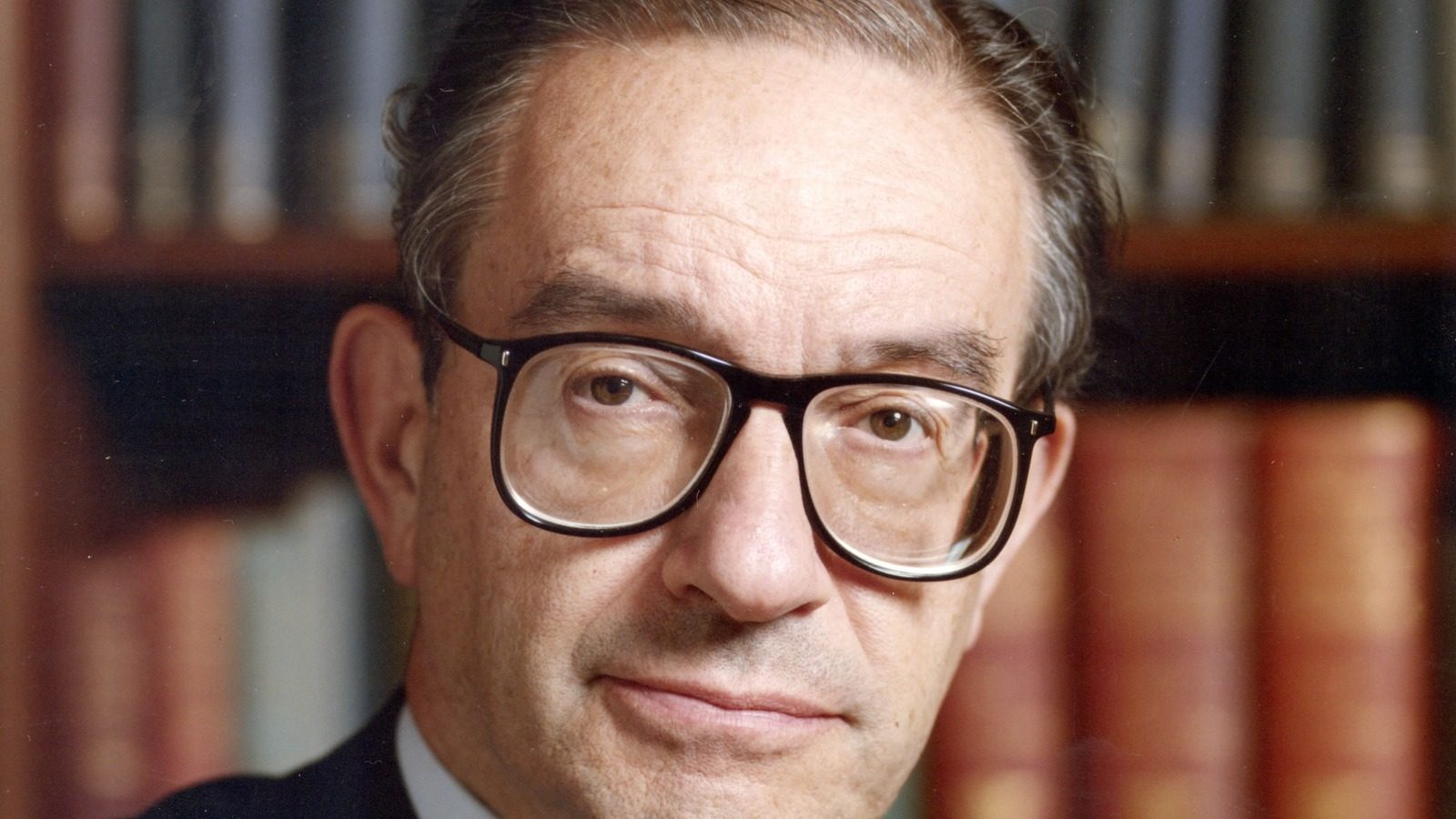
Alan Greenspan, who ran the Federal Reserve for nearly two decades and became the most recognizable central banker in the world, died Monday, June 22, 2026, at age 100.
His wife, NBC News correspondent Andrea Mitchell, confirmed the death.
The longtime Fed chairman was one of those rare Washington figures whose name broke out of the policy world and became a shorthand for the markets themselves.
For years, Wall Street watched his every word like it was scripture.
BREAKING: Alan Greenspan, the influential economist who served as Federal Reserve chairman under four presidents, dies at 100. https://t.co/CBpcxndSOs
— NBC News (@NBCNews) June 22, 2026
Greenspan was appointed by President Ronald Reagan in 1987 and stayed through Reagan, President George Herbert Walker Bush, Bill Clinton, and George W. Bush before leaving in 2006.
His tenure covered the 1987 stock-market crash, the long 1990s expansion, the dot-com bubble, the September 11 attacks, and the early-2000s downturn.
Through all of it, Greenspan earned the nickname Maestro and the reputation of a man who could steer the entire economy with a few careful words.
The Federal Reserve marked his passing with an official statement that treated him as one of the defining figures in the institution’s history. The Fed identified him as the 13th Chairman of the Board of Governors and emphasized that he held the post from 1987 through 2006.
The statement credited Greenspan with guiding the central bank through both major economic expansions and periods of serious stress. It also pointed to price stability, institutional credibility, and his analytical discipline as central parts of his legacy.
That official tribute matters because Greenspan’s influence was bigger than one policy cycle. The Fed he left behind was more visible, more closely watched, and more central to the daily psychology of markets than the institution he inherited.
The Fed also extended condolences to Mitchell and the family, underscoring that Greenspan helped define modern central banking.
Before the Fed, Greenspan chaired the Council of Economic Advisers under President Gerald Ford.
He remained one of the country’s loudest economic voices for years after leaving Washington.
He was also famous for talking in riddles. His deliberately fuzzy Fed-speak became a running joke in Washington, and even his admirers struggled to decode him in real time.
#RIP Alan Greenspan …
Biden 6-7-2006:
"It's a little daunting to have you before this committee, someone of your stature. You yourself once said, 'If I turn out to be particularly clear, you probably misunderstood what I said.' Your pronouncements, although seem clear to me" pic.twitter.com/wVH8rjd07U
— Howard Mortman (@HowardMortman) June 22, 2026
That clip captures the Greenspan act perfectly. Lawmakers treated him with near reverence while admitting they had no idea what he had just said.
One phrase did land clearly. In 1996 he warned about “irrational exuberance” in the markets, and the line became shorthand for every bubble warning since.
The death confirmation from AP put the cause at complications of Parkinson’s disease, citing Mitchell. AP’s obituary also framed the split-screen legacy: a Fed chairman celebrated for prosperity and market calm, then judged again after the 2007 to 2009 financial crisis.
That second judgment is where the Greenspan story gets harder. Critics have long argued that his deregulatory instincts and faith in self-regulating markets helped set the stage for the excessive risk that eventually blew apart the housing system.
The AP account also highlighted how quickly he moved in moments of panic, including the 1987 crash. That crisis-management style made investors trust the Fed would step in when markets wobbled.
Supporters saw that as steady leadership. Critics saw the beginning of a dangerous expectation that central bankers would always ride to the rescue.
NBC News gave the breaking-news frame from the supplied post: Greenspan was an influential economist who served under four presidents and died at 100. That simple summary is why this news cut across politics, finance, and Washington history all at once.
His chairmanship stretched across Republican and Democrat administrations, which is almost impossible to imagine in today’s political climate. Presidents changed, markets changed, wars and bubbles came and went, but Greenspan stayed in the chair.
The NBC framing also helps explain why the story reaches beyond one man’s death. It closes a generation of economic policy where the Fed chairman could seem more powerful than most elected officials.
That was Greenspan’s strange place in American life: unelected, often hard to understand, and still powerful enough to move markets with a sentence.
ABC News also carried the confirmation, emphasizing Greenspan’s long run at the Fed and Mitchell’s role in confirming the news. ABC’s headline framed him as the longtime Federal Reserve chairman, which is exactly how most Americans who followed markets remember him.
That longevity is the point. Greenspan was not a short-term caretaker or a footnote appointee; he became the face of the central bank across crashes, booms, recessions, and political turnovers.
For conservative readers who have watched easy money distort the economy for two decades, the other side of the legacy is impossible to ignore.
Greenspan’s low rates and his willingness to ride to the rescue when markets wobbled set expectations that never really went away.
Market-watchers connect that mindset to the later era of aggressive intervention, including quantitative easing.
To be precise, QE began after Greenspan left the Fed.
His rescue-era playbook helped clear the ground for the central bankers who later took that interventionist approach even further.
🇺🇸 Alan Greenspan, former Federal Reserve Chair, has passed away at the age of 100.
He is often credited with laying the groundwork for the QE era.
He led the Fed from 1987 to 2006, steering U.S. monetary policy through the 1987 crash, the dot-com bubble, 9/11, and the early… pic.twitter.com/hmV1JZCcul
— CryptoGoos (@cryptogoos) June 22, 2026
That tension defines how history will read him. The Maestro who presided over a booming decade is also the man whose easy-money instincts critics never stopped questioning.
Both things can be true, and at 100 years old, Alan Greenspan lived long enough to hear the full debate.

Join the conversation!
Please share your thoughts about this article below. We value your opinions, and would love to see you add to the discussion!