

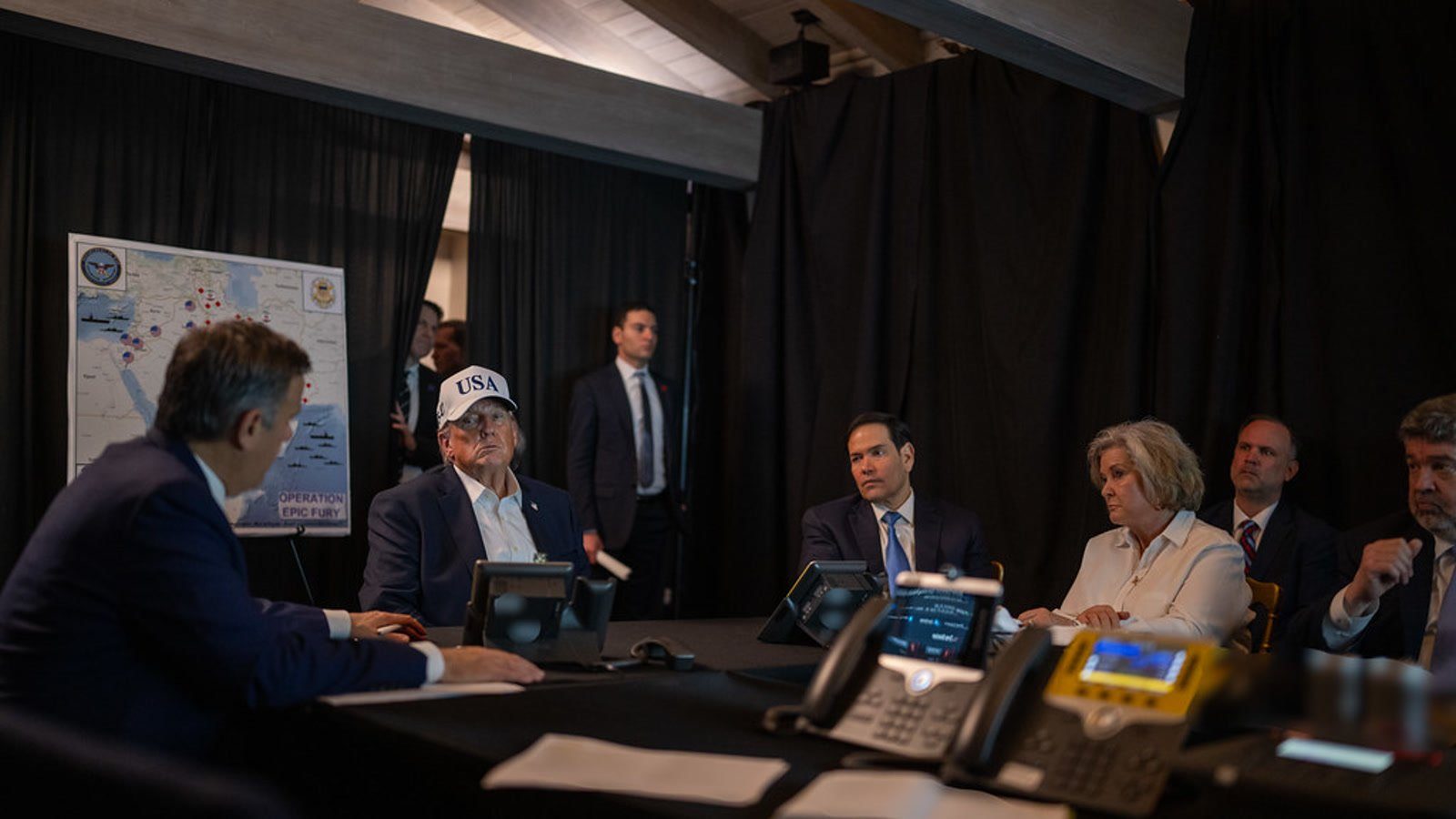
Iran’s foreign minister has now described, in his own words, what it was like to be inside Ali Khamenei’s compound on February 28 when the strike came.
The detail he gave does not help Tehran. It helps the case that the United States and Israel hit exactly what they aimed for.
Abbas Araghchi told Lebanon-based, Hezbollah-backed Al Mayadeen in an interview that aired June 4, 2026 that he was in Khamenei’s office when the former supreme leader was killed in the joint U.S.-Israeli strike.
Fox News Digital reported the account on June 7.
What stood out was how Araghchi described the damage.
The original Al Mayadeen interview is where Araghchi gave the account that later drove the Fox report.
The wider conflict has not gone quiet since then, either. Israel-focused analysts were still documenting another heavy week of strikes tied to the same regional fight:
Weekly Report – Israeli Air Force Airstrikes in Lebanon (June 1–7, 2026)
Between June 1 and June 7, the Israel Defense Forces (IDF) conducted 436 airstrike waves across Lebanon. Operations were concentrated primarily in southern Lebanon and in areas both south and north of the… pic.twitter.com/6XDyXjdGpa
— Israel-Alma (@Israel_Alma_org) June 8, 2026
According to Araghchi, the building where they were sitting was targeted, but the wing he occupied remained intact.
The office area was hit. He walked out of the rubble.
That is not a story about a building flattened at random.
That is a story about a strike that reached one specific part of a hardened regime compound and left another part standing.
APA reported the same core account from the interview on June 4, including Araghchi’s claim that he had returned from Geneva negotiations and gone to Khamenei’s office at 9 a.m. Saturday to present his report.
LaPresse also reported Araghchi saying he emerged from the rubble thinking about whether Khamenei himself had been targeted.
President Trump had already made clear that the United States was part of the operation, working closely with Israel.
Now Iran’s own account is filling in just how precise that operation appears to have been.
Fox News Digital laid out why the new admission matters:
New details from Iran’s top diplomat about the strike that killed Supreme Leader Ali Khamenei provide some of the clearest evidence yet of the precision and strategy behind the joint U.S.-Israeli operation that launched Operation Epic Fury, counterterrorism experts said Sunday.
The account, revealed by Iranian Foreign Minister Abbas Araghchi in a new television interview, also highlights what analysts describe as a defining feature of President Donald Trump’s national security doctrine: using a decapitation strike against a hostile regime while simultaneously creating an off-ramp to end the conflict.
“Well, the building we were sitting in was targeted, but the wing we were in remained intact while the other wing of the building was destroyed,” Araghchi said in an interview that aired June 4 on the Lebanon-based, Hezbollah-backed Al Mayadeen television network.
While Araghchi survived the Feb. 28 strike because he was in a different wing of Khamenei’s compound when the attack occurred, he went on to detail how Khamenei was in his office and how others survived.
“In the Arabic version, Araghchi says he was in a different wing of the compound, briefing another official, and his wing survived while the leader’s office was destroyed,” Mohammed explained.
Counterterrorism expert Dr. Omar Mohammed reviewed the Arabic segment for Fox and said Araghchi’s description points to a specific wing of the compound being targeted, not the whole structure being leveled.
The hardware backs that up.
Fox reported that the daylight strike on Khamenei’s compound involved Israeli jets, 30 precision munitions, and Sparrow air-launched ballistic missiles.
Military officials confirmed the strike killed Khamenei, Defense Minister Amir Nasirzadeh, IRGC Commander Mohammed Pakpour, and several other top security leaders, according to Fox.
That line lands differently now that Iran’s own foreign minister has described how one part of the compound survived while the other did not.
The message in February was straightforward.
The United States and Israel could find the center of the regime, hit it, and offer Tehran a chance to stand down.
Iran chose to escalate instead.
Mojtaba Khamenei has since become Iran’s new supreme leader, and Araghchi is still on camera, still defending the regime’s posture.
That posture was visible again over the weekend after another missile barrage:
Iranian FM Abbas Araghchi Posts Iranian and Lebanese Flags Following Massive Missile Barrage on Israel
In a symbolic move following tonight’s intensive multi-vector missile assault on Israel, Iranian Foreign Minister Abbas Araghchi has posted an image displaying only the… pic.twitter.com/laGaKvN2dU
— Kurdistan 24 English (@K24English) June 7, 2026
Tehran wanted this interview to make Araghchi look like a survivor.
What it actually did was confirm the precision of the operation that killed the man he served.
And it reminded everyone that when President Trump said Iran’s rulers could not hide from American intelligence, Iran’s own foreign minister eventually helped prove the point.

Join the conversation!
Please share your thoughts about this article below. We value your opinions, and would love to see you add to the discussion!