

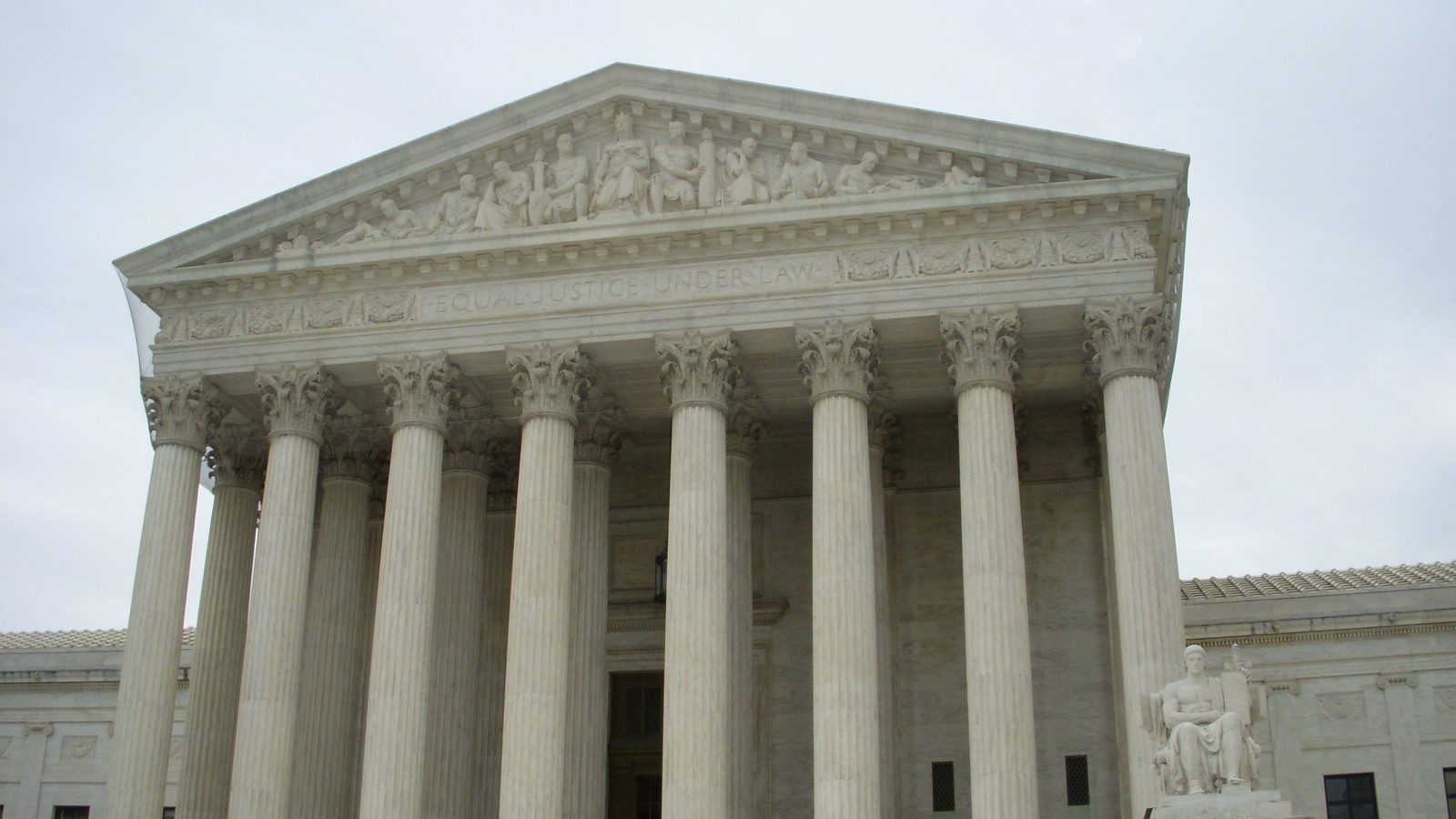
The Supreme Court on Tuesday denied Florida’s request to file a lawsuit against California and Washington over Florida’s allegations that those states are issuing commercial driver licenses to illegal aliens who cannot read English.
The unsigned order gave no reasoning. But Justice Clarence Thomas, joined by Justice Samuel Alito, wrote a sharp dissent warning that the Court is abandoning its constitutional duty to hear disputes between states.
Florida brought the case under the Supreme Court’s original jurisdiction, the only forum where one state can directly sue another. The complaint alleged that California and Washington are defying federal law by handing CDLs to foreign nationals who entered the country illegally and cannot demonstrate basic English proficiency.
Courthouse News reporter Kelsey Reichmann flagged the dissent moments after the order dropped.
NEWS: Justices Thomas and Alito dissent after SCOTUS denies Florida's complaint against California and Washington for issuing commercial licenses to immigrant truck drivers
Thomas calls for more intervention on original jurisdiction cases between states @CourthouseNews pic.twitter.com/Mj5iVeJqpB
— Kelsey Reichmann (@KelseyReichmann) May 26, 2026
The case traces back to a horrific crash on the Florida Turnpike on August 12, 2025.
A truck driver named Harjinder Singh attempted a U-turn across the median, and his trailer blocked both lanes. A minivan could not avoid the wreck, and three people inside were killed.
According to the Thomas dissent, Singh had crossed the Mexican border illegally. After the crash, federal FMCSA testing found Singh could not correctly answer most verbal questions and could identify only one of four highway signs.
The court order states the denial and then includes Thomas’s dissent laying out Florida’s allegations.
The motion for leave to file a bill of complaint is denied.
Justice Thomas, with Justice Alito joining, dissented from the denial. Thomas wrote that Florida moved for leave to file a complaint against Washington and California for defying federal law by providing commercial driver’s licenses to illegal aliens who cannot read English.
Thomas said Florida alleged that the result of this practice is illegal-alien truck drivers causing fatal accidents on the road. He pointed to the August 12, 2025 crash involving Harjinder Singh on the Florida Turnpike, where Singh attempted a U-turn across the median and his trailer blocked both lanes of traffic.
The dissent said all three passengers in the minivan died. It also said law enforcement later discovered Singh had crossed the Mexican border illegally and likely could not read the road signs.
That denial means the Court never reached the merits of Florida’s argument. It simply refused to let the case through the door.
Justice Thomas saw that as exactly the problem.
His dissent argued that state-versus-state disputes belong at the Supreme Court because no other court has jurisdiction over them. If the Court refuses to hear the complaint, Florida has nowhere else to go.
The court order also explains why Thomas believed the Supreme Court should have let Florida proceed.
Thomas wrote that after Singh’s crash, Florida sought permission from the Supreme Court to sue Washington and California based on how those states provide CDLs to foreign drivers. Florida claimed the states’ laws are preempted by federal law where they stop licensing officials from asking applicants about immigration status.
The dissent also said Florida claimed the states’ disregard of federal commercial licensing standards amounted to an actionable public nuisance. According to Thomas, Florida argued enforcement data suggested neither state was adequately checking CDL holders for English proficiency.
Thomas stressed that the Supreme Court has exclusive original jurisdiction when one state sues another. He warned that if the Court declines jurisdiction over such a controversy, the complaining state may have no judicial forum in which to seek relief.
The distinction matters here: this case is about commercial driver licenses, not the ordinary licenses some blue states issue to illegal aliens for personal driving. CDLs authorize the operation of 18-wheelers and other heavy commercial vehicles on highways across every state in the country.
Florida was not acting alone. Iowa and 16 other states filed briefs supporting the lawsuit.
Washington Attorney General Nicholas Brown dismissed the case as a political stunt. That framing is convenient for states whose licensing practices are now linked to a fatal crash involving a driver who could not read road signs.
The pattern extends well beyond a single incident. Fox News reporter Bill Melugin has documented a series of deadly crashes allegedly caused by illegal alien truck drivers holding CDLs from various states.
At least four Indian illegal alien truck drivers with CDLs have been arrested for allegedly causing deadly crashes that have killed multiple innocent people in different parts of the country.
Manvir Singh (CA)
Jashanpreet Singh (CA)
Harjinder Singh (FL)
Sukhdeep Singh (IN) pic.twitter.com/2ofd7QYSfp
Tuesday’s order is not a ruling that California and Washington are within their rights. It is a procedural refusal to hear the case at all.

The legal question of whether blue states can issue CDLs to illegal aliens who fail basic English competency remains unanswered.
Thomas and Alito made clear they believe the Court got this one wrong. When the next crash happens, and the pattern suggests it will, the majority will have a harder time looking the other way.

Join the conversation!
Please share your thoughts about this article below. We value your opinions, and would love to see you add to the discussion!