

When Joe Biden had an opportunity to select a Supreme Court justice, he dutifully appeased the far left by nominating Ketanji Brown Jackson.
Critics have decried her controversial positions on various issues, with some noting Biden’s promise to nominate a Black woman as evidence that Jackson was a “DEI” hire.
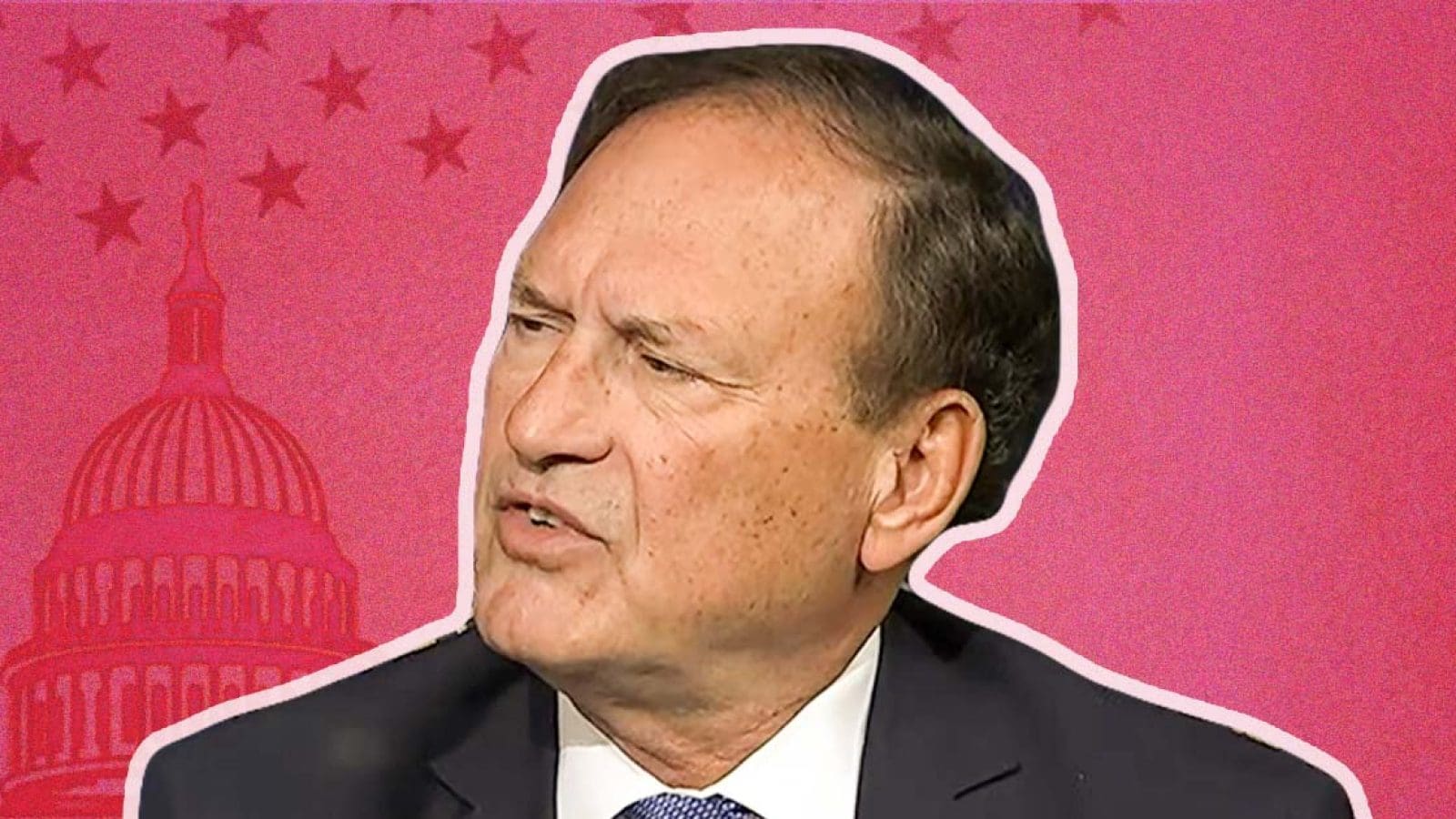
But it was her colleague, Justice Samuel Alito, who had some of the harshest criticism to date after Jackson issued a scathing dissent in response to a recent decision on congressional redistricting.
Here’s what Fox News reported:
In Monday’s order, the high court decided in an unsigned ruling to allow Louisiana officials to quickly move forward with changing their congressional map, which is expected to reshape the state’s congressional representation in favor of Republicans ahead of the midterms.
Alito argued that delaying the judgment of the high court’s 6-3 ruling last month — which significantly narrowed section two of the Voting Rights Act by finding Louisiana’s map was an unconstitutional racial gerrymander — served no practical purpose. Jackson’s reasons for wanting to prolong implementation of the landmark ruling were “trivial at best” and “baseless and insulting,” Alito said.
“The dissent accuses the Court of ‘unshackl[ing]’ itself from ‘constraints,'” Alito wrote. “It is the dissent’s rhetoric that lacks restraint.”
Jackson had warned that the high court’s intervention risked improperly injecting itself into an active election and creating the “appearance of partiality,” pointing to ongoing voting and legal challenges already unfolding in the state.
Legal experts observed the unusually pointed tone of Alito’s response, suggesting it indicated a deeper internal friction. George Washington University law professor Jonathan Turley said the conservative justice appeared to reach a breaking point in responding to Jackson’s criticism.
“Justice Alito had had enough,” Turley wrote. “He noted that her reliance on the 32-day period was a ‘trivial’ objection that put form above substance since no party had asked for reconsideration. It would be waiting for 32 days for no purpose, while the other parties had stated a reasonable and pressing need to finalize the opinion.”
The back-and-forth between justices fueled plenty of social media commentary:
Justices Thomas and Gorsuch join Alito's opinion. No justice joined Jackson in her dissent.
Read the order and opinions here: https://t.co/BwnZZMSY1j
— SCOTUS Wire (@scotus_wire) May 4, 2026
Alito wiped the floor with jackson.
Jackson needs to be removed from scotus. She's wildly unqualified and incapable of performing the necessary duties.
— Alex Krycek (@AlexKrycek1962) May 5, 2026
Omfg
"Justice" K'tanji Brown Jackson adds yet more, of her, by now, trademarked, low IQ, ebonics laden, ignominious, high pitched screechings, to the official record of US Supreme Court proceedings
Justice Alito, who finally reached his breaking point, after enduring 1,405… pic.twitter.com/SHtpwbW20G
— failzero (@failzero29206) May 5, 2026
Here’s the full text from the post above:
Omfg
“Justice” K’tanji Brown Jackson adds yet more, of her, by now, trademarked, low IQ, ebonics laden, ignominious, high pitched screechings, to the official record of US Supreme Court proceedings
Justice Alito, who finally reached his breaking point, after enduring 1,405 straight days of K’tanji’s tortured syntax, and learning disabled legal “logic”, lets the DEI abomination have it with both barrels
And rightly so
Future historians will review this period of US history with horror, and bewilderment, at what we allowed to happen to the highest institutions in the land, while they gaze dumbfounded, at such data as noted in the OPs’ post above, and captured by the attached graph below:
Here’s how The Hill reported it:
The Supreme Court on Monday immediately put into effect its ruling invalidating Louisiana’s congressional map, leaving conservative Justice Samuel Alito and liberal Justice Ketanji Brown Jackson on opposite sides and accusing each other of lacking restraint.
ADVERTISEMENTThe order speeds up the normal 32-day timeline before the justices formally return a case to the lower court.
Some groups questioned if the lower court had jumped the gun in the Louisiana case when it moved quickly to ensure state Republicans would have an opportunity to draw a new map before conducting this year’s election. Technically, the case remained with the justices.
By returning it, the decision clears the way for the state to almost certainly redraw one of the state’s two majority-Black House districts, which would offer a pickup opportunity to House Republicans ahead of November.
In dissent, Jackson said the majority “unshackles itself” from “constraints.” The court should follow the default rule, she insisted.
ADVERTISEMENT

More coverage of the high-court intrigue below:

Join the conversation!
Please share your thoughts about this article below. We value your opinions, and would love to see you add to the discussion!