

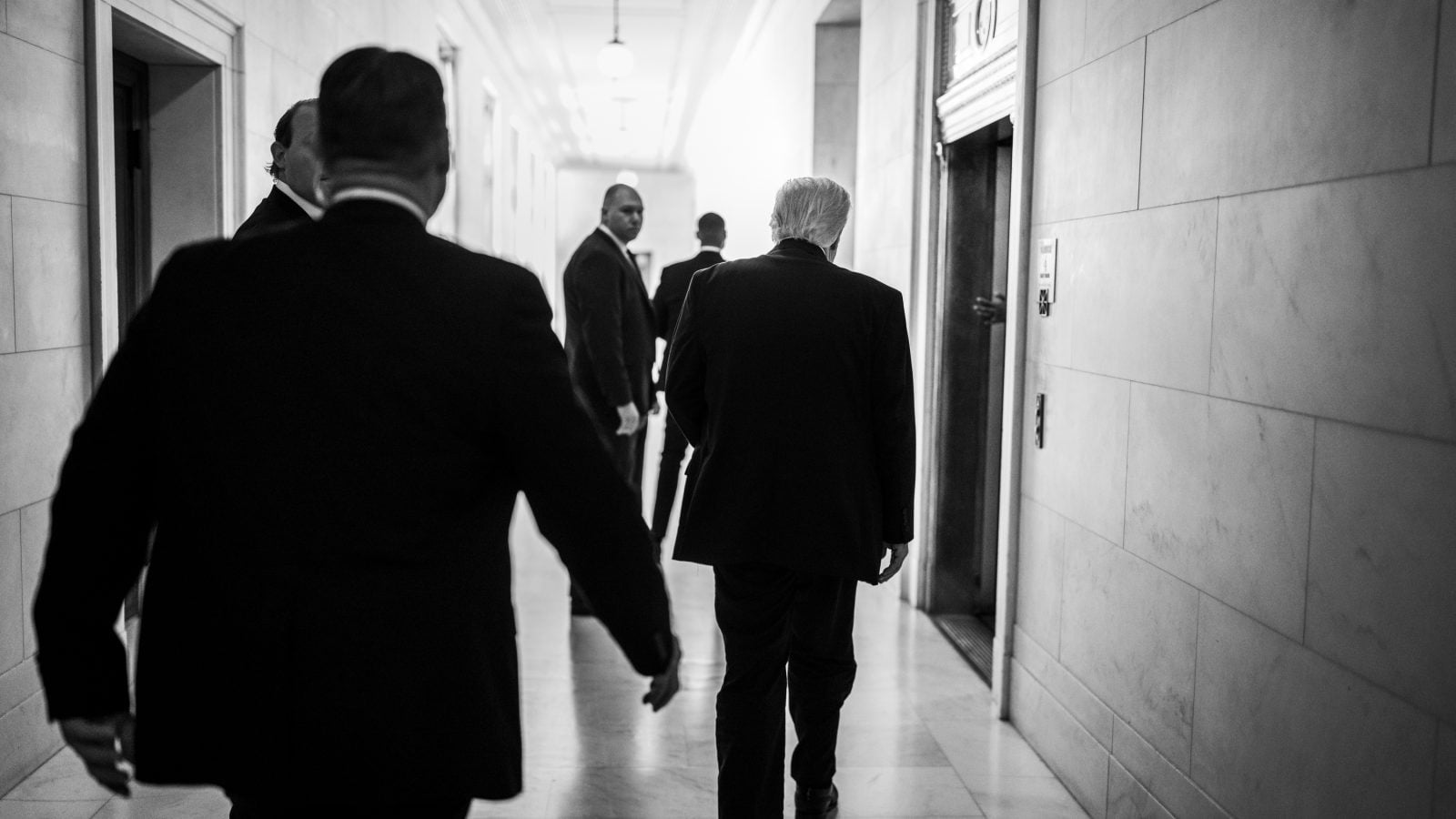
Today, the Supreme Court heard arguments on one of the most important cases of our lifetime — birthright citizenship.
Specifically, SCOTUS is weighing whether or not to uphold President Trump’s executive order restricting birthright citizenship.
This would stop the children of illegal immigrants from automatically being granted U.S. citizenship and end decades of birth tourism, which is growing from places like China and Russia.
And, President Trump had a front row seat for it all!
He made history as the first sitting president to ever attend Supreme Court arguments in-person.
Check it out:
🚨 BREAKING: President Trump has ARRIVED at the Supreme Court to attend oral arguments in the birthright citizenship case
He's the first President in HISTORY to attend oral arguments at SCOTUS
This case is VITAL to our country's future pic.twitter.com/0Sku7DE8o5
— Nick Sortor (@nicksortor) April 1, 2026
Backup here if needed:
Attorney General Pam Bondi and Commerce Secretary Howard Lutnick joined President Trump at the hearing.
The White House shared a photo of President Trump entering the courthouse:
HISTORIC: President Donald J. Trump attends U.S. Supreme Court oral arguments on birthright citizenship, the first sitting president ever to do so. pic.twitter.com/EKdtcekbBb
— The White House (@WhiteHouse) April 1, 2026
After listening to over an hour of oral arguments, President Trump left the Supreme Court and posted this on Truth Social:
We are the only Country in the World STUPID enough to allow “Birthright” Citizenship! President DONALD J. TRUMP
ADVERTISEMENT
President Trump is absolutely right.
But, unfortunately, it appears like the Supreme Court is leaning towards striking down his executive order.
With the notable exception of Justice Alito and Thomas, the majority of SCOTUS justices expressed skepticism at the hearing.
Here’s a summary of today’s oral arguments:
- Case Background: The Court heard arguments on President Trump’s executive order (signed January 20, 2025) limiting birthright citizenship under the 14th Amendment’s Citizenship Clause (“All persons born or naturalized in the United States, and subject to the jurisdiction thereof, are citizens”). The order would deny automatic citizenship to children born in the U.S. to undocumented immigrants or temporary visitors, requiring at least one parent to be a U.S. citizen or permanent resident. It applies prospectively only and has been blocked by all lower courts. Trump attended the arguments in person (a first for a sitting president) but left early.
- Trump Administration Arguments (Solicitor General D. John Sauer): The 14th Amendment’s “subject to the jurisdiction thereof” phrase excludes children of those without full “political jurisdiction” or “ties of allegiance” (i.e., illegal entrants or temporary visitors/sojourners). Relied on original history tied to freed slaves, distinguished (but did not overrule) the 1898 Wong Kim Ark precedent as limited to “domiciled” aliens, and noted the U.S. is an “outlier” among nations granting broad birthright citizenship. Emphasized practical enforcement via federal systems and policy concerns like birth tourism.
- Challengers’ Arguments (ACLU’s Cecillia Wang): The 14th Amendment codifies the English common-law rule of jus soli (citizenship by birthplace), focused on the child’s jurisdiction at birth—not the parents’. Wong Kim Ark confirms this broad rule; the order violates the Constitution, historical tradition, and federal immigration statutes (1940/1952 laws mirroring the 14th Amendment language). Warned of chaos, statelessness risks, and potential for future citizenship stripping.
- Key Justices’ Questions and Comments:
- Conservatives (Roberts, Gorsuch, Barrett, Kavanaugh) and liberals (Kagan, Sotomayor, Jackson) expressed widespread skepticism toward the administration’s narrow reading, probing “domicile” references in Wong Kim Ark, historical debates (little mention of parental status), logistical nightmares (e.g., delivery-room verification, foundlings), and slippery-slope risks of retroactive revocation.
- Chief Justice Roberts: Called the position “quirky” and noted “It’s a new world. It’s the same Constitution.”
- Justice Alito showed some sympathy on modern illegal immigration realities; Justice Thomas appeared most receptive to the government.
- Multiple justices explored deciding on statutory grounds (1952 law) to avoid a broad constitutional ruling.
- Overall Tone and Indications: The more-than-two-hour arguments featured rigorous, bipartisan headwinds for the administration’s position. Justices from across the ideological spectrum highlighted textual, historical, and practical weaknesses. The Court appears poised to reject or sharply limit the executive order—potentially upholding longstanding birthright citizenship via precedent or statute—though a final ruling is expected by early summer 2026.
The Supreme Court is expected to make a final decision this June.
Fox News dove deeper in how today’s hearing went in this clip:
🚨 JUST IN: A majority of the Supreme Court appears poised to strike down President Trump's executive order that ends birthright citizenship for illegal aliens under the 14th Amendment — FOX
Decision expected probably by late June
Don't BETRAY AMERICA, SCOTUS! pic.twitter.com/t30fjddZHH
— Eric Daugherty (@EricLDaugh) April 1, 2026

Join the conversation!
Please share your thoughts about this article below. We value your opinions, and would love to see you add to the discussion!