

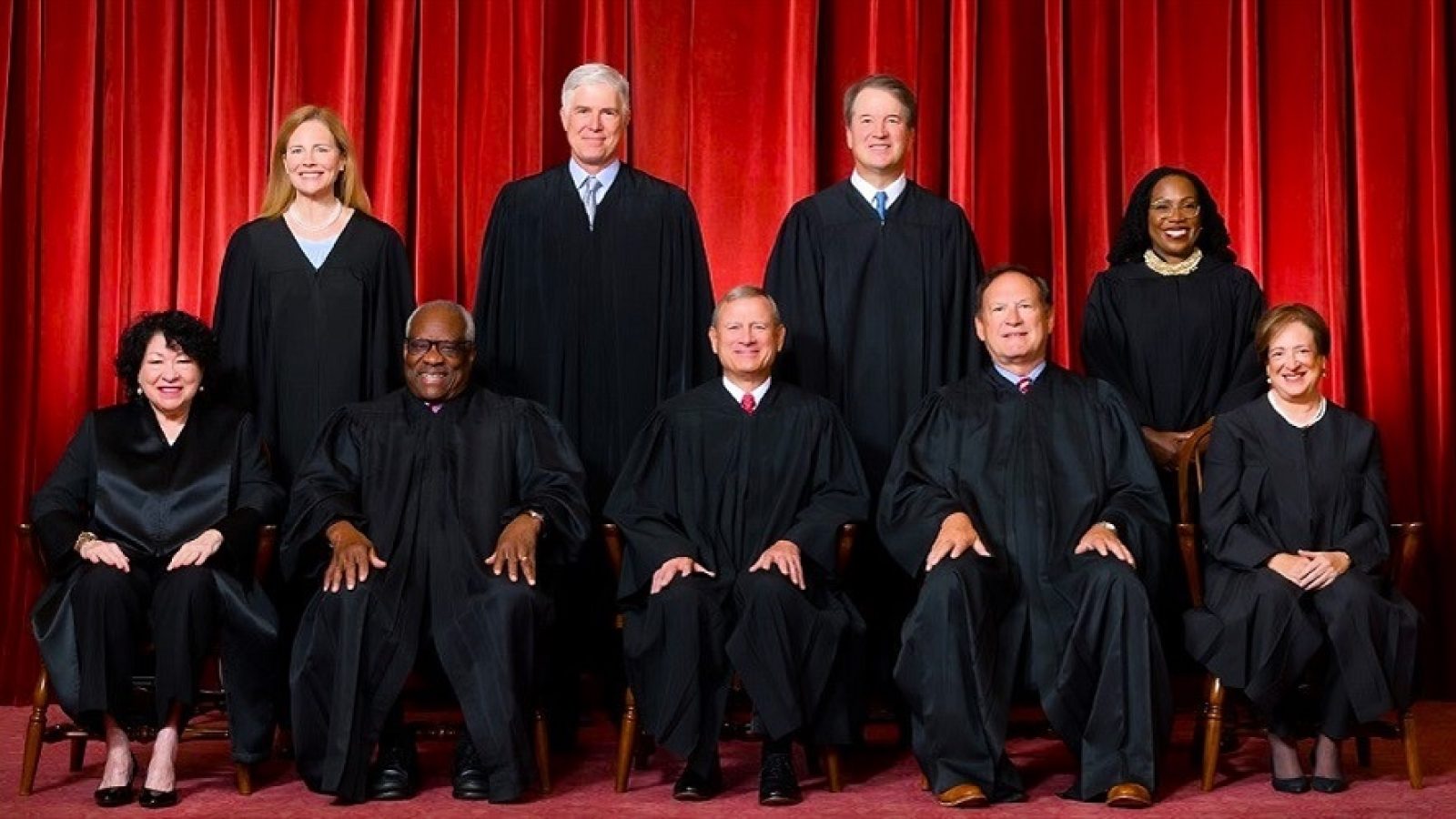
After some major blunders recently the Supreme Court has finally made a right decision.
On Tuesday, The Supreme Court sided with a Christian counselor who sued the state of Colorado for violating her free speech after the state banned conversion therapy.
According to Bible Based, “Christian conversion therapy is a set of practices aimed at helping individuals with same-sex attractions or gender identity issues align with Christian norms, often grounded in biblical teachings.”
The decision wasn’t even close.
The Hill provided an overview of SCOTUS’ decision and what the final ruling was:
The Supreme Court sided with a Christian counselor on Tuesday in her free speech challenge to Colorado’s ban on counselors attempting to change a minor’s sexual orientation or gender identity.
Justice Neil Gorsuch, writing for the 8-1 majority, said lower courts used too lenient a standard in upholding the ban.
The law regulates counselors’ speech in an attempt to silence a certain viewpoint, Gorsuch wrote.
“Fortunately, that is not the world the First Amendment envisions for us,” the justice wrote.
The court’s decision is poised to have ripple effects across the country, with more than 20 states having enacted similar measures. But two of the court’s liberal justices, Elena Kagan and Sonia Sotomayor, signaled that states that write more tailored laws could still prevail.
The court’s other liberal justice, Ketanji Brown Jackson, dissented alone.
Passed in 2019, Colorado’s ban prohibits licensed mental health counselors from engaging in “any practice or treatment” that “attempts or purports to change” a minor’s sexual orientation or gender identity. Critics have described it as “conversion therapy.” Violations can carry $5,000 fines, and counselors can be suspended and stripped of their license.
Kaley Chiles, a Christian and licensed Colorado-based counselor, sued under the First Amendment, arguing the state was trying to control her conversations with patients to suppress disfavored views on LGBTQ rights.
A federal district judge and a divided appeals panel sided with Colorado, agreeing its law regulated not speech, but professional conduct.
ADVERTISEMENTThe Supreme Court sided with Chiles by agreeing the state’s law regulates speech and needs to clear a more stringent constitutional test. The justices sent the case back to the lower courts to apply it.
In defending its law, Colorado pointed to major professional medical associations that suggest conversion therapy is ineffective and can be harmful to minors. The Williams Institute estimates that 698,000 U.S. adults have received conversion therapy, including 350,000 who did so as adolescents.
The Supreme Court ruled 8-1 against a Colorado law banning “conversion therapy” for LGBTQ minors, finding that it violates the First Amendment.
Justice Ketanji Brown Jackson was the lone dissenter.
Follow: @AFpost pic.twitter.com/l1Vflk5lap
— AF Post (@AFpost) March 31, 2026
Read a portion of Justice Kentaji Brown Jackson’s dissent below, per The Hill:
Supreme Court Justice Ketanji Brown Jackson, dissented alone as the Supreme Court sided 8-1 with a Christian counselor on Tuesday in her free speech challenge to Colorado’s ban on counselors attempting to change a minor’s sexual orientation or gender identity.
“To do anything else opens a dangerous can of worms,” Jackson wrote. “It threatens to impair States’ ability to regulate the provision of medical care in any respect. It extends the Constitution into uncharted territory in an utterly irrational fashion. And it ultimately risks grave harm to Americans’ health and wellbeing.”
Any thoughts?

Join the conversation!
Please share your thoughts about this article below. We value your opinions, and would love to see you add to the discussion!