


The Epstein Files Transparency Act has officially been passed by Congress!
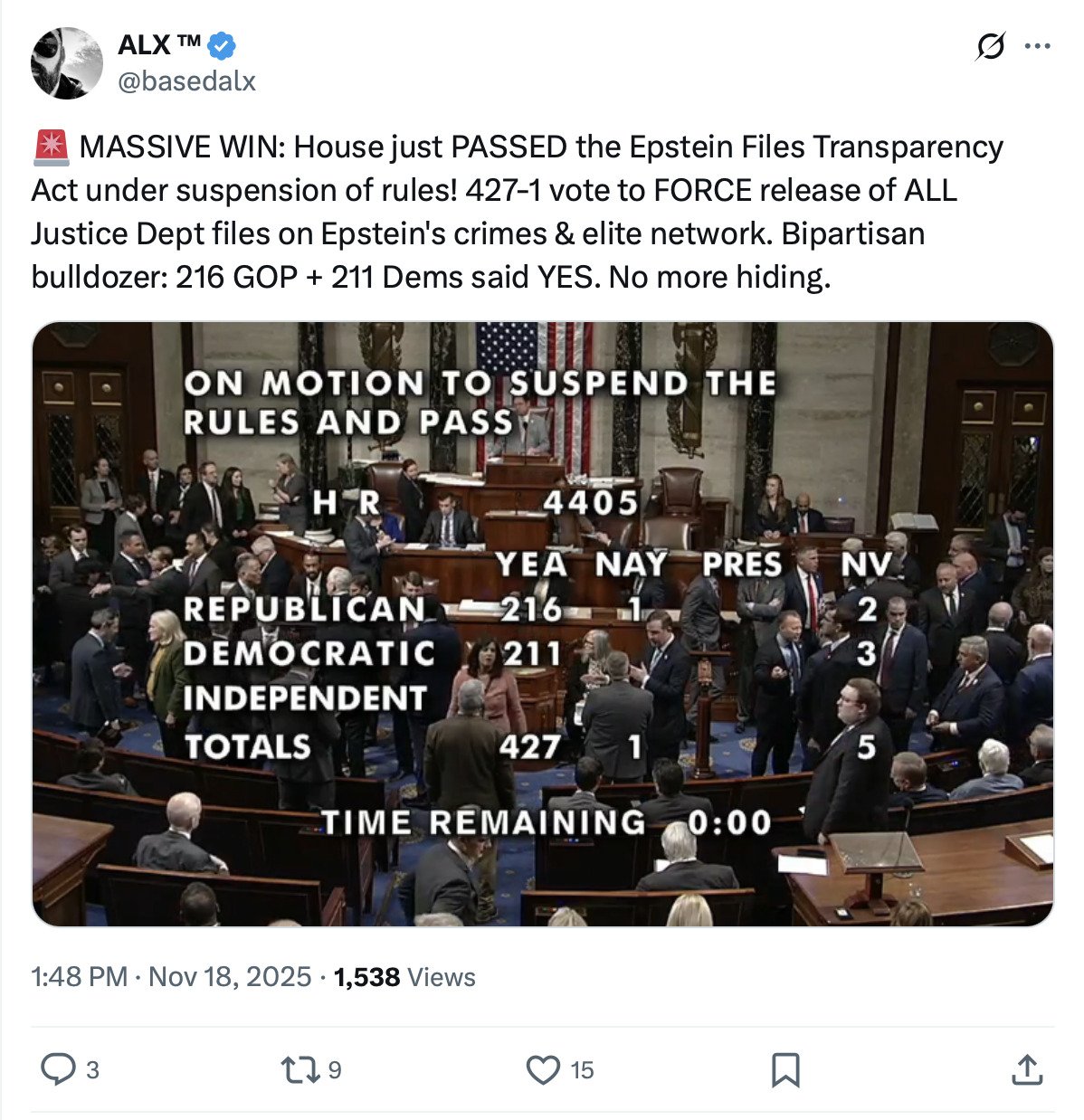
It cleared the House by a vote of 427-1:
🚨 MASSIVE WIN: House just PASSED the Epstein Files Transparency Act under suspension of rules! 427-1 vote to FORCE release of ALL Justice Dept files on Epstein's crimes & elite network. Bipartisan bulldozer: 216 GOP + 211 Dems said YES. No more hiding. pic.twitter.com/1IoggwjkmU
— ALX ™ (@basedalx) November 18, 2025
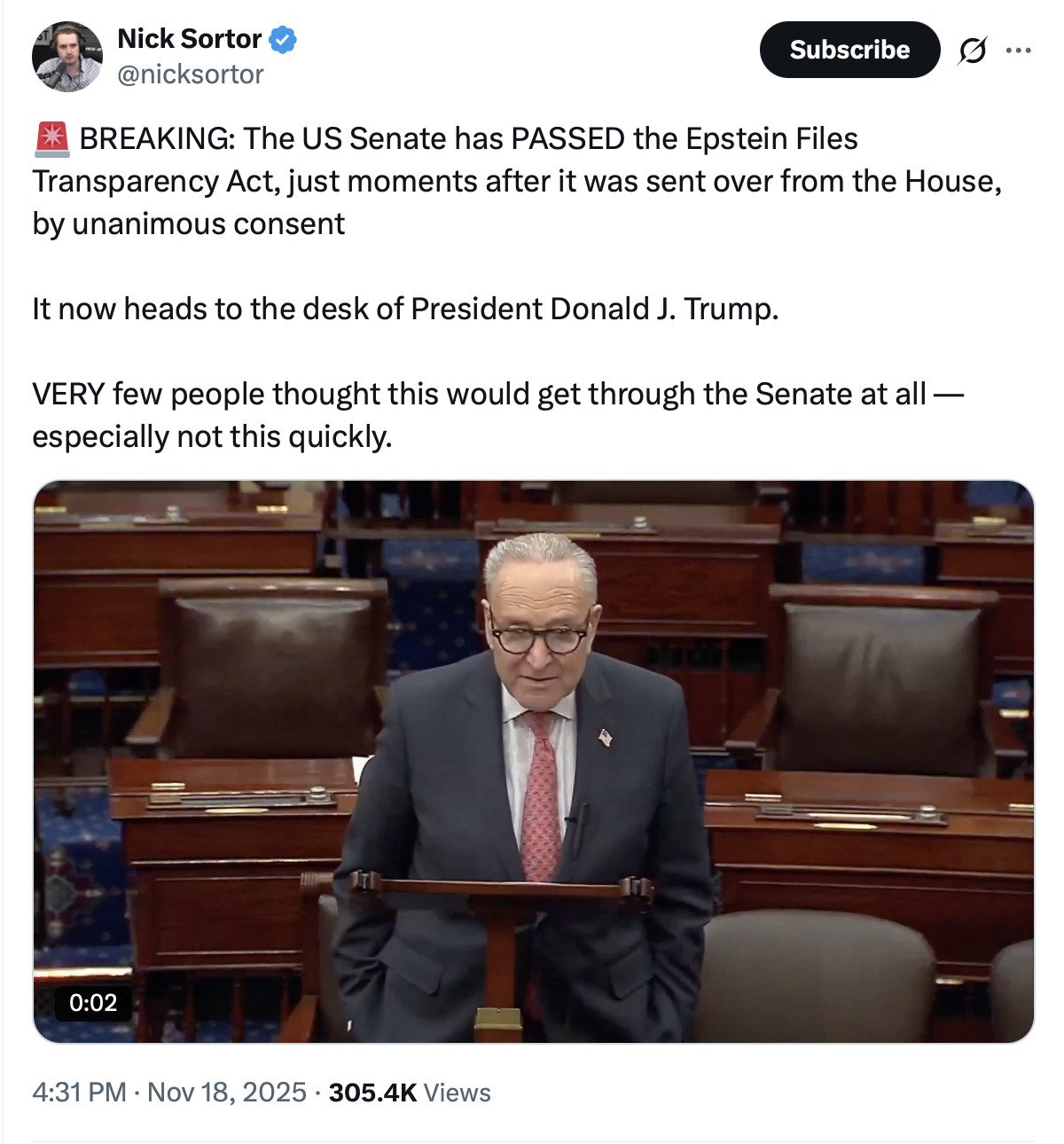
Then it passed the Senate by unanimous consent:
🚨 BREAKING: The US Senate has PASSED the Epstein Files Transparency Act, just moments after it was sent over from the House, by unanimous consent
It now heads to the desk of President Donald J. Trump.
VERY few people thought this would get through the Senate at all —… pic.twitter.com/xzAEHXuaJ4
— Nick Sortor (@nicksortor) November 18, 2025
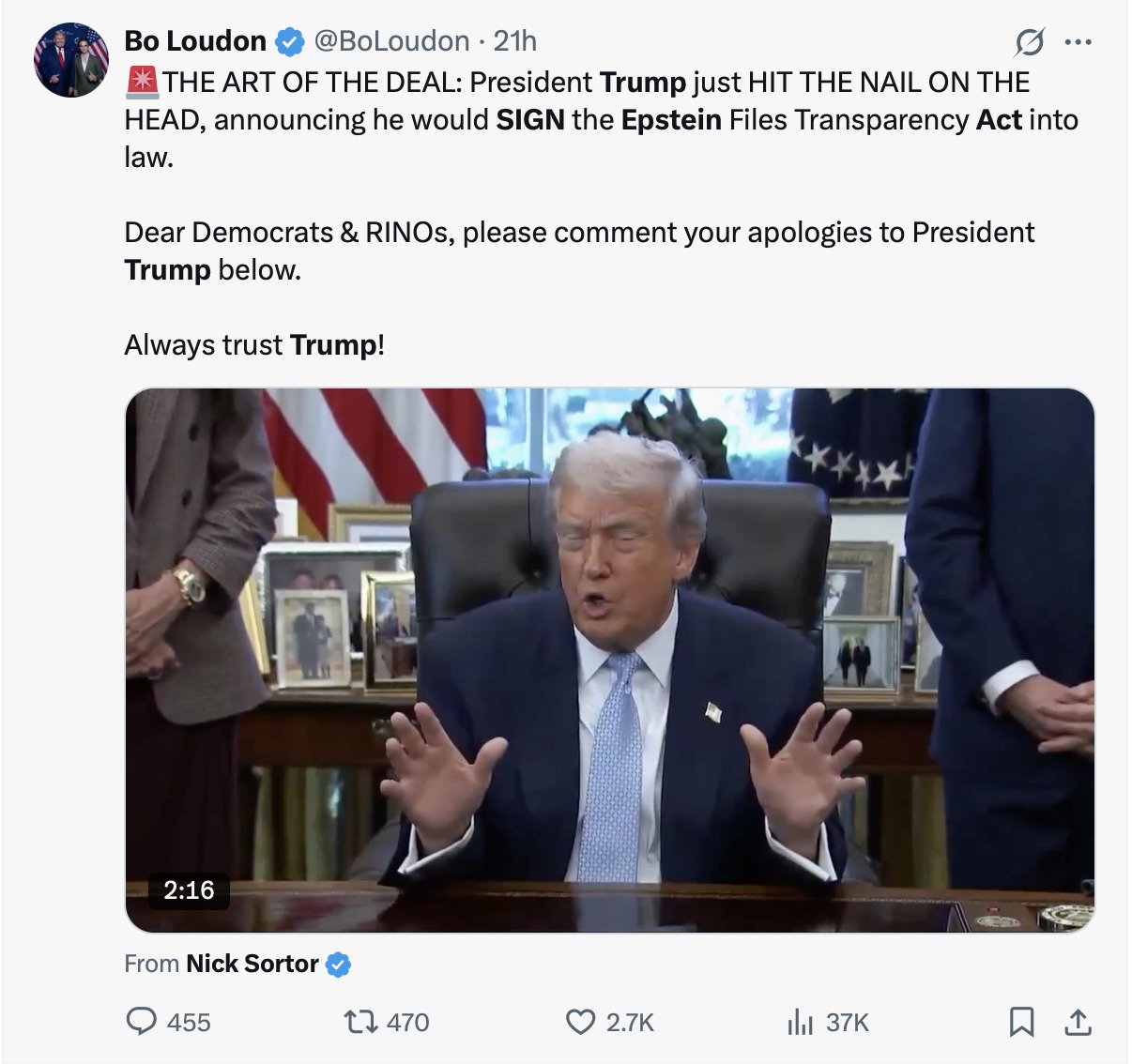
Now it heads to President Trump’s desk, and he has already promised to sign it.
See here:
🚨THE ART OF THE DEAL: President Trump just HIT THE NAIL ON THE HEAD, announcing he would SIGN the Epstein Files Transparency Act into law.
Dear Democrats & RINOs, please comment your apologies to President Trump below.
Always trust Trump!
pic.twitter.com/kqkNwyRzyD— Bo Loudon (@BoLoudon) November 18, 2025
For years the Democrats cared nothing about the Epstein Files and I think President Trump just roped them into caring in one of the most impressive operations ever! That’s my take.
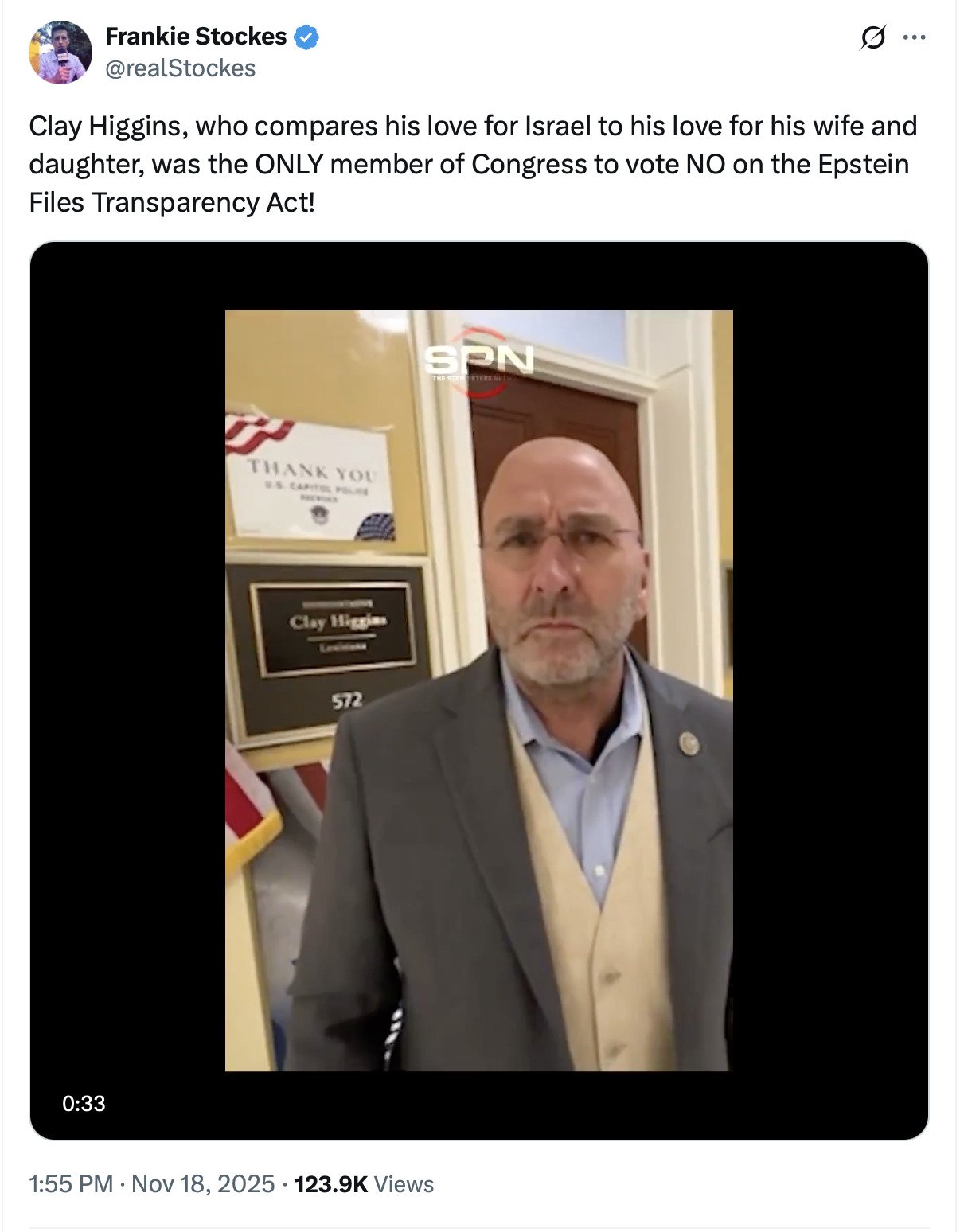
Meanwhile, who is the ONLY person to vote against it?
This guy:
Clay Higgins, who compares his love for Israel to his love for his wife and daughter, was the ONLY member of Congress to vote NO on the Epstein Files Transparency Act! pic.twitter.com/ltIKmv6NUm
— Frankie Stockes (@realStockes) November 18, 2025
Local WAFB reports the reason for Higgins’ “No” vote is the classic “we must protect the victims” garbage:
Both the House and Senate acted decisively Tuesday to pass a bill to force the Justice Department to publicly release its files on the convicted sex offender Jeffrey Epstein, a remarkable display of approval for an effort that had struggled for months to overcome opposition from President Donald Trump and Republican leadership.
When a small, bipartisan group of House lawmakers introduced a petition in July to maneuver around House Speaker Mike Johnson’s control of which bills reach the House floor, it appeared a longshot effort — especially as Trump urged his supporters to dismiss the matter as a “hoax.”
But both Trump and Johnson failed in their efforts to prevent the vote. Now the president has bowed to the growing momentum behind the bill and even said he will sign it. Just hours after the House passed the bill, the Senate agreed to pass the bill with unanimous consent once it is sent to the Senate.
The U.S. House voted 427-1 on Tuesday. The lone vote against the measure came from Louisiana Republican Rep. Clay Higgins.
Higgins, in a statement posted online, said he has opposed the bill “from the beginning,” arguing the current version would “abandon 250 years of criminal justice procedure” and expose private information about individuals not accused of wrongdoing.
ADVERTISEMENT“[This bill] reveals and injures thousands of innocent people – witnesses, people who provided alibis, family members, etc.,” Higgins wrote. “If enacted in its current form, this type of broad reveal of criminal investigative files, released to a rabid media, will absolutely result in innocent people being hurt. Not by my vote.”
Ok, now….the only problem? The only catch?
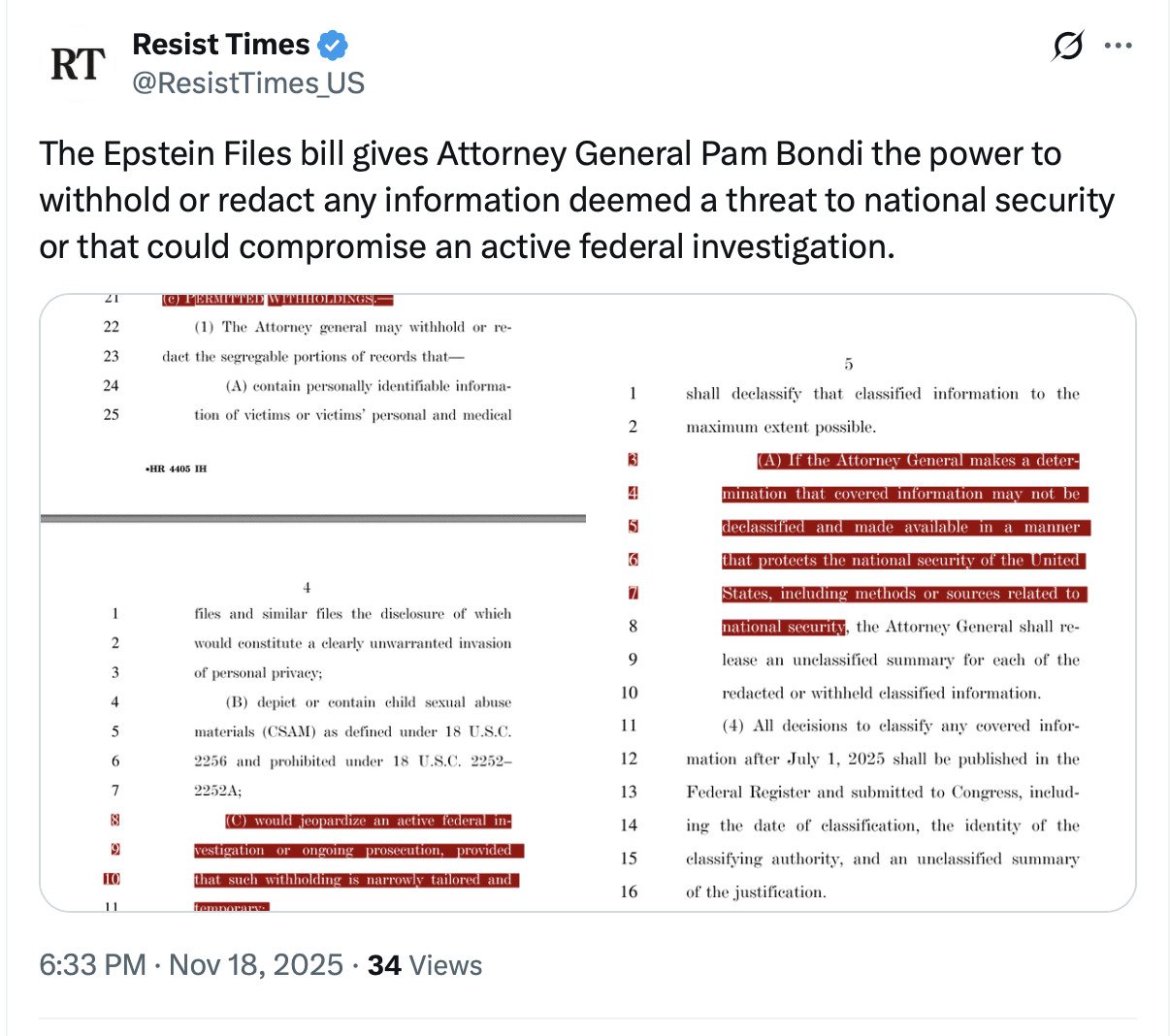
The Act basically contains a giant “escape hatch” to redact and withhold virtually anything they want.
See here:

The Epstein Files bill gives Attorney General Pam Bondi the power to withhold or redact any information deemed a threat to national security or that could compromise an active federal investigation. pic.twitter.com/ZwedoehOZE
— Resist Times (@ResistTimes_US) November 19, 2025
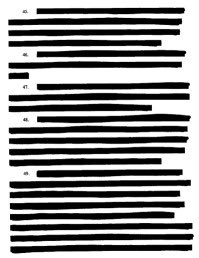
In other words, here’s what we’re about to get…..AGAIN:
Here’s a more detailed breakdown of exactly what’s in the Act:
✅ What the Act requires
The Department of Justice (DOJ), including the Federal Bureau of Investigation and U.S. Attorney’s offices, must make public all unclassified records, documents, communications, and investigative materials relating to the investigation and prosecution of Jeffrey Epstein (and related matters).
The materials covered explicitly include:
Documents related to his prosecution, detention, or custodial matters.
ADVERTISEMENTFiles concerning his associate Ghislaine Maxwell.
Flight logs, travel records, and other investigative records that the DOJ possesses that relate to the Epstein/Maxwell case.
Documents that name or reference individuals (including government officials or politically exposed persons) in connection with the Epstein/Maxwell investigation or prosecution.
The materials must be published in a searchable and downloadable format (to facilitate public access).
Within a short timeframe after publication (in many described drafts: ~15 days), DOJ must also report to Congress:
The categories of information released and those withheld.
A summary of redactions made.
A list of government officials and politically exposed persons named or referenced in the published materials.
⚠️ What the Act allows (exceptions/limits)
The Act does not require release of classified materials (i.e., it covers only unclassified records.
The DOJ may withhold:
Personal identifying information of victims.
Materials that would jeopardize an active federal investigation or prosecution.
ADVERTISEMENTOther information protected by law (e.g., grand-jury material, privileged material) as appropriate.
Redactions are permitted (and required) where victim privacy or ongoing investigations would be harmed.
🕒 Timing & logistics
The legislation sets a deadline: the Attorney General must publish the required materials within 30 days (from enactment) in its searchable downloadable form.
It standardises the process so that public access is expedited and accessible, not blocked behind special requests.
📌 Why it matters
It signals a push toward full transparency of the federal investigative files in one of the highest-profile sex-trafficking / abuse matters involving very powerful individuals.
It creates a public record and searchable archive of the DOJ’s files relating to Epstein/Maxwell, potentially exposing names of officials or others referenced in the investigation.
It provides a mechanism of oversight: DOJ must account to Congress what it is releasing and what it is withholding, and why.
🧾 Key caveats
Even though the Act mandates “all unclassified records,” in practice many documents may still be heavily redacted or withheld for legitimate legal reasons (victim protection, ongoing investigations).
“Unclassified” does not mean “everything” — anything classified remains excluded unless declassified separately.
The Act does not itself guarantee criminal or civil liability for names revealed; it is disclosure-focused, not enforcement-focused.
The law’s effectiveness depends on how comprehensively the DOJ complies, and how genuinely searchable and usable the published format is.

Join the conversation!
Please share your thoughts about this article below. We value your opinions, and would love to see you add to the discussion!