

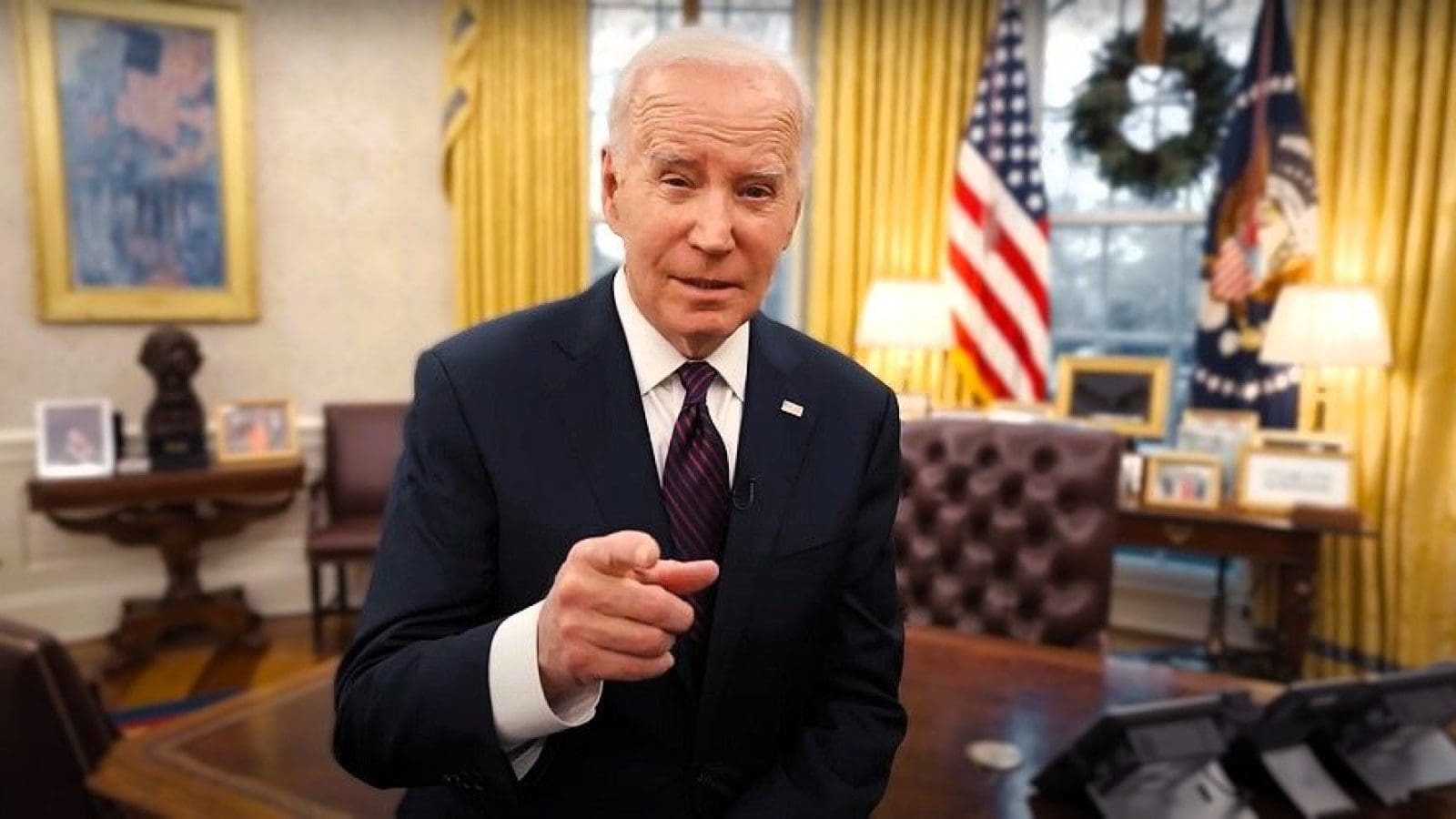
Hopefully, Biden’s new presidential library will look better than Obama’s.
No, seriously, look at Obamas:
This is Obama’s presidential library. What does it tell you about him? pic.twitter.com/InxtnvFjYC
— Jessica 🇺🇸 (@RealJessica05) July 24, 2025
A new report has revealed Joe Biden has decided where he will build his presidential library.
A Biden spokesperson revealed that Biden’s presidential library would be built in his home state of Delaware.
CBS reported more details on Biden’s upcoming presidential library and who will be involved in the building process:
Former President Joe Biden has decided to build his presidential library in Delaware, an aide confirmed to CBS News on Saturday. He has also tapped a group of former aides, friends and political allies who are charged with steering the project for the museum and archive.
The Joe and Jill Biden Foundation approved a 13-person governance board that includes former Secretary of State Antony Blinken, longtime adviser Steve Ricchetti, prolific Democratic fundraiser Rufus Gifford, according to a list provided to CBS News. Gifford will serve as the board’s chair.
A senior member of the Biden Foundation said the project will serve as a “vibrant and lasting space where history, learning, and civic leadership come together, inspiring future generations to lead with purpose, serve their communities, and strengthen our nation.” They said a robust planning process and landscape analysis is underway.
Others named to Biden’s library board are former senior White House aides Elizabeth Alexander, Julissa Reynoso Pantaleón and Cedric Richmond; David Cohen, a former ambassador to Canada and telecom executive; Tatiana Brandt Copeland, a Delaware philanthropist; Jeff Peck, Biden Foundation treasurer and former Senate aide; Fred C. Sears II, Biden’s longtime friend; former Labor Secretary Marty Walsh; former Office of Management and Budget director Shalanda Young; and former Delaware Gov. Jack Markell.
Biden has deep ties to Pennsylvania but ultimately settled on Delaware, the state that was the launching pad for his political career. He was first elected to the New Castle County Council in 1970 and spent 36 years representing Delaware in the Senate before serving as Obama’s vice president.
Biden chooses Delaware for his presidential library as his team turns to raising money for it https://t.co/8v2nGXef9i pic.twitter.com/MvUMORUkTV
— darlene superville (@dsupervilleap) September 6, 2025
So why does Biden even need a library?
U.S. Archives explains why:
At the dedication of his library on June 30, 1941, Franklin Roosevelt observed:
“To bring together the records of the past and to house them in buildings where they will be preserved for the use of men and women in the future, a Nation must believe in three things. It must believe in the past. It must believe in the future. It must, above all, believe in the capacity of its own people so to learn from the past that they can gain in judgement in creating their own future.”
The Presidential Library system formally began in 1939, when President Franklin Roosevelt donated his personal and Presidential papers to the Federal Government. At the same time, Roosevelt pledged part of his estate at Hyde Park to the United States, and friends of the President formed a non-profit corporation to raise funds for the construction of the library and museum building.
Roosevelt’s decision stemmed from a firm belief that Presidential papers are an important part of the national heritage and should be accessible to the public. He asked the National Archives to take custody of his papers and other historical materials and to administer his library.
Before the advent of the Presidential Library system, Presidents or their heirs often dispersed Presidential papers at the end of the administration. Though many pre-Hoover collections now reside in the Library of Congress, others are split among other libraries, historical societies, and private collections. Sadly, many materials have been lost or deliberately destroyed.
In 1950, Harry S. Truman decided that he, too, would build a library to house his Presidential papers and helped to galvanize congressional action. In 1955, Congress passed the Presidential Libraries Act, establishing a system of privately erected and federally maintained libraries. The Act encouraged other Presidents to donate their historical materials to the government and ensured the preservation of Presidential papers and their availability to the American people. Under this and subsequent acts, more libraries have been established.
Until 1978, Presidents, scholars, and legal professionals held the view dating back to George Washington that the records created by the President or his staff while in office remained the personal property of the President and were his to take with him when he left office. The first Presidential libraries were built on this concept. NARA successfully persuaded Presidents to donate their historical materials to the Government for housing in a Presidential library managed by NARA.
The Presidential Records Act of 1978 established that the Presidential records that document the constitutional, statutory, and ceremonial duties of the President are the property of the United States Government. After the President leaves office, the Archivist of the United States assumes custody of the records. The Act allowed for the continuation of Presidential libraries as the repository for Presidential records.
ADVERTISEMENTThe Presidential Libraries Act of 1986 also made significant changes to Presidential libraries, requiring private endowments linked to the size of the facility. NARA uses these endowments to offset a portion of the maintenance costs for the library.

Join the conversation!
Please share your thoughts about this article below. We value your opinions, and would love to see you add to the discussion!