

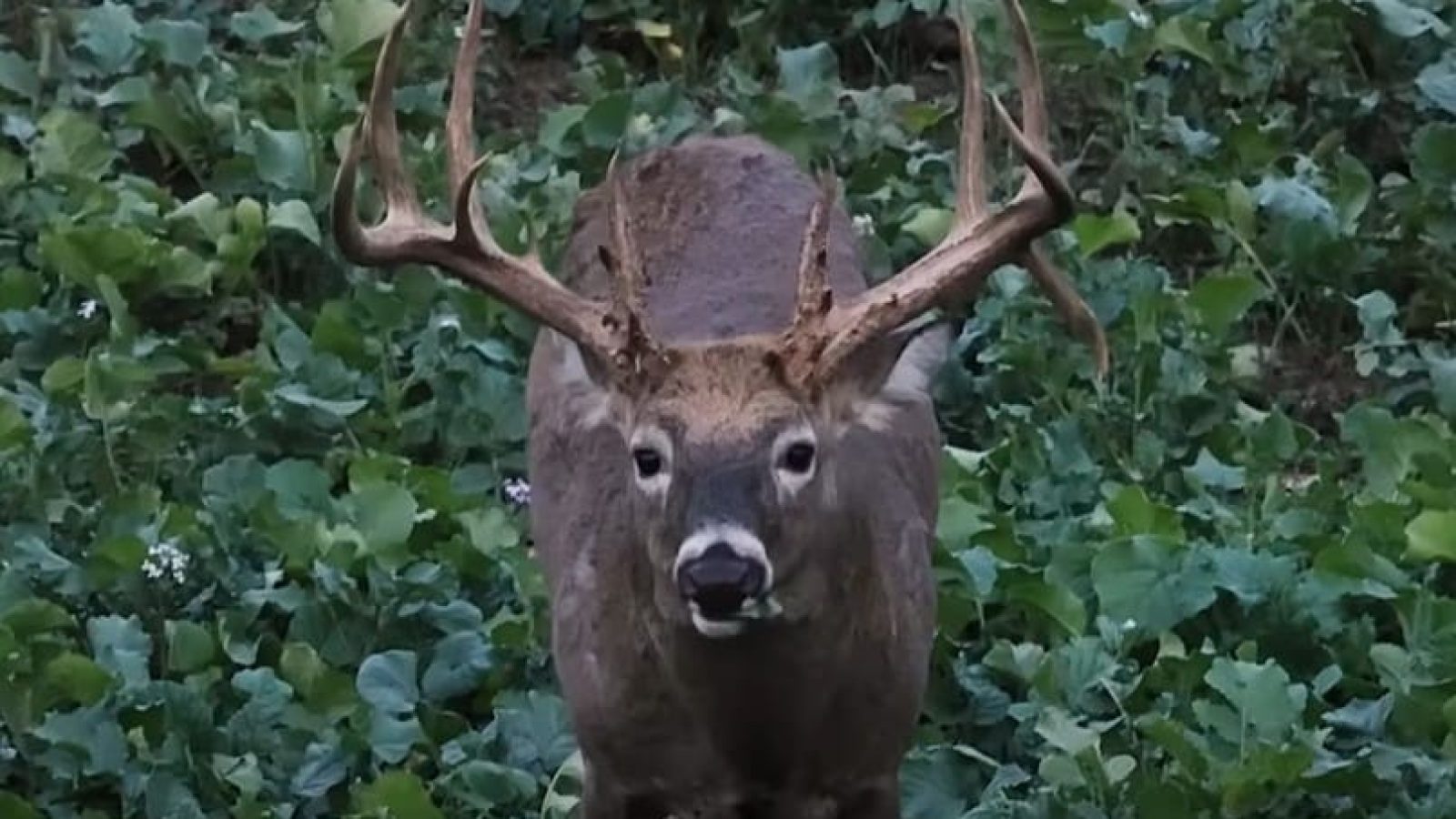
First the rabbits, and now the deer.
A couple of weeks ago, we brought you a bizarre report about rabbits with horn or tentacle-like growths sprouting out of their bodies.
If you missed that, here it is:
STRANGE: Experts Warn Of Mutant Rabbits With Horn-Like Growths In Colorado
So-called "experts" say that the unsightly growths on these rabbits come from a virus that is not transmissible to humans or other animals.
However, two weeks later, people across the U.S. are now spotting deer with "bubble-like" growths that very much resemble these mutant rabbits.
See for yourself:
Freaky photos of ‘black-bubbled’ deer go viral after fears of zombie rabbits, squirrels spread https://t.co/90c1fm3GCL pic.twitter.com/5Zd9ofOZb8
— New York Post (@nypost) August 22, 2025
Here are a few more photos:


And, a video of a deer spotted out in the wild in New York:
It looks like something straight out of the beginning of a zombie movie.
Scientists say the growths on these poor deer are the result of a papillomavirus spread by bugs like ticks and mosquitos that bite deer.
Just like with the rabbits, the experts are assuring us that it cannot spread to humans.
Strange images from Pennsylvania and Wisconsin show deer with dark, bubble-like growths on their bodies, raising fears of a possible outbreak.
Experts say the condition is called deer fibroma, caused by a papillomavirus that only affects deer, similar to the one found in… pic.twitter.com/MMgj1Yr8PR
— The MES Times (@themestimes) August 21, 2025
Strange images from Pennsylvania and Wisconsin show deer with dark, bubble-like growths on their bodies, raising fears of a possible outbreak.
Experts say the condition is called deer fibroma, caused by a papillomavirus that only affects deer, similar to the one found in rabbits. These growths often shrink and disappear within months, but in severe cases, deer may suffer from starvation or need to be euthanized.
Scientists confirm that deer fibroma cannot spread to humans. However, ticks from deer can still transmit Lyme disease.
Some researchers warn that climate change may be making these outbreaks worse by increasing tick and mosquito populations.
Similarly to the deer and rabbits, squirrels with grotesque growths have also recently been spotted around the country.
Again, experts say it's the result of a squirrel-specific disease that can't spread to humans or other animals.
‘Zombie squirrels’ covered in oozing warts spotted sulking through US backyards: report https://t.co/5MGlDvEfqH pic.twitter.com/zZCTaMFjOl
— New York Post (@nypost) August 18, 2025
"Zombie squirrels" covered in oozing warts have been sighted across the US.
Experts say they are likely suffering from squirrel fibromatosis. pic.twitter.com/eibMITZgdM
— News on X (@GlobalNewsOnX) August 20, 2025
The New York Post has more:
Despite being grotesque-looking, the golf ball-sized warts — officially known as “fibromas” — are just non-cancerous tumors, according to wildlife officials.
ADVERTISEMENTThe warts, which can spread from deer to deer, most often grow on the animal’s head and neck but rarely affect overall health.
The freaky photos started going viral after sightings of “zombie squirrels” and “Frankenstein rabbits” stoked concerns about possible plague outbreaks across the country.
Reports of cottontail rabbits sporting black, tentacle-like growths out of their heads in Colorado, Minnesota and Nebraska recently prompted warnings to steer clear of the mutated animals.
The unsettling deformities are the result of cottontail papilloma virus (CRPV) — a bug that spreads when mosquitoes, ticks, or fleas bite infected bunnies and then pass it along to others.
Days later, squirrels covered in pus-filled boils were reportedly spotted skulking through parts of Maine.
While some were quick to dub the critters “zombie squirrels,” wildlife experts said it was likely the result of squirrel fibromatosis — a viral skin disease caused by leporipoxvirus.

I don't claim to know exactly what is happening here, but it's very strange that over the past few weeks, we've seen similar, horrific-looking growths pop up across the U.S. in three different mammals.
While experts are doing their best to placate us by saying these viruses can't spread to humans, it's still very concerning.
In an apparent attempt to quell fears, some scientists are trying to blame "climate change" for the recent uptick in rabbits and deer with these nightmarish growths.
Per Daily Mail:
One medical expert told the Daily Mail that Americans should expect diseases like this to continue spreading as temperatures get warmer throughout more of the year.
Dr Omer Awan of the University of Maryland School of Medicine explained that climate change has allowed mosquitoes and ticks to live longer and also spread to areas they don't normally inhabit.
While deer can't spread deer warts to people, they can bring illnesses such as Lyme disease to populated areas, which is passed on to humans through the ticks they carry.
'These temperature changes are resulting in diseases that were never endemic in certain areas to become endemic,' Dr Awan said.
It definitely feels like there's something up here, but it's not climate change...
I'm not the only one who feels this way:
So we had rabbits infected, now deer! Seems like someone is taking out wild food sources.... who was modifying misquitos???
— Whiskey D (@Whiskey_Don) August 22, 2025
Adding to the fact that Chinese scientists were caught smuggling pathogens into the US, this seems a bit suspicious.
— B Rob (@robisonbw) August 22, 2025
Thanks Bill Gates
— 🇺🇸TradDad (@1dwn4up) August 23, 2025
What are your thoughts?

Join the conversation!
Please share your thoughts about this article below. We value your opinions, and would love to see you add to the discussion!