

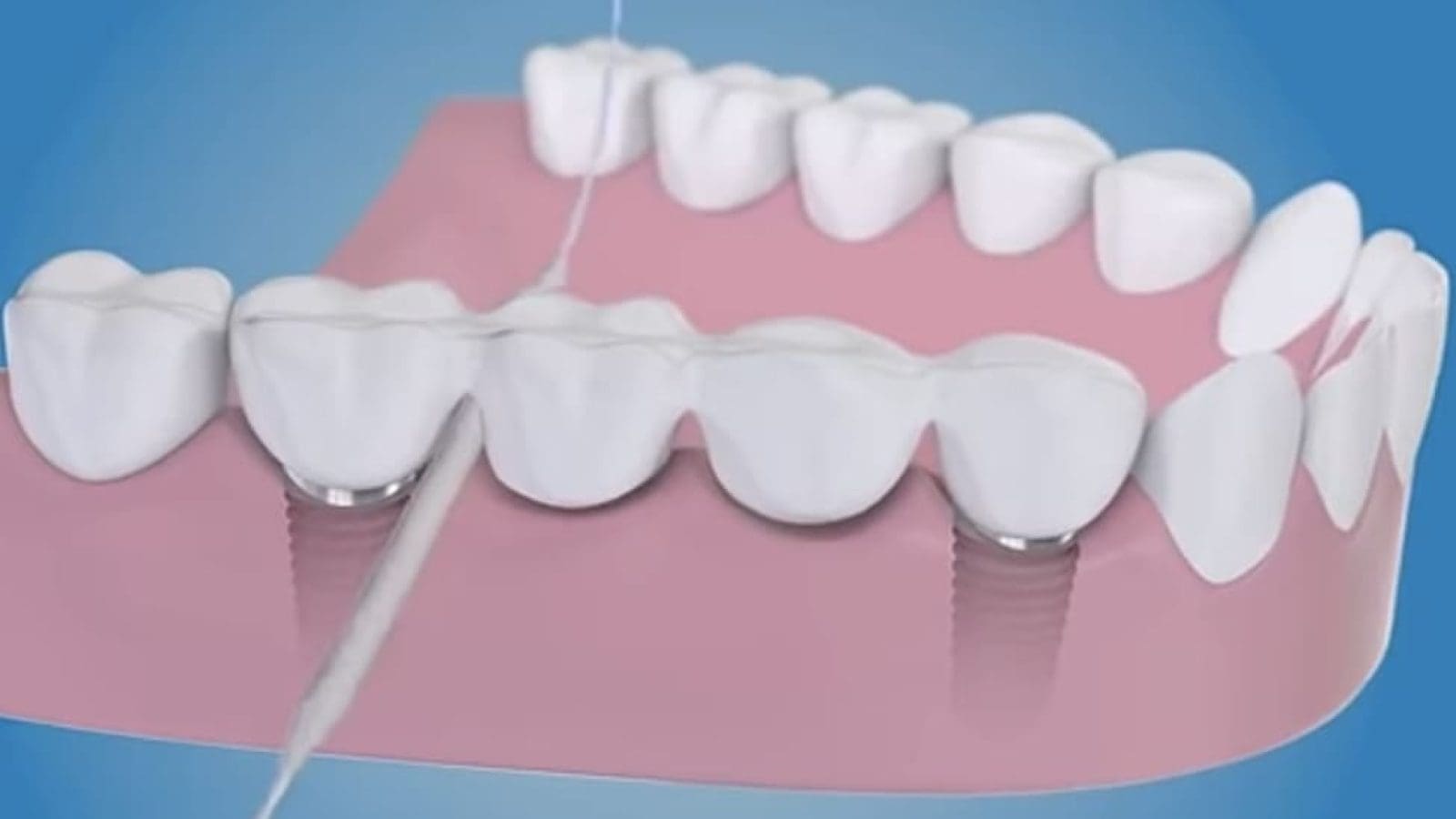
Scientists are developing another method of getting a vaccine into the human body.
To create needle-free vaccines, researchers are experimenting with a special type of dental floss that can deliver “proteins and inactive viruses,” Science reports.
There’s nothing that won’t be attempted to give people a vaccine.
For now, scientists are experimenting on mice’s gumlines to trigger immune responses.
Scientists have figured out how to turn dental floss into a vaccine delivery system.
“Such a vaccine could be especially helpful in active outbreaks when vaccine coverage needs to be boosted quickly.” pic.twitter.com/Uugp01kqpA
— Jason Bassler (@JasonBassler1) July 27, 2025
Science explained:
For many years, scientists have tried to develop alternatives to delivering vaccines via syringes by turning to the moist areas in your mouth and nose where most viruses enter. But it’s tough to develop an effective vaccine that can be administered through those entry points because they have naturally tough defenses against foreign molecules, says Vanderbilt University immunologist James Crowe, who was not involved in the work.
The new approach could circumvent these defenses. Years ago, Harvinder Gill, an engineer at North Carolina State University who specializes in nanomedicine, was reading about gum disease when he stumbled across a paper that said the gingival sulcus—the pockets of gum between the sides of your teeth—could absorb molecules extremely well. “That sort of struck a spark,” says Gill, the new study’s senior author. “If it is highly permeable, could we not use it for vaccination?”
To test this idea, Gill and Rohan Ingrole, first author of the paper and a chemical engineer at Texas Tech University, had to do something no scientist had done before: Try to floss a mouse. It was a “quite difficult” two-person job, Gill says: One scientist gently pulled the mouse’s jaw down with the metal ring from a keychain while the other administered the floss.
During a test run, the team found that when researchers coated floss with a fluorescently labeled protein, 75% of the protein was successfully delivered to the mouse’s gums. And even 2 months after flossing, the mice had elevated levels of antibodies in their lungs, noses, feces, and spleens, suggesting a robust immune response to the protein.
“That last discovery was key, antibodies in bone marrow suggest long-term immunity,” Interesting Engineering noted.
William Giannobile, a periodontics researcher at the Harvard University School of Dental Medicine who was not involved in the work, called the approach “clever.”
“You could imagine going to the dentist, and your provider administers one of these vaccines during your visit,” he said, according to Science.
They’re putting vaccines in your dental floss now.
Let that sink in.This isn’t about health.
This is about control — down to your gums.If you’re not innerstanding what’s happening yet,
you’re already being programmed… from the inside out. pic.twitter.com/ALAjccf9BK— Dr Diane Kazer (@DianeKazer) July 25, 2025
More from Interesting Engineering:
The results suggest this flossing method doesn’t just offer local protection in the mouth, but activates a strong immune response throughout the body, something that traditional mucosal vaccines have struggled to achieve.
To explore whether the technique might work in people, scientists recruited 27 healthy adults. Each participant used dental picks coated in food dye. On average, the dye reached gum tissue in about 60% of flossing attempts.
That level of contact shows potential, though further refinement is needed for consistent delivery.
The gums between teeth are highly permeable, which allows vaccine molecules to pass through more easily than skin or other tissues.
The oral cavity is also a frontline entry point for viruses.
But developing vaccines for the mouth and nose has proven difficult due to the body’s natural resistance to foreign agents in these regions.
Floss, however, might offer a way to bypass those defenses.
ADVERTISEMENT“These findings establish floss-based vaccination as a simple, needle-free strategy that enhances vaccine delivery and immune activation compared with existing mucosal immunization methods,” wrote the researchers.

Join the conversation!
Please share your thoughts about this article below. We value your opinions, and would love to see you add to the discussion!