

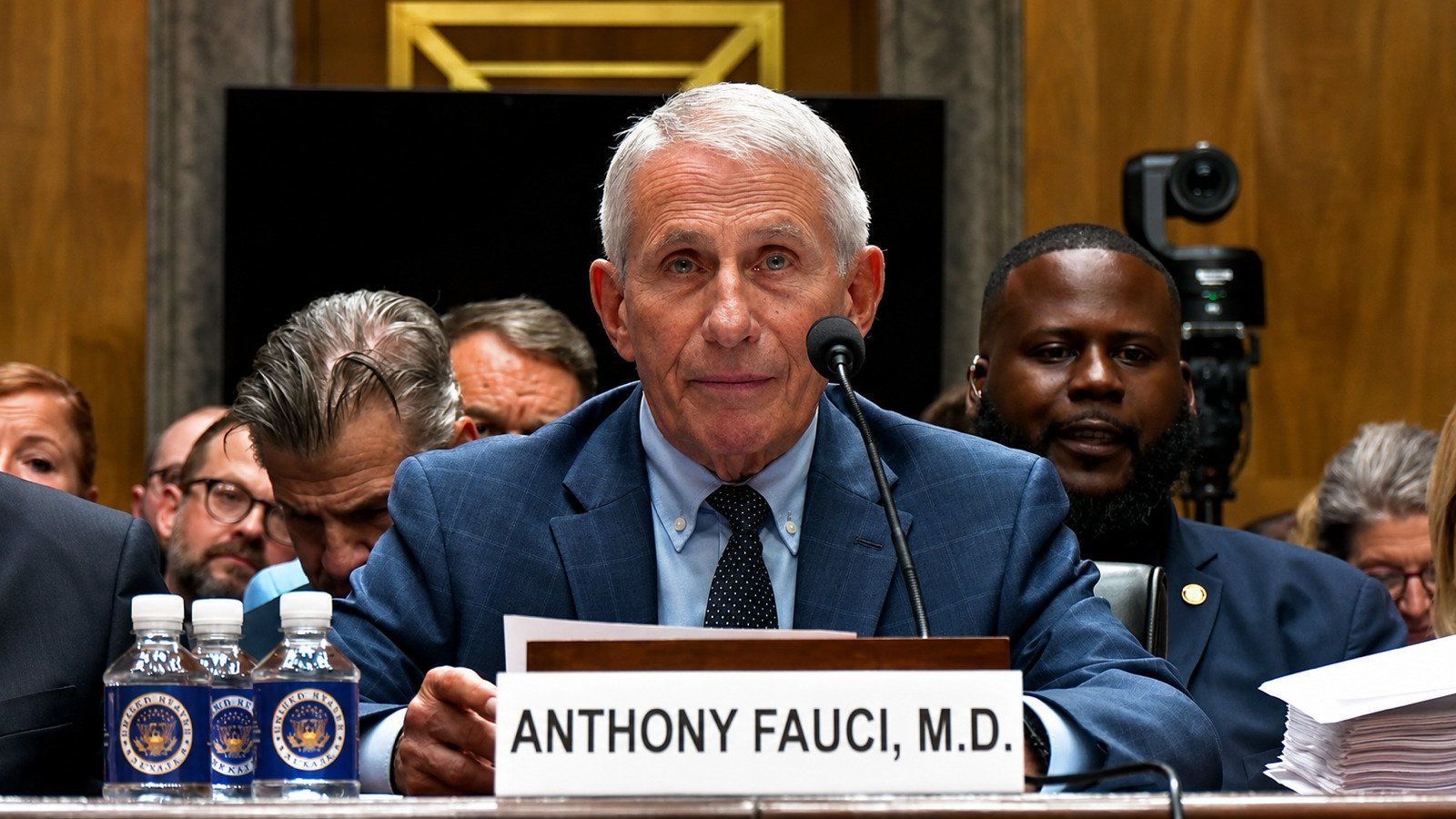
Anthony Fauci finally took the witness chair Wednesday morning.
He was there under subpoena. Sen. Rand Paul was across from him.
More than 1,000 pages of Fauci’s pandemic diary had been released, and years of unanswered questions were waiting.
Then Fauci made sure there would be no answers.
In his opening statement, the former NIAID director invoked the Fifth Amendment and announced that he would refuse to answer the committee’s questions.
The hearing everyone expected to become a long-awaited Paul-Fauci confrontation changed in a matter of seconds.
This was not Fauci refusing one question or objecting to one line of inquiry.
It was a blanket decision, announced before senators could begin questioning him, to say nothing about the pandemic response, the Wuhan research controversy, his private diary or his prior testimony.
The Fox News live coverage recorded the turn almost as soon as it happened. Paul opened by reminding Fauci that he had initially declined to appear voluntarily and was sitting before the committee only because a subpoena compelled him to attend.
Fauci answered with an attack on the premise of the hearing. He accused Paul of conducting a slanderous campaign against him and pointed to the senator’s repeated public statements that Fauci should face prosecution over the government’s handling of COVID-19.
Fauci said he believed Paul wanted him to make a statement that could be used to support those calls. On the advice of his attorneys, he announced that he would rely on his constitutional right against self-incrimination and decline to answer.
The exchange left Paul with the witness he had spent years trying to confront, a stack of records in front of him—and no testimony to test against them.
That does not make Fauci’s invocation a confession.
The Fifth Amendment protects a person from being compelled to give testimony that could be self-incriminating. The act of exercising that right proves no criminal charge against him.
But the political and historical impact is impossible to miss.
Fauci spent the pandemic telling Americans that his statements reflected the best available science. He repeatedly defended his decisions before Congress and rejected allegations that his agency funded gain-of-function research at the Wuhan Institute of Virology.
On Wednesday, with senators ready to compare those statements against his private records, he chose not to defend any of it under questioning.
The Associated Press independently confirmed that Fauci declined to answer after being subpoenaed by Paul. Its account described the hearing as the latest clash in a years-long fight over the pandemic’s origins and whether Fauci misled Congress, an accusation Fauci has consistently denied.
The AP also preserved Fauci’s stated reason for remaining silent. Fauci argued that Paul’s public calls for his prosecution turned the hearing into an effort to draw out a statement that could be used against him.
He said following his lawyers’ advice pained him because of his respect for Congress and his decades in government.
Fauci’s attorney, David Schertler, called Paul’s allegations false and disgraceful and said Fauci’s legal team would examine its options. That response matters because it makes Fauci’s position clear: he was asserting a constitutional protection, not accepting Paul’s accusations as true.
The same report noted that more than 150 infectious-disease specialists and other scientists signed a public letter defending Fauci and arguing that no credible evidence supports the charges against him. The hearing therefore opened with both sides dug in—and only one side willing to answer questions on camera.
Paul used the silence to lay out his case anyway.
He accused Fauci and other officials of approving dangerous virus research, obscuring the government’s connection to that work and giving the public categorical assurances that the evidence did not justify.
Paul also returned to a simpler demand: an apology.
One million Americans died from COVID and not even an apology from Dr. Anthony Fauci. Sickening.
— Senator Rand Paul (@SenRandPaul) July 29, 2026
The Senate Homeland Security and Governmental Affairs Committee scheduled the hearing for 8:30 a.m. in room SD-342 of the Dirksen Senate Office Building. Its official page identified Fauci, who led NIAID from 1984 through 2022, as the witness before the full committee.

The committee also carried the hearing on the Senate’s official video system, creating a public record of Fauci’s opening statement and every question that followed. The footage shows Fauci at the witness table with attorneys and staff behind him while Paul and other senators worked through their prepared material.
The hearing proceeded after Fauci invoked the Fifth. Senators could state their claims, read from documents and enter material into the record, but they could not force him to provide substantive answers once he asserted the privilege.
Fauci complied with the subpoena by appearing.
He did not give Paul what the senator actually wanted from the appearance: sworn answers about decisions that shaped the lives of every American.
What are your thoughts?
Those questions now carry even more weight because of the records released before the hearing.
As WLTR documented Tuesday, one February 2020 diary entry recorded Fauci and former CDC Director Tom Frieden privately estimating COVID’s fatality rate at roughly 0.2 to 0.3 percent after accounting for infections that testing had missed.
Five weeks later, Fauci told Congress that including minimally symptomatic and asymptomatic infections would probably place the rate around one percent.
The figures came at different moments in a rapidly changing outbreak. Those numbers alone fell short of establishing perjury, and our report said so plainly.
The dated discrepancy still demanded an explanation.
Wednesday was supposed to be the day Fauci supplied one.
Paul also wanted answers about federal funding connected to research in Wuhan, Fauci’s statements about gain-of-function work, school closures and the government’s campaign to steer public discussion of COVID’s origin.
Fauci has denied wrongdoing across those disputes. Former President Joe Biden issued him a broad preemptive pardon covering federal offenses tied to his government service from 2014 through the end of Biden’s term.
That pardon did not make Wednesday’s hearing irrelevant.
Paul’s investigation is also about the public record: what Fauci knew, when he knew it, what he told Congress and whether the internal documents support those statements.
Fauci had the right to invoke the Fifth Amendment.
Americans have the right to judge the decision.
After years of mandates, shutdowns, school closures, destroyed businesses and bitter arguments over what officials called settled science, the man at the center of it all finally returned under subpoena.
He did not explain the diary.
He did not reconcile his old testimony with the records now in public view.
He did not answer Paul.
He pleaded the Fifth.

Join the conversation!
Please share your thoughts about this article below. We value your opinions, and would love to see you add to the discussion!