

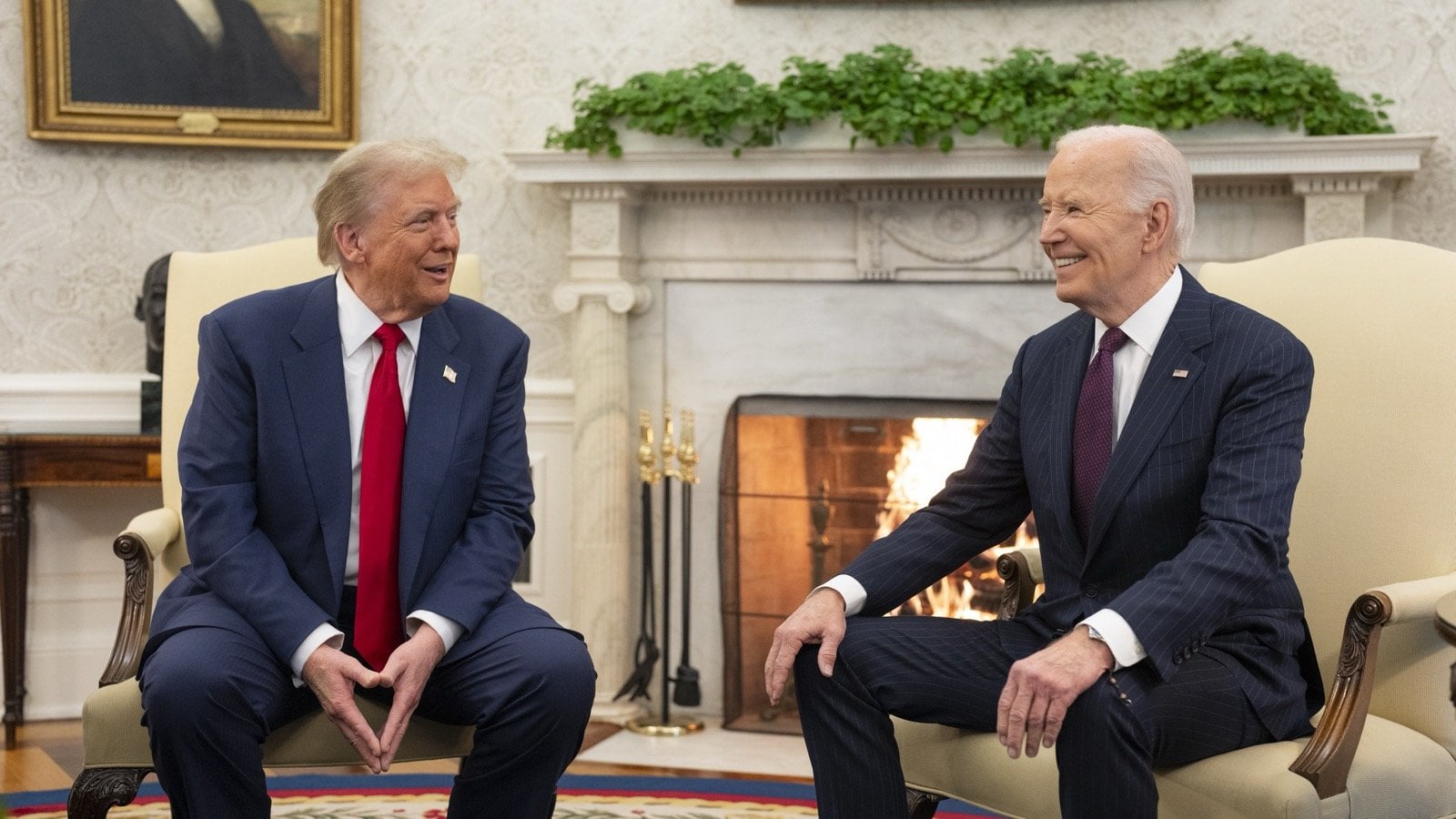
A White House memo from the closing days of the Biden administration has surfaced, and it reads like a plan to tie President Trump’s hands before he ever returned to the Oval Office.
The number attached to that plan was staggering: more than 3.1 million noncitizens.
Fox News reported that Senator Eric Schmitt obtained the memo from Archivist of the United States Edward Forst through his authority as chairman of a Senate Judiciary subcommittee.
The document came from Biden’s senior advisers and examined a series of Temporary Protected Status actions that could be completed before the transfer of power.
The recommendations covered extensions, redesignations and entirely new country designations. The memo grouped them by what could be finished before January 20, what required more processing and what litigation risk advisers expected.
The report also describes a legal strategy for making those actions harder for the next administration to reverse, including a discussion of court rulings that blocked several TPS terminations during Trump’s first term.
It separates options advisers viewed as immediately executable from new designations that would require more processing, a distinction that shaped what Biden’s team actually completed.
BOMBSHELL MEMO: A newly uncovered Biden White House memo from the administration’s final days reveals plans to expand Temporary Protected Status to more than 3.1 million noncitizens, a move Biden’s own advisors acknowledged was designed to shield migrants from Trump’s deportation agenda.
— Fox News Politics (@foxnewspolitics) July 24, 2026
Temporary Protected Status was created as humanitarian relief for nationals of countries facing war, natural disaster or other extraordinary conditions that make a safe return temporarily impossible.
The Congressional Research Service explains that TPS protects eligible recipients from removal and allows them to seek work authorization while a country’s designation remains active.
DHS may designate a country because of armed conflict, an environmental disaster or other extraordinary and temporary conditions. Individual applicants must still satisfy nationality, residence and admissibility requirements, while serious criminal convictions and security-related bars can make a person ineligible.
TPS remains a temporary immigration benefit rather than a grant of citizenship or permanent residence. While the protection remains in force, the government generally cannot deport a covered recipient.
A redesignation can also move the eligibility date forward, opening the program to people who arrived after the original cutoff.
When a designation ends, a recipient returns to whatever immigration status he or she held before TPS unless another lawful status has been obtained. That makes the duration and repeated renewal of a designation enormously consequential.
The benefit can therefore pause enforcement against large groups for years without changing the law that governs who may become a permanent resident.
That is why the country-by-country estimates inside the Biden memo are so important.
Fox reported that proposals placed roughly 1.5 million Guatemalans and 600,000 Ecuadorians in line for potential new TPS designations.
The memo also discussed actions involving an estimated 464,000 Nicaraguans and 455,000 Venezuelans, along with smaller populations connected to Ukraine, Sudan and Afghanistan.
Taken together, the options climbed past 3.1 million people.
The memo openly discusses rushing TPS extensions/redesignations and new designations before January 20 specifically to shield people from “President-elect Trump’s planned mass deportations.”
It frames the lame duck’s team’s actions as a deliberate barrier.
— Senator Eric Schmitt (@SenEricSchmitt) July 23, 2026
The timing was not incidental.
The memo was prepared after voters had chosen Trump and while Biden’s team still controlled the machinery of the executive branch.
Fox reported that the document presented requests from outside stakeholders who wanted the administration to act before January 20 so the protections would be in place when Trump took office.
The legal discussion is every bit as revealing as the raw numbers.
The memo examined why courts had blocked some TPS terminations during Trump’s first term and suggested that the weaknesses identified by judges could be addressed with a stronger administrative record.
In plain English, Biden’s team was considering a massive expansion while studying how to make those actions harder for the incoming president to unwind.
The most aggressive part of the plan was not completed.
Schmitt said senior advisers recommended creating about 2.1 million new TPS designees during Biden’s final weeks, but those new designations were never fully carried out.

That does not mean the memo sat untouched.
One week after it circulated, Biden extended TPS protections for nearly one million existing beneficiaries, according to Fox and Schmitt.
Those extensions were legally distinct from the uncompleted proposals for Guatemala and Ecuador. They still show that the outgoing administration was acting in the same policy lane discussed in the memo.
The fight over TPS is still playing out in Washington.
Senator Eric Schmitt said Thursday that he blocked a Democratic attempt to extend TPS for more than 350,000 Haitians after the Supreme Court cleared the way for President Trump to terminate that designation.
Haitian TPS began after the 2010 earthquake with an expected duration of 18 months. Schmitt’s office says it was extended nine times over the next 16 years.
The senator objected on the Senate floor, preventing the proposal from moving forward by unanimous consent. His office framed the fight as a test of whether the word “temporary” still carries any meaning in federal immigration policy.
The Haiti dispute involves an existing designation rather than the uncompleted new-country proposals in the Biden memo. Together, they show how a short-term humanitarian program can become a long-running shield from removal through extensions and redesignations.
No one disputes that TPS has a legitimate role when people truly cannot return home safely.
The scandal here is the scale, timing and stated objective of the Biden plan.
The election was over. Americans had voted for stronger immigration enforcement, and the outgoing White House was considering protections that could have placed millions more people beyond the immediate reach of the incoming administration.
The memo also contemplated the litigation that would follow and how to build a record capable of surviving it.
A routine transition respects the incoming president’s authority. This plan sought to make the defeated administration’s immigration policy outlive the voters’ verdict.
President Trump has spent his second term dismantling the Biden border system piece by piece.
This memo shows just how much more difficult Biden’s team wanted to make that job, and how close millions of additional TPS protections came to being locked in before the door closed behind them.
This is a Guest Post from our friends over at 100 Percent Fed Up. View the original article here.

Join the conversation!
Please share your thoughts about this article below. We value your opinions, and would love to see you add to the discussion!