

Democratic socialists spent the summer pointing to one primary win after another as proof their movement was coming for the party establishment.
Then the insurgency reached Arizona.
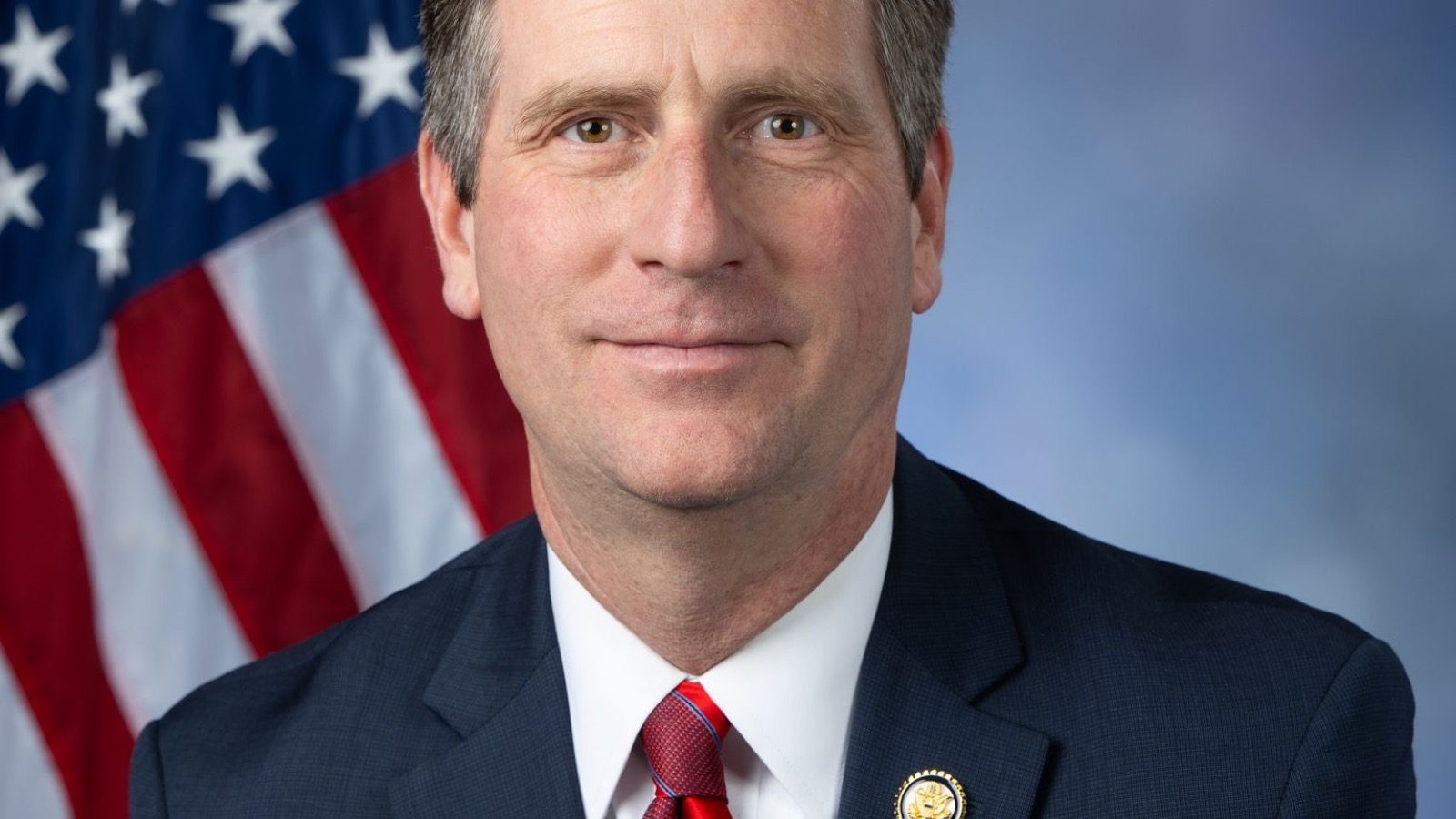
Four-term Rep. Greg Stanton defeated activist Kai Newkirk in Tuesday’s Democratic primary for Arizona’s 4th Congressional District, turning what Newkirk’s allies hoped would be another left-wing breakthrough into a decisive win for the incumbent.
The latest detailed report from Maricopa County Elections put Stanton at 32,345 votes, or 64.93%, and Newkirk at 17,397 votes, or 34.92%.
That is a 30-point margin—and a much different result from the nail-biter Newkirk’s camp had suggested might be coming.
The same county snapshot recorded 72 write-in votes and 49,814 votes in the Democratic contest overall. Stanton’s lead stood at 14,948 votes, nearly matching Newkirk’s entire vote total.
Those figures came from a 2:57 a.m. Arizona-time update after the county incorporated the remainder of Election Day ballots. They are a timestamped picture of an unfinished count, but more than enough to explain why the race was called so quickly.
Stanton’s victory message was brief:
A Decisive Result, With Counting Still Underway
The Associated Press called the race for Stanton, and Newkirk conceded hours later. In his own statement, the challenger congratulated Stanton on what he called a “decisive victory.”
Newkirk also pledged to support Stanton in November, even as he vowed to keep organizing for the agenda that defined his campaign.
Here is Newkirk’s full concession:
The race has been called, but the numbers remain unofficial. Maricopa County Elections said its early-morning update included the remainder of ballots cast on Election Day, while additional ballots can still move the final percentages before certification.
Arizona’s statewide canvass is scheduled for August 6, according to the Arizona Secretary of State.
The outstanding count does not appear capable of changing the outcome. It does matter, however, when reporting exact percentages in a race whose totals are still being updated.
The state calendar identifies July 21 as Primary Election Day and sets a separate deadline for the official statewide canvass. Until that process is complete, county totals should be described as unofficial even after a winner has been projected.
That distinction is about precision, not suspense. Stanton’s advantage was so large that late-counted ballots across the district would have to break in an extraordinary pattern to threaten the result Newkirk had already accepted.
The Choice Arizona Democrats Were Given
Newkirk did not hide what he wanted to change.
In a March interview with Arizona’s Family, he identified himself as a democratic socialist and backed Medicare for All, abolishing ICE, ending military aid to Israel, and banning corporate and super-PAC political spending.
He accused Stanton of being too close to corporate interests and too supportive of Israel. Newkirk also attacked the congressman over his vote for the Laken Riley Act and argued that Democratic leaders had failed to confront President Trump aggressively enough.
Stanton answered with a different pitch: experience, coalition-building, infrastructure investment, and a record he said delivered tangible results for the East Valley.
The contrast was not cosmetic. Voters were choosing between two competing theories of how Democrats should govern: an activist movement demanding sweeping structural change and an incumbent arguing that durable coalitions and incremental victories remain the safer path.
The distinction over Newkirk’s movement ties is important. He was a democratic socialist and DSA member, but the organization did not endorse his campaign, according to reporting carried by The Jerusalem Post.
His confirmed backers included Our Revolution, Progressive Democrats of America, and Track AIPAC. That placed him firmly inside the progressive insurgency without turning a movement affiliation into an endorsement that never happened.
The same report noted that a poll commissioned by a Newkirk-aligned group had shown Stanton ahead by only eight points. Another survey conducted for Stanton’s side put the incumbent up by 33, making the enormous disagreement between the campaign polls part of the story before votes were counted.

The actual result landed much closer to Stanton’s version of the race. It also made clear that Newkirk’s backing from national progressive organizations had not translated into anything resembling a district-wide majority.
Why This Arizona District Was A Real Test
Arizona’s 4th District covers Tempe, Ahwatukee, and parts of Chandler and Mesa. It leans Democratic, but it is not the kind of deep-blue district where the primary is the only election that matters.
Axios Phoenix described the seat before the election as strongly, though not overwhelmingly, Democratic. Stanton first won a House seat in 2018 after serving as mayor of Phoenix, and he has built his political identity around the practical needs of a fast-growing metropolitan region.
That made this race a test of whether the socialist surge could travel beyond America’s most reliably left-wing urban districts and take down an incumbent with an established local brand.
For months, the national trend seemed to favor the challengers.
Socialist candidates scored high-profile Democratic primary victories in New York and Washington, D.C., while a far-left challenger also defeated an incumbent in Colorado—a result WLTR covered earlier this month.
Newkirk hoped Arizona would be next. Voters delivered a margin closer to 30.
What The Result Actually Means
One congressional primary does not prove that democratic socialism has peaked nationwide.
Newkirk entered late, faced a major financial disadvantage, and never assembled the institutional force that helped power other insurgent campaigns. His supporters can fairly point to those weaknesses—and to the roughly one-third of primary voters who still chose him.
But those explanations do not erase the verdict.
Stanton now advances toward November, when Republican nominee Zuhdi Jasser will again be competing for the seat. The incumbent emerged with his coalition intact and a result far stronger than the close-race narrative promoted before Election Day.
The socialist left will keep organizing. It has real energy, real money, and a growing constituency inside the Democratic Party.
Arizona showed that momentum is not automatic—and that an online wave can still break hard against the realities of an actual district.
The insurgency came looking for another upset. Arizona voters gave it a boundary instead.

Join the conversation!
Please share your thoughts about this article below. We value your opinions, and would love to see you add to the discussion!