

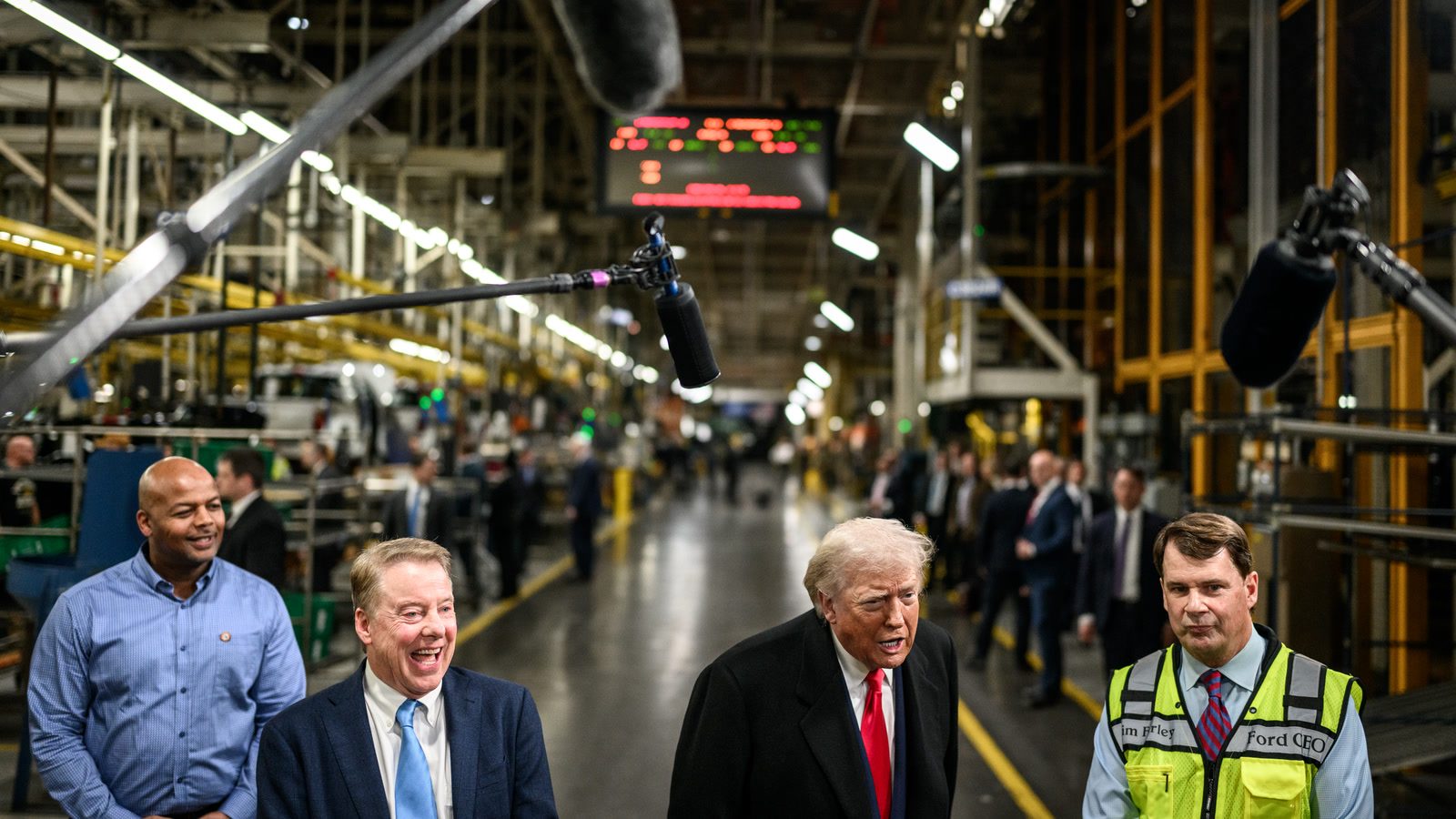
President Trump just gave aluminum producers a deal with teeth.
Put real money into a U.S. smelter, start construction by a hard deadline, and earn a lower tariff on a matching amount of imported primary aluminum while that American capacity is built.
Keep relying on foreign production without building here, and keep paying the full rate.
That is a far more serious industrial policy than another Washington grant program with a ribbon-cutting ceremony and no consequences.
Fact Sheet: President Donald J. Trump Takes Further Action To Adjust Imports Of Aluminum Into The United Stateshttps://t.co/hxd1YRJIYX
— Rapid Response 47 (@RapidResponse47) July 20, 2026
The new incentive appears in a White House proclamation signed Monday. It modifies the Section 232 tariff system and orders Commerce to build the program around measurable domestic investment.
The department will solicit and review onshoring plans from companies willing to build, expand or refurbish primary-aluminum facilities in the United States. Officials must weigh each project’s timeline, milestones, cost and production forecast.
Every approved plan must commit to beginning construction by January 20, 2029.
If Commerce approves a plan, the company may annually import an amount of primary aluminum corresponding to the project’s reasonably anticipated annual U.S. output once completed. Those approved imports receive a tariff rate equal to half of the otherwise applicable Section 232 rate.
Commerce must examine whether the timeline, milestones, costs and production forecasts are commercially reasonable. The department may also decide how the reduced-rate benefit is divided when more than one applicant participates in a plan.
That distinction matters. The order offers no blanket exemption and no relief based on a press release or a promise to think about investing someday.
The benefit is tied to a specific American project, a commercially reasonable timeline, production estimates, costs and measurable milestones.
For refurbishment projects, the tariff adjustment is further limited to the value of the company’s investment.
Commerce also gets the authority to write the implementing rules, require progress reports and order outside audits. Every benefit remains subject to federal monitoring and enforcement.
Those conditions turn the proclamation into a contract with consequences rather than an invitation to collect a favor.
Reuters independently confirmed the new policy Monday, describing it as an investment incentive rather than a general rollback of aluminum tariffs. The report noted that the proclamation was signed under the president’s Section 232 authority.
Its report noted that the lower rate is reserved for companies whose onshoring plans win federal approval. Even then, the company still pays a tariff on the eligible imports.
The benefit applies to a defined volume tied to the output expected from the American project. The order covers new facilities, expansions and upgrades to aging smelters.
Those approved imports can supply customers while furnaces are designed and built. The expected U.S. output sets the ceiling on how much foreign metal receives the lower rate.
The structure solves a real timing problem. A primary-aluminum smelter cannot be switched on next month.
It takes years, massive capital and dependable power.
The reduced rate gives a company a bridge while it builds. The company can keep serving customers with imports, but it earns that break only by creating the domestic capacity America needs.
The terms are straightforward:
- Submit a real onshoring plan to the Commerce Department.
- Build, expand or refurbish a U.S. facility that produces primary aluminum.
- Start construction by January 20, 2029.
- Receive the half-rate benefit only on an approved import volume linked to expected American production.
- Report progress and face audits if Commerce requires them.
And there is an enforcement mechanism.
Commerce may stop and rescind the tariff benefits if a company is substantially failing to meet the commitments that justified them.
If the government determines that a company committed fraud or deliberately misled officials about its onshoring commitments, the proclamation allows retroactive rescission to the extent permitted by law. Customs may then collect the additional tariffs owed, and fines or other penalties may follow.
In plain English: take the deal, build the plant and prove it. Do not pocket the benefit and play games with the deadline.
The stakes are bigger than beverage cans.
The White House fact sheet says U.S. demand for primary aluminum still exceeds the production capacity of domestic smelters. Its central finding is blunt: the country cannot currently smelt enough primary aluminum to meet its own needs.
It also identifies the metal as critical to armored vehicles, naval vessels, spacecraft, missiles and the advanced alloys used throughout the defense industrial base. The shortage therefore reaches directly into national-security supply chains.
Those alloys require primary aluminum, according to the administration. Recycled metal remains enormously useful, but it cannot fill every high-strength military and aerospace requirement.
An America that cannot produce enough of a foundational defense metal at home is accepting a vulnerability it does not have to accept.
The administration says earlier aluminum tariffs brought investment back into the industry, but domestic supply still remains insufficient. This program targets the missing piece by rewarding additional smelting capacity itself.
That focus matters because primary aluminum sits at the beginning of the chain. Without enough metal coming out of American smelters, manufacturers farther down the line remain exposed no matter how many finished products carry a Made in America label.
The new program is designed to change the calculation facing the companies capable of fixing that shortage.
The tariff is no longer only a wall against foreign dependence. Under this plan, part of it becomes leverage to finance the road back to American production.
Here is how the policy is already being explained:
Trump just greenlit a new incentive program to ramp up U.S. primary aluminum production.
The Commerce Department will now approve "onshoring plans" from companies committing to new facilities, expansions, or smelter upgrades, with construction deadlines by 2029. Approved firms… pic.twitter.com/GjNHUrl52m
— The Epoch Times (@EpochTimes) July 21, 2026
This is the kind of bargain Washington should be making.
No permanent carveout. No free pass.
No reward for keeping the same foreign supply chain and changing the company letterhead.
Build here, meet the milestones and earn the benefit.
Otherwise, pay the full price.

Join the conversation!
Please share your thoughts about this article below. We value your opinions, and would love to see you add to the discussion!