

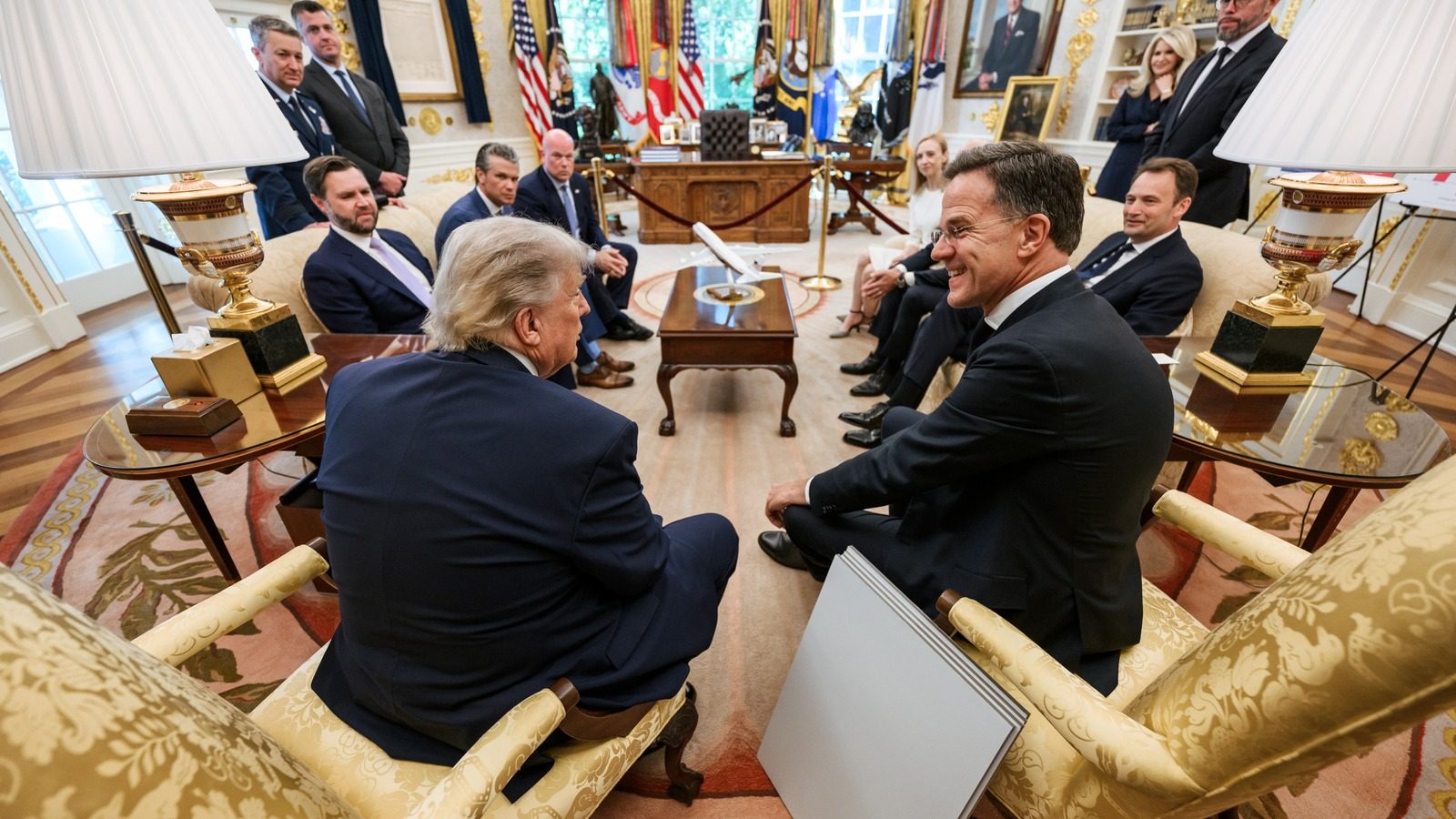
The Iran ceasefire is collapsing in real time, and President Trump is not pretending otherwise.
Speaking Wednesday at the NATO summit in Ankara, Turkey, President Trump was asked about the status of the ceasefire with Iran. His answer was blunt.
“For me, I think it’s over,” he said.
Trump made clear he is done wasting his time with Tehran’s leadership after weeks of provocations.
He said he does not want to deal with Iran’s leaders anymore, calling them vicious and violent. He said negotiators can keep talking if they want, but he thinks the whole thing is a waste of time.
This is what he sounded like in his own words.
.@POTUS on the status of the ceasefire with Iran: "To me, I think it's over. I don't want to deal with them anymore. They're scum… They're led by sick people… I'll speak to our negotiators. They want to negotiate—they're good people… but they have to come back to me. As far… pic.twitter.com/6eYfwMxSdn
— Rapid Response 47 (@RapidResponse47) July 8, 2026
The White House rapid-response clip captures Trump’s position cleanly. He said the deal is over as far as he is concerned, he does not want to keep dealing with Iran’s leaders, and while his negotiators can continue if Tehran comes back to the table, he views the effort as pointless.
The remarks landed after a devastating night of American firepower.
Trump said the U.S. hit Iran hard the previous night and would probably hit Iran hard again Wednesday night. He tied the strikes directly to Iranian drone and rocket attacks connected to ships in the Strait of Hormuz.
The military side of the story is spelled out in an official CENTCOM release. U.S. forces completed a new round of offensive strikes against Iran on July 7, hitting more than 80 targets with precision munitions.
CENTCOM said the strikes were an immediate response to Iran’s latest attacks on commercial vessels transiting the Strait of Hormuz.
The target list was serious. It included Iranian air defense systems, command and control networks, coastal radar sites, anti-ship missile capabilities, and more than 60 IRGC small boats in and near the strait.
The threat moved from rhetoric to the shipping lanes. The strait is one of the world’s most important energy corridors, and targeting ships there is a direct attack on global commerce.
The stated objective was straightforward: degrade Iran’s ability to keep attacking international commerce through the trade corridor.
Iran broke the ceasefire by going after shipping. Then it absorbed the consequences.
🚨 HOLY CRAP! Following huge US strikes, President Trump just said the Iran ceasefire is likely OVER
The mullahs are COOKED.
"I THINK IT'S OVER."
"THEY'RE SCUM."
"I don't want to DEAL with them anymore. They're vicious, VIOLENT people."
"As far as I'm concerned? IT'S OVER."… pic.twitter.com/GMFd4kV5lj
— Eric Daugherty (@EricLDaugh) July 8, 2026
Iran did try to hit back after the American strike package. CBS News reported that Tehran launched retaliatory attacks toward U.S. Gulf allies Bahrain and Kuwait.
Kuwait said it intercepted two ballistic missiles and 13 drones that entered Kuwaiti airspace, and officials reported no casualties. Bahrain sounded missile-alert sirens as Iran acknowledged targeting U.S. military installations in both countries.
CBS also tracked the NATO-summit remarks, including Trump’s warning that the U.S. had hit Iran hard and would likely hit again Wednesday night. The market felt it too, with oil prices jumping after the ceasefire comments and the renewed Hormuz danger.
The report underscored the key point: Tehran’s latest escalation did not stay inside Iran. It pulled in U.S. partners across the Gulf and immediately raised the stakes for shipping, bases, and energy markets.
AP reported the same core development: Trump said the interim agreement is over, while also saying negotiations could continue if both sides wanted them to.
AP placed the comments at the NATO summit in Ankara, Turkey, just hours after U.S. strikes hit Iran in retaliation for tanker attacks in the Strait of Hormuz.
AP also reported that Iranian state television aired a military statement warning regional countries that supporting the U.S. would make them a legitimate target. That threat shows Tehran is trying to widen the pressure beyond the strait even as its own ceasefire violations triggered the U.S. response.
The timing is important. Trump was speaking after U.S. aircraft had already carried out retaliatory strikes and Tehran had already signaled a wider regional threat.
The battlefield reality had already changed before the microphone was in front of him.
The financial fallout was immediate. Axios reported Brent crude jumped about 6% to nearly $79 a barrel.
Axios also noted the sequence: roughly three weeks after the U.S. and Iran signed the peace agreement, both sides are exchanging fresh attacks, with Trump now saying the ceasefire is over and the talks are a waste of time.
As part of the response to the latest Hormuz attacks, the U.S. also revoked a general license that had allowed the sale of Iranian oil. The pressure is coming from every direction at once.
BREAKING: CEASEFIRE OVER: President Trump declared the U.S.-Iran ceasefire agreement is effectively “over” following a new round of overnight military strikes, saying he has no interest in continuing diplomatic talks with Tehran.
Speaking at the NATO summit in Ankara, Turkey,… pic.twitter.com/8V3nKTJjXs
— Breaking911 (@Breaking911) July 8, 2026
The picture is simple. Iran attacked commercial shipping, the United States responded with overwhelming force, and Iran’s counterstrike against Gulf allies was largely swatted out of the sky.
Trump left the door cracked for his negotiators, but he was honest about where things stand. He does not think the deal survives, and he is not going to beg Tehran to save it.
The mullahs gambled on the strait and got a precision strike package for their trouble. Now they know exactly how the next night will look if they keep it up.

Join the conversation!
Please share your thoughts about this article below. We value your opinions, and would love to see you add to the discussion!