

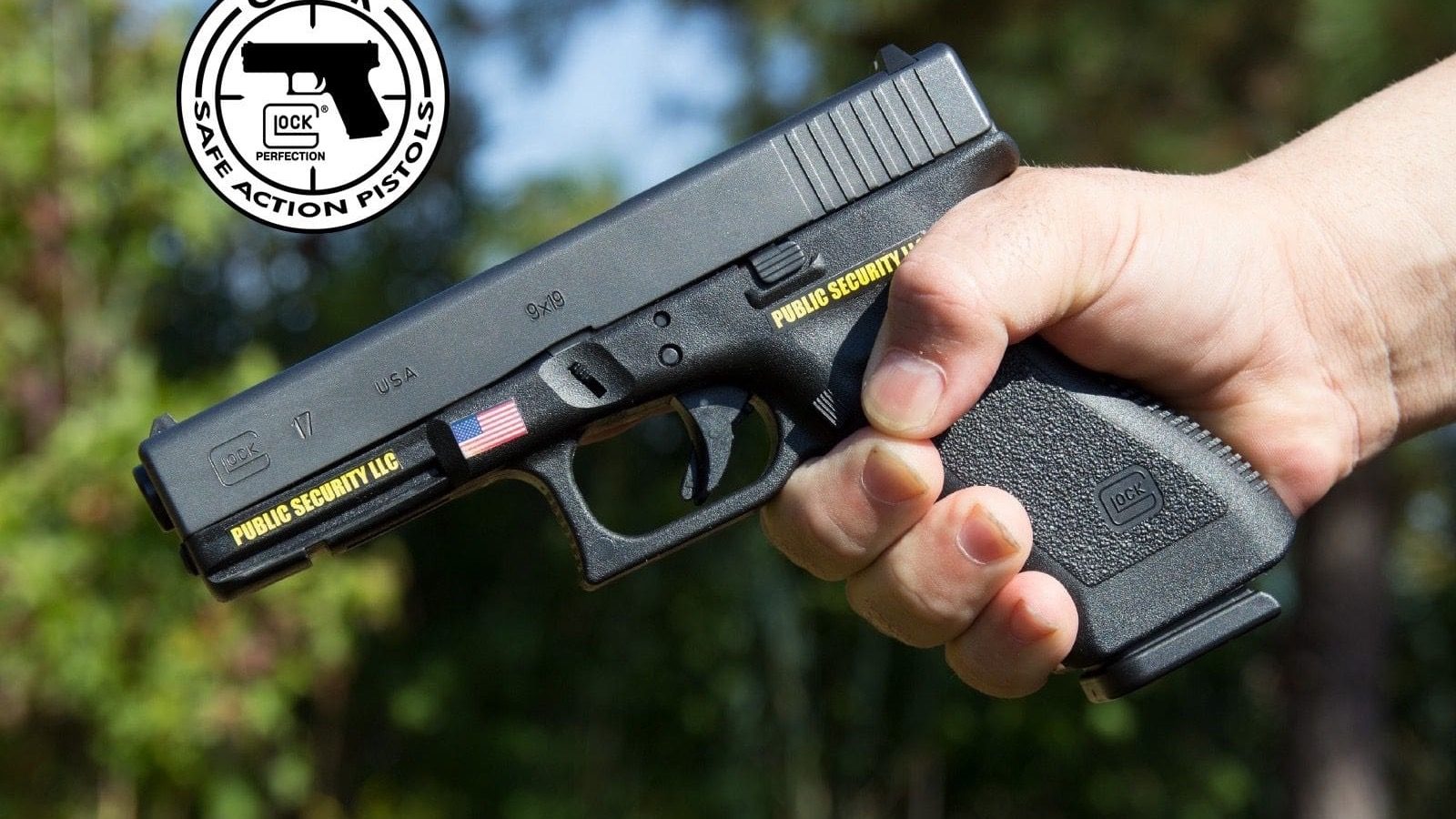
President Trump’s Justice Department just took California to federal court over guns, and the argument is exactly the one Second Amendment supporters have been making for years.
On July 1, 2026, DOJ filed suit against the State of California, Attorney General Rob Bonta, and other state officials to halt California’s new Glock Ban and to challenge the state’s Handgun Roster.
The case is United States v. State of California et al., filed in the U.S. District Court for the Central District of California, case number 8:2026-cv-1697.
The core of the government’s argument is simple. California cannot ban ordinary, lawful handguns just because a criminal could illegally modify one.
Justice Department SUES CALIFORNIA to Halt Glock Ban
"The Second Amendment is a sacred right belonging to all Americans, even those in California. California cannot ban the most popular type of handgun in America," said Acting Attorney General @DAGToddBlanche. "We will work to… pic.twitter.com/yqUDW2vzXp
— U.S. Department of Justice (@TheJusticeDept) July 1, 2026
The Justice Department announced that it is challenging both the new Glock Ban and California’s Handgun Roster as unlawful under the Second Amendment.
The department says the Glock Ban would stop retail purchase of common semiautomatic handguns made by Glock and other manufacturers with similar firing mechanisms. DOJ argues California is targeting ordinary pistols based on illegal aftermarket behavior by criminals.
The release also says the state’s Handgun Roster limits which handguns Californians are even allowed to buy in the first place. That turns this from a narrow fight over one statute into a much broader fight over whether California can keep boxing citizens into a shrinking list of government-approved firearms.
DOJ pointed to recent Supreme Court Second Amendment precedent and said its newly established Second Amendment Section is bringing the case. The signal is big: President Trump’s DOJ has moved from statements to federal litigation against blue-state gun restrictions.
The heart of the fight lives in the DOJ complaint, and it lays out the theory in plain terms.
The filing notes that handguns are the most popular self-defense weapon in America. It says California’s new Penal Code section 27595 bans common semiautomatic pistols based on illegal aftermarket conversion devices, often called switches.
Those switches can turn a normal pistol into something it was never sold as. But the complaint stresses that Glock and Glock-style manufacturers are separate from those illegal converters, meaning the state is blaming lawful firearms for criminal add-ons.
DOJ gives the court an analogy that lands hard. Banning these pistols because a criminal might illegally convert one, the complaint argues, is like outlawing ordinary shotguns because someone with a hacksaw can illegally make a sawed-off shotgun.
The government also argues that the right to keep and bear arms includes the right to acquire arms in the first place.
That right-to-acquire point is where the Handgun Roster comes in.
"The Civil Rights Division will defend law-abiding citizens from states that seek to disarm them illegally," said @AAGDhillon. "This lawsuit is yet another example of this Justice Department enforcing the Second Amendment by protecting citizens against unconstitutional state… https://t.co/ePYSvVawhp
— DOJ Civil Rights Division (@CivilRights) July 1, 2026
The complaint describes roster requirements such as chamber-load indicators, magazine-disconnect mechanisms, and microstamping-related restrictions.
Here is the number that should stop any honest reader. DOJ says no new handguns were added to California’s roster from 2013 to 2023.
For a full decade, the complaint argues, Californians were effectively pushed toward older models while newer handguns stayed off limits.
The people carrying this fight are named. Acting Attorney General Todd Blanche said the Second Amendment is a sacred right belonging to all Americans, including Californians.
Assistant Attorney General Harmeet Dhillon said the Civil Rights Division will defend law-abiding citizens from states that try to disarm them illegally.
The Washington Examiner reported that Dhillon had already warned California officials to back off the Glock Ban before the lawsuit landed.
According to that report, the lawsuit followed after a June 30 deadline passed with California refusing to stand down. That detail makes the filing look less like a surprise and more like the next step after DOJ put the state on notice.
The outlet also noted the complaint’s argument that the ban is presumptively unconstitutional because it strips Californians of the chance to acquire common handguns. That is the cleanest version of DOJ’s case: a state cannot make the Second Amendment depend on whether politicians like the model.
So the fight reaches beyond Glock. It is over whether California can use technical restrictions and approval lists to make ordinary arms practically unavailable to ordinary citizens.
On the California side, the San Francisco Chronicle reported that the suit names Attorney General Rob Bonta and challenges AB 1127, a measure signed by Governor Gavin Newsom that took effect July 1.
The Chronicle noted the law stops short of explicitly naming Glock, though Glock has been the central target over claims its pistols can be modified with switches. Supporters of the law frame it as a response to illegal conversion devices, while DOJ says California overshot the Constitution by targeting common legal handguns.
Bonta’s office defended the state’s gun laws and said California will respond in court. That means the fight now moves where it belongs: into a federal courtroom.

That distinction matters because no judge has halted the California law yet. DOJ filed the case and is asking for relief, but the court battle still has to play out.
The Associated Press reported that the Trump administration sued both California and Virginia on July 1 over new state gun restrictions.
AP described the California law as a ban on gun-shop sales of certain handguns that can be easily converted into fully automatic weapons. The outlet also noted that attorneys general in both states vowed to defend their laws.
The broader context matters because this fight reaches beyond one state. Democratic-led states keep looking for new ways to restrict firearms after major Supreme Court gun-rights decisions, and now DOJ is signaling that those moves will get federal resistance.
AP also noted the sharp split between blue states and red states on gun legislation. In practical terms, that means the next wave of Second Amendment fights is likely to be fought state by state, statute by statute, and filing by filing.
SCOTUS’s recent 2A decisions hew to America’s natural law, and the right to self-defense. The @CivilRights Division’s 2A section at @theJusticeDept will continue to aggressively protect Americans’ right to keep and bear arms, and follow the precedent that SCOTUS set. pic.twitter.com/PdVMXn70cH
— AAGHarmeetDhillon (@AAGDhillon) July 1, 2026
For now, the lawsuit is filed and still pending. No court has yet halted California’s law, and the state is expected to fight hard to keep it.
But the direction of this Justice Department is unmistakable. It is treating the right to buy a common handgun as a right worth suing over, and it is putting the states that chip away at that right on notice.
What are your thoughts?


Join the conversation!
Please share your thoughts about this article below. We value your opinions, and would love to see you add to the discussion!