

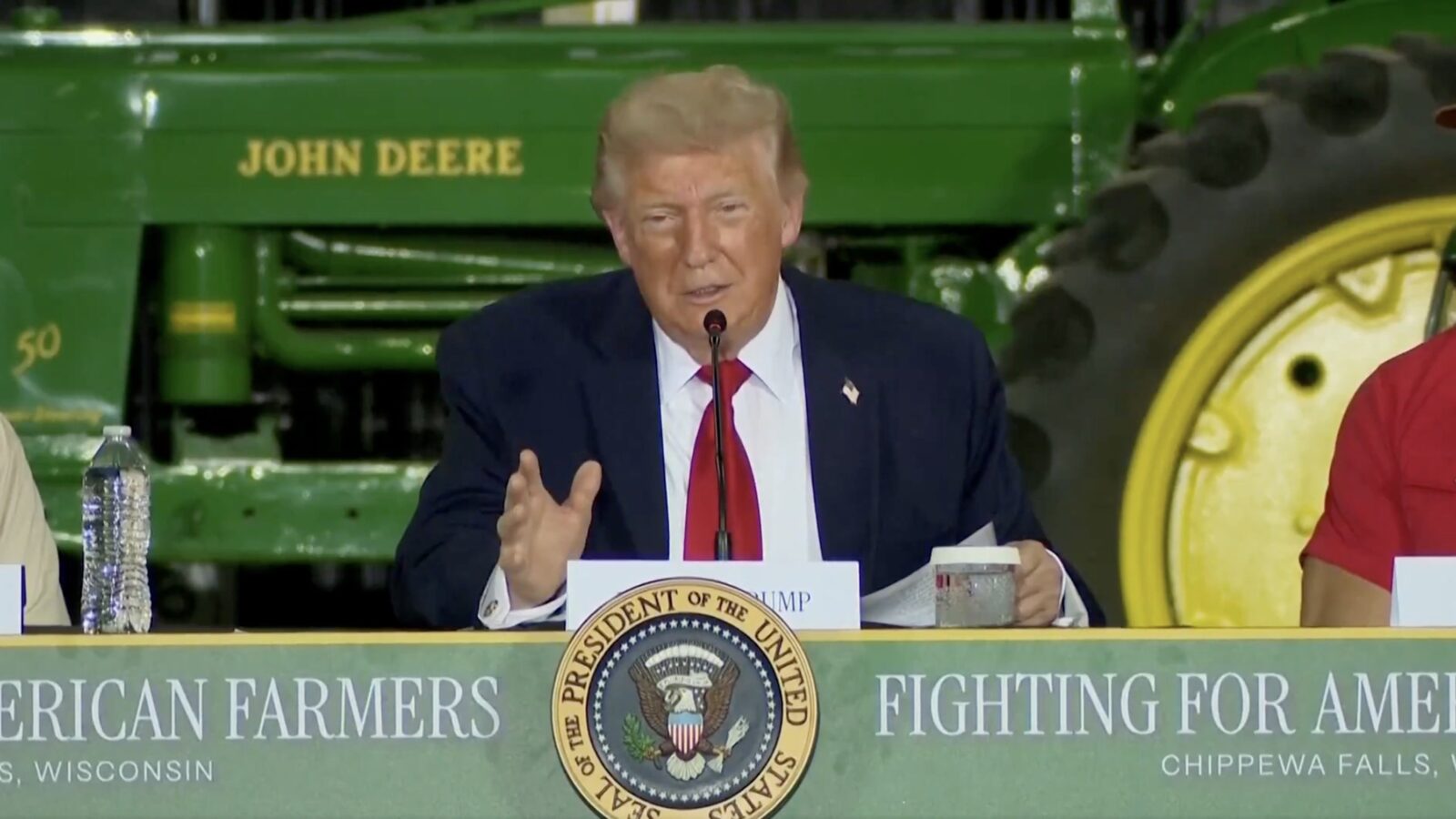
President Trump just moved to give American farmers a real break on one of their biggest costs.
On June 29, 2026, he declared an emergency and authorized the temporary suspension of certain anti-dumping and countervailing duties on phosphate fertilizer imported from Morocco.
The White House posted the fact sheet the next morning, June 30.
The reason is simple. Phosphate fertilizer is critical plant food, and there is not enough of it flowing to American farms at a price that works.
Fact Sheet: President Donald J. Trump Declares an Emergency and Authorizes the Temporary Suspension of Certain Duties on Phosphate Fertilizer from Moroccohttps://t.co/tLHWdpZ4id
— U.S. State Dept – Near Eastern Affairs (@StateDept_NEA) June 30, 2026
The White House laid out exactly what this does and why it matters.
The emergency declaration targets threats to the availability of enough fertilizer to meet expected U.S. agricultural demand, with the administration pointing specifically to phosphate fertilizer imported from Morocco and the pressure already hitting farm planning.
For farmers, that goes straight to the heart of production decisions. Phosphate fertilizer is described by the White House as a critical type of plant food, and the administration says it is vital to food security.
Corn, soybeans, wheat, rice, and other major crops all depend on fertilizer access long before anyone sees the final grocery bill. When input costs move, the pain starts on the farm months before it reaches the store shelf.
The fact sheet frames the move plainly: protect America’s food supply, support domestic agricultural production, and keep farmers supplied in the near term while broader manufacturing capacity is built out.
The White House also makes clear domestic production expansion is a longer project. The immediate goal is to prevent farmers from getting squeezed while that work continues.
The same fact sheet ties the action to President Trump’s broader farm agenda, including tax relief, equipment expensing, and policies the administration says are meant to strengthen rural producers and reduce pressure on working families.
The legal details sit in the proclamation itself.
President Trump invoked emergency authority under the Tariff Act of 1930 and directed Treasury and Commerce to allow duty-free importation tied to phosphate fertilizers from Morocco. Those departments are also told to consult as they carry out the relief.
The relief applies to certain anti-dumping and countervailing duties, including duties and estimated-duty deposits, connected to those Moroccan phosphate fertilizer imports. That means the action reaches the actual cost stack importers and farmers feel.
The suspension runs for eight months or until the emergency is terminated, whichever comes first, giving the administration a defined window instead of an open-ended trade carveout while officials monitor supply conditions and report any need for more action.
The timing is the whole point. The proclamation notes that farmers apply more than half of the phosphate fertilizer they use each year between fall and very early spring, before the next planting season.
It also states the obvious problem behind the emergency: current U.S. phosphate fertilizer production is not enough to cover domestic food production once exports are accounted for.
The proclamation also points to disruptions in global fertilizer supply chains, including conflicts in fertilizer-producing regions and trade actions by major fertilizer-producing countries.
Morocco is singled out as a foreign source able to supply phosphate fertilizer without disruption at this moment.
In other words, this trade action has dirt-under-fingernails consequences. It is a direct attempt to keep a critical crop input available before the next planting cycle becomes a cost crisis.
Fertilizer Relief Update 🇺🇸🌾
President Trump and @USDA are delivering real results for American farmers.
Under the Biden Administration, fertilizer prices surged to record highs—rising roughly 40% overall, with some nutrients nearly doubling at their peak. Since January 2025,…
— Secretary Brooke Rollins (@SecRollins) June 30, 2026
USDA Secretary Brooke Rollins said President Trump and her department are delivering results, and she tied this relief to the fertilizer price pressure farmers carried under the prior administration.
Farm groups did not wait to react, and they were not lukewarm about it.
The National Association of Wheat Growers called the action welcome relief for wheat farmers, and that reaction tells you why this story matters outside Washington, especially in wheat country.
NAWG said fertilizer remains one of the most significant production expenses on family farms and warned that growers have been operating on razor-thin margins for years. The group framed the order as a way to reduce input costs and restore certainty during volatility.
The group had already urged the U.S. International Trade Commission earlier this year to revoke the countervailing duty orders on phosphate fertilizer imports from Morocco and Russia.
Its argument was simple: higher fertilizer costs do not stay in a spreadsheet. They hit the competitiveness of U.S. farmers and the survival math for family operations.
That is why the wheat industry treated the order as more than a policy win. For growers buying fertilizer before revenue arrives from a crop, certainty can matter almost as much as price.
USA Rice welcomed the suspension too, calling phosphate fertilizer a key nutrient in rice production and tying the move directly to fertilizer supply-chain disruption.
The group noted that countervailing duties on Moroccan phosphate fertilizer imports have been sitting on the books since April 7, 2021, meaning producers have been dealing with this cost layer for years.
USA Rice said the move could help balance the fertilizer market and make a key input more affordable for producers. That is especially important in a crop where fertilizer decisions are part of the basic production plan.
It also pointed to broader work in Congress, including the Lowering Input Costs for American Farmers Act, aimed at eliminating tariffs and duties on phosphate fertilizer imports from Morocco and easing farm production costs.
The rice industry has also pressed the Federal Trade Commission on fertilizer concerns, with farmers warning that rising input costs make it harder to keep operations stable.
That makes the White House action land as immediate relief and a signal that the administration is listening to the production side of the food chain.
Sen. Roger Marshall called President Trump’s action a huge win for American agriculture.
President Trump is once again putting America’s farmers first.
Today’s Executive Order suspending Biden-implemented phosphate fertilizer duties is a huge win for American agriculture. We’ve fought for years to eliminate these unnecessary production costs, and today, farmers will…
— Dr. Roger Marshall (@RogerMarshallMD) June 29, 2026
Marshall said farmers have fought for years to eliminate these unnecessary production costs.
Strip away the policy language and this lands where it counts.
Fertilizer is one of the heaviest input costs a farmer carries, and it gets applied months before the crop ever comes up.
Lower that cost during the window when farmers are buying and spreading it, and you protect both the family operation and the food supply that depends on it.
That is what President Trump did here, and farmers across corn, soybean, wheat, and rice country are the ones who feel it first.
What are your thoughts?


Join the conversation!
Please share your thoughts about this article below. We value your opinions, and would love to see you add to the discussion!