

The Supreme Court just handed election-integrity voters a brutal loss.
On June 29, 2026, the Court ruled 5-4 that federal Election Day statutes do not require mail-in ballots to be physically received by Election Day.
States can count ballots postmarked by Election Day but delivered afterward, so long as state law allows it.
That is the holding in Watson v. Republican National Committee, and the lineup is what stings the most.
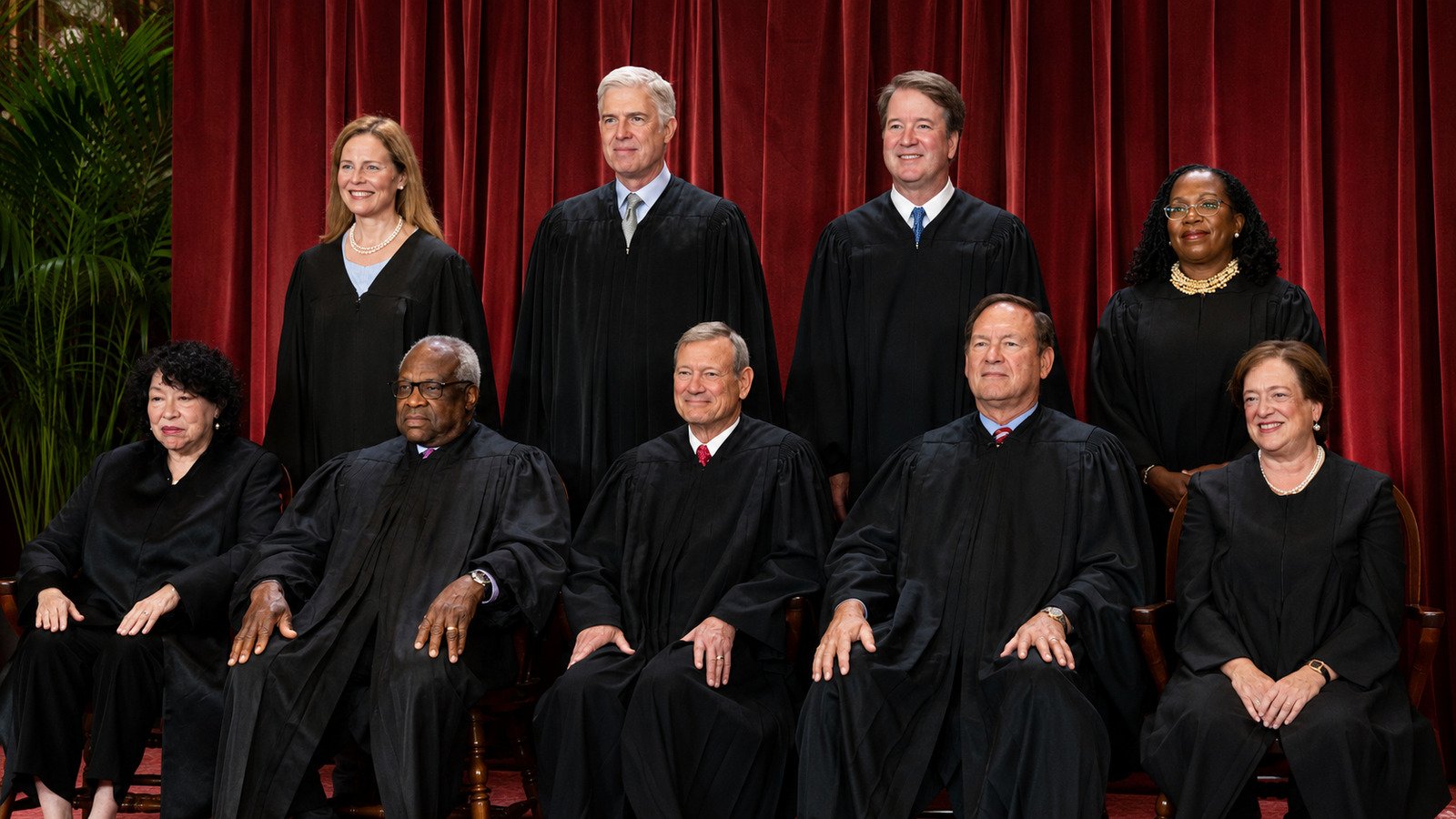
Justice Amy Coney Barrett wrote the majority opinion. Chief Justice John Roberts joined her along with the three liberal justices: Sonia Sotomayor, Elena Kagan, and Ketanji Brown Jackson.
Justice Samuel Alito dissented, joined by Justice Clarence Thomas and Justice Neil Gorsuch. Justice Brett Kavanaugh joined most of the dissent.
So two of the justices conservatives counted on, Roberts and Barrett, crossed over to deliver this one to the left.
🚨 In a 5-4 vote, the Supreme Court ruled that federal law does not require mail-in ballots to be received by Election Day, holding that states may count ballots postmarked by Election Day but received afterward if state law allows it. pic.twitter.com/j0QiGwhHUM
— SCOTUS Wire (@scotus_wire) June 29, 2026
Here is the case that got us here.
Mississippi lets certain residents vote absentee in federal elections, including college students away from home and senior citizens.
State law requires those absentee ballots to be postmarked on or before Election Day and received no more than five business days after the election.
In 2024, the Republican National Committee, the Mississippi Republican Party, and individual plaintiffs sued the Mississippi secretary of state and election officials over that grace period. The Libertarian Party of Mississippi filed a similar suit.
The district court sided with Mississippi. The Fifth Circuit reversed and held the state law was preempted by federal Election Day statutes.
Now the Supreme Court has reversed the Fifth Circuit and sent the case back down.
The New York Post framed the decision as a clear win for Democrats heading into the midterms, and the numbers explain why. The report noted that Mississippi was not some strange one-off; at least 13 other states have similar grace periods on the books.
The Post also reported that nearly 30 states give certain mail-in voters some extra time to get ballots in. That is why this ruling matters far beyond Mississippi, because the Court just blessed a legal theory that can protect late-arriving ballot systems in multiple states.
The Post added that President Trump has long blasted states that keep counting ballots after Election Day, and that the Justice Department backed the RNC lawsuit. The administration was on the right side of this fight, but the Court sided with the state officials defending the delayed-receipt rule.
Justice Barrett delivered the opinion of the Court. Justice Alito dissents.
Read the ruling here: https://t.co/xtswv7rtP9
— SCOTUS Wire (@scotus_wire) June 29, 2026
The majority tried to keep its reasoning narrow.
Barrett wrote that federal law dictates when ballots must be cast, while state law governs when those ballots must be received.
The Election Day statutes, the majority said, say nothing about ballot receipt.
The Court was careful to say it was not touching absentee voting generally, early voting, the use of the Postal Service or common carriers, post-election counting and certification, or Congress’s broader authority over federal elections.
The ruling does not legalize every late ballot in America. It covers ballots postmarked by Election Day and received afterward under state law, in Mississippi’s case within five business days.
Alito did not buy the majority’s logic, and his dissent cut to the heart of it.
He argued that if ballots received after Election Day get added to the pool that decides the outcome, then the voters’ choice no longer actually happens on Election Day, which is exactly what the federal statutes set out to fix.
His words landed hard.
Justice Samuel Alito responds to this ruling:
"I cannot support this irresponsible escapade." https://t.co/Uq7p4F6UjG pic.twitter.com/ArnC6Ox4OL
— Townhall.com (@townhallcom) June 29, 2026
For voters who have spent years asking for one simple thing, ballots in by Election Day, this ruling is a gut punch.
The whole point of an Election Day is that the people decide on that day. Stretching the count out for days afterward chips away at that, and the Court just blessed it 5-4.

The fight over election integrity does not end here. It moves back to the states, to Congress, and to the voters who refuse to accept that Election Day is just a suggestion.
Read the full Supreme Court ruling here: Watson v. Republican National Committee.

Join the conversation!
Please share your thoughts about this article below. We value your opinions, and would love to see you add to the discussion!