

A French citizen living in New Jersey has admitted in federal court that he voted in a United States election he had no legal right to vote in.
The U.S. Attorney’s Office for the District of New Jersey announced the guilty plea on June 25, 2026.
The defendant is Eliezer Kadoch, a 39-year-old citizen of France from Toms River. He has never held American citizenship.
Kadoch pleaded guilty before U.S. Magistrate Judge J. Brandon Day in Trenton to voting by an alien in a federal election.
Alien Admits to Illegally Voting in Federal Election https://t.co/JeOsAm8lMP
— NJ US Attorney (@USAO_NJ) June 25, 2026
The charge is laid out plainly in the federal information, captioned United States v. Eliezer Kadoch.
The document is listed under case number 26-5044, and it was filed by Assistant U.S. Attorney Joseph McFarlane with approval from the office’s Special Prosecutions Division chief.
It charges a violation of 18 USC 611, the federal law covering voting by aliens in federal elections and protecting federal contests from ineligible ballots in New Jersey.
It says that on or about November 8, 2022, in Ocean County, Kadoch knew he was not a United States citizen and still voted in an election held at least partly to choose federal candidates. That is the legal core of the case.
That matters because the 2022 contest included races for the U.S. House of Representatives. The charging document is a federal voting charge tied to a specific election day, county, defendant, and statute, with no room to confuse it for a routine registration typo.
The document also keeps the case narrow. It does not try to litigate New Jersey’s registration system; it charges the illegal vote itself and leaves the driver’s-license explanation to the reporting around the plea.
The U.S. Attorney’s Office credited its Election Integrity Task Force, a coalition of federal law-enforcement partners focused on protecting elections in New Jersey.
U.S. Attorney Robert Frazer said the task force brought the case, and the office identified the FBI, Homeland Security Investigations, and U.S. Citizenship and Immigration Services as part of the investigation.
That federal mix matters. This was handled as a federal election-integrity case with immigration and criminal-investigative agencies involved, which is exactly the response voters should expect when a noncitizen ballot reaches a federal race.
Kadoch faces up to six months in federal prison and a fine of up to $100,000. Sentencing is set for October 26, 2026, so the punishment has not yet been imposed.
The office’s public posture is simple: an alien admitted voting in a federal election, and the federal task force exists to catch exactly that kind of violation.
The defense is leaning on one detail that ought to set off alarms in Trenton.
Fox News reported that Kadoch’s attorney, Yosef Jacobovitch, said his client mistakenly believed he was allowed to vote because New Jersey automatically registered him when he obtained a state driver’s license.
Fox identified Kadoch as a 39-year-old French national from Toms River who has never held American citizenship.
The outlet also reported that he entered the plea before U.S. Magistrate Judge J. Brandon Day in Trenton federal court, tying the case directly to the official federal proceeding.
The attorney’s argument is not that a noncitizen may vote. The argument is that Kadoch believed he could vote after the state allegedly placed him into the registration system during the driver’s-license process, which is why the registration pipeline matters.
Fox also reported that the offense Kadoch pleaded to does not require proof of criminal intent. That means the case can still be criminal even if the defense insists he did not set out to break election law, because eligibility is the line.
That is what gives the story its political bite. The guilty plea is about one illegal vote, but the defense explanation points directly at New Jersey’s automatic-registration machinery.
🚨FIRST ON FOX: Attorneys representing a French national who recently admitted to illegally casting a ballot in the 2022 federal midterm elections told Fox News Digital that he thought he was allowed to vote because he was automatically registered when he received his New Jersey… pic.twitter.com/9sbm2CRIUH
— Alexandra Koch (@alexandrankoch) June 26, 2026
New Jersey’s own materials describe how this registration pipeline runs.
The New Jersey MVC page says eligible voters may register at a motor vehicle agency while applying for or renewing a license or non-driver ID.
The page also says the MVC reports that information to the New Jersey Division of Elections, and that a county commissioner of registration notifies the applicant if the voter application is accepted or needs correction.
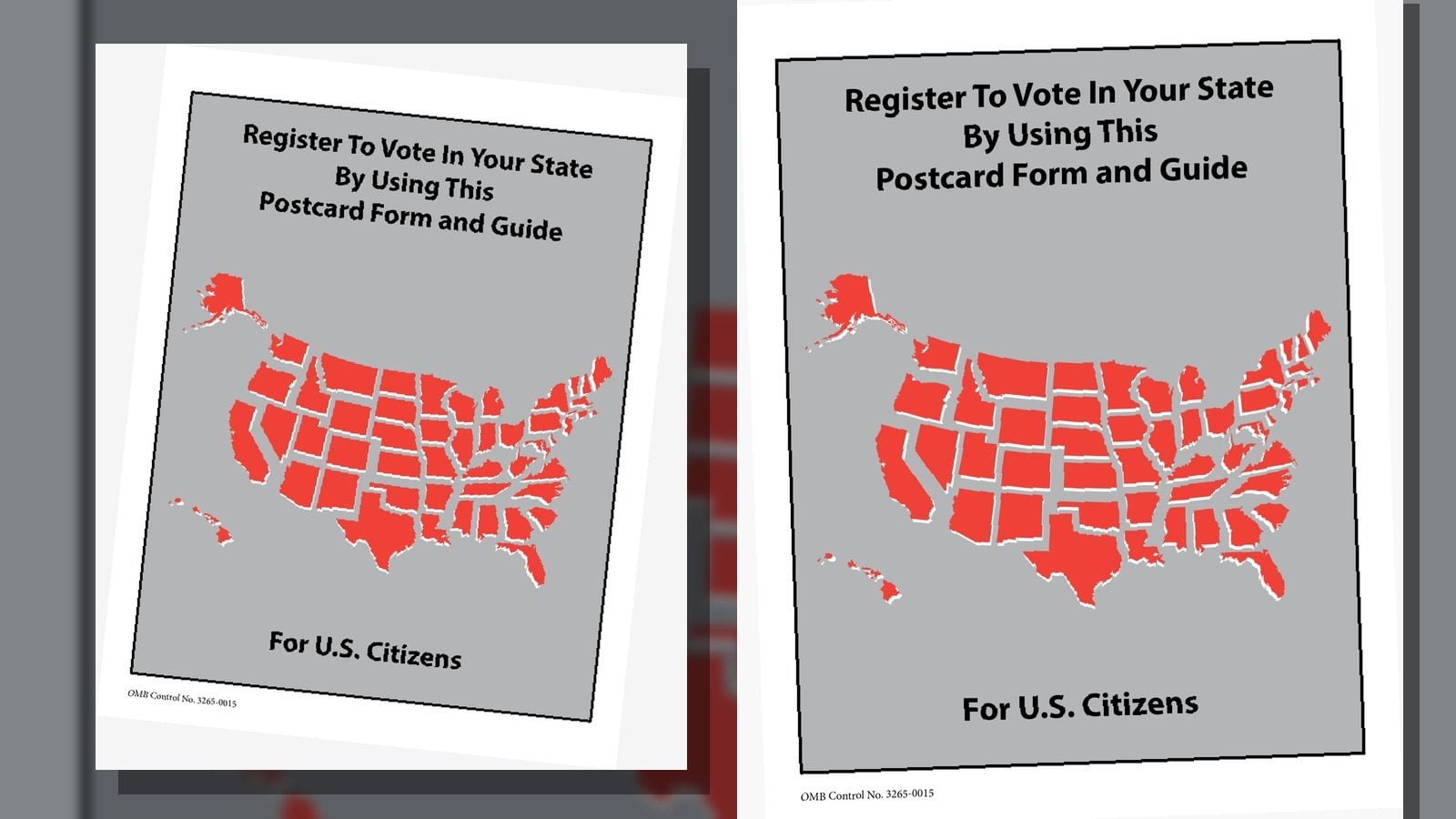
That is the front door Fox is pointing to: the state motor-vehicle process includes a license or ID card, and for eligible voters it can also become the path into the election system.
That makes the motor-vehicle checkpoint enormously important. If citizenship eligibility is not locked down there, the mistake can travel from a license transaction into a voter file.
Statutes posted by the New Jersey Department of State describe an automatic registration process for eligible applicants who apply for a license, permit, probationary license, or non-driver ID.
The statute says the applicant can be automatically registered to vote, or have an existing registration updated, in a way that satisfies both motor-vehicle requirements and voter-registration requirements.
It also says the applicant must be offered a chance to decline the automatic registration. The key word in all of that is eligible.
The law is written for people who qualify to vote. Citizenship screening is supposed to happen before anyone lands on the rolls, long before a ballot can be requested, issued, marked, received, returned, or counted.
The system runs on the front end through a motor vehicle counter, and that is exactly where a sloppy automatic process can go wrong.
Kadoch’s guilty plea does not prove every automatic-registration system is broken. It does show why proof-of-citizenship checks and routine audits are not optional details.
Taken together, the MVC page and the statute show how one state service can feed another. That is efficient only if the eligibility screen is airtight.
Fox reported that the America First Policy Institute has warned about this very gap.
AFPI argues that issuing driver’s licenses to noncitizens and then running automatic voter registration can put noncitizens on the rolls. The group’s model legislation calls for proof of citizenship and audit requirements.
One French citizen in Ocean County is one illegal ballot too many.
If the attorney’s account is right, this case shows how quickly automatic registration can turn a license counter into a voter-roll problem.
The case landed a guilty plea. The bigger fix is making sure the rolls only carry the people the Constitution says belong there.

Join the conversation!
Please share your thoughts about this article below. We value your opinions, and would love to see you add to the discussion!