

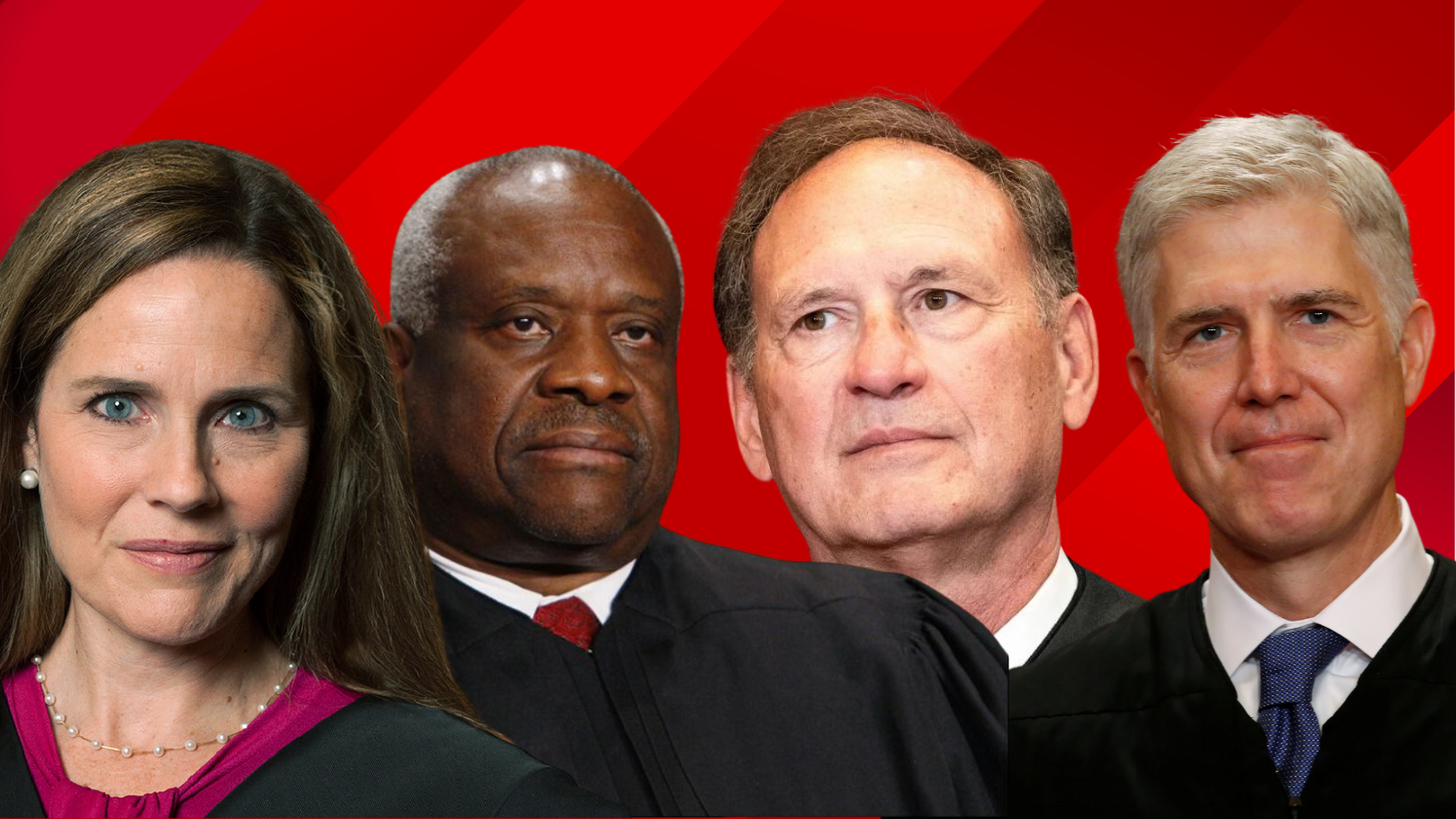
The Supreme Court just handed law-abiding gun owners a massive win.
In a 6-3 decision issued June 25, 2026, the Court struck down Hawaii’s rule that banned concealed-carry permit holders from carrying handguns onto private property open to the public unless the owner gave express permission.
The case is Wolford v. Lopez, docket 24-1046.
Justice Samuel Alito delivered the opinion of the Court. The Court held that Hawaii’s law violates the Second and Fourteenth Amendments.
This is a clean, decisive victory for the post-Bruen framework, and it slams the door on one of the slickest workarounds blue states cooked up after they lost in 2022.
🚨 In a 6-3 vote, the Supreme Court struck down Hawaii’s rule that banned carrying guns on most private property that is open to the public unless the owner gave explicit permission, holding that it violates the Second and Fourteenth Amendments. pic.twitter.com/yz7303UybD
— SCOTUS Wire (@scotus_wire) June 25, 2026
Here is the heart of it.
The Supreme Court opinion in Wolford v. Lopez reversed and remanded the Ninth Circuit. The case was argued January 20, 2026, decided June 25, 2026, and centered on Hawaii’s attempt to make lawful carry on public-facing private property illegal unless the owner gave express permission.
The holding is the whole ballgame: Hawaii’s rule violated the Second and Fourteenth Amendments as applied to licensed concealed-carry permit holders carrying handguns on private property open to the public. Alito’s opinion was joined by Chief Justice Roberts and Justices Thomas, Gorsuch, Kavanaugh, and Barrett.
Barrett filed a concurrence, joined by Thomas and Gorsuch as to Part II-B. Justice Kagan dissented, and Justice Jackson dissented too, joined by Sotomayor.
The Court explained that the petitioners are among “the people” protected by the Second Amendment and that they seek to “bear” “Arms” for self-defense. That puts them squarely inside the plain text of the Amendment, which makes Hawaii’s law presumptively unconstitutional unless the state can show a real historical tradition behind it.
Then the burden shifts to Hawaii to find a real historical tradition that fits. It couldn’t.
The Court zeroed in on how Hawaii flipped the standard common-law default. Under the traditional rule, people may enter property held open to the public unless the owner withdraws consent.
Hawaii reversed that. Under its scheme, nobody carrying a firearm could enter unless the owner affirmatively authorized it first.
Alito noted how badly that burdens everyday life for permit holders who simply want to stop at a gas station, grab dinner at a restaurant, or run into a store.
The opinion also exposed how hostile Hawaii had been to carry rights in the first place. Before Bruen, carry permits were nearly impossible to get, and from 2000 to 2018 the state apparently issued only four such licenses.
Then, after Bruen forced these states to actually issue permits, Hawaii and four of the five other states the Court called out turned around and adopted these “default rule” restrictions on public-facing private property. The workaround was obvious.
The Court wasn’t buying Hawaii’s history lesson either. The state leaned heavily on old anti-poaching and hunting-related laws, and Alito rejected those analogues as far too different from a modern blanket default ban.
The opinion also shot down the idea that local attitudes can shrink the meaning of the Bill of Rights. The Second Amendment applies the same way in every single state.
Justice Alito delivers the opinion of the Court. Justice Kagan dissents. Justice Jackson dissents, joined by Sotomayor.
Read the ruling here: https://t.co/0MGHfS8xQP
— SCOTUS Wire (@scotus_wire) June 25, 2026
One important point, so nobody gets this twisted.
The ruling does not say private businesses cannot ban guns on their own property. Property owners can still exclude firearms if they choose.
What Hawaii cannot do is make “no carry” the government-imposed default for public-facing private property and force lawful permit holders to assume they’re banned everywhere unless told otherwise.
That’s the whole game. The state tried to make a constitutional right the exception instead of the rule.
CBS News reported that critics nicknamed Hawaii’s restriction the “vampire rule,” because law-abiding carriers had to be invited in before entering many stores, restaurants, gas stations, and other private places open to the public. CBS also noted that violating the rule was a misdemeanor punishable by up to a year in prison.
That is why this was not some minor paperwork dispute. A person who had already cleared Hawaii’s concealed-carry process could still risk criminal exposure just by carrying while running everyday errands unless the property owner had affirmatively given permission first.
CBS also noted Hawaii was one of five states with these presumptive restrictions. Similar measures in New York, California, and Maryland have already been blocked, and President Trump’s administration backed the gun owners in this fight.
The report also put the ruling in the post-Bruen chain of gun cases, where courts are still working through what the right to carry outside the home means in practice. This decision lands squarely on the side of ordinary lawful carry.
The legal background lines up with all of it.
The Constitution Annotated summary from the Library of Congress laid out the core question before the decision: whether Hawaii violated the Second Amendment by barring permit holders from carrying on private property open to the public absent express consent. That framed the fight as a direct test of the right to keep and bear arms for self-defense.
The background also walked through the post-Bruen standard. Once a gun restriction burdens conduct covered by the Second Amendment’s text, the government must point to a national historical tradition that supports the modern restriction.
That was the problem for Hawaii. The Ninth Circuit had upheld Hawaii’s default rule, but the petitioners argued the appeals court misapplied Bruen and split from other courts confronting similar laws.
The high court just settled that fight the right way. A state cannot turn the right to carry into something citizens may exercise only after getting an affirmative green light at the door.
This was also a busy day at One First Street. The official Supreme Court opinions list shows four opinions released June 25, 2026, including Wolford v. Lopez, Mullin v. Al Otro Lado, Mullin v. Doe, and Monsanto v. Durnell.
That same release list is what made this gun-rights ruling part of a remarkable day at the Court. By the time Wolford landed, the justices had already sent major signals on immigration, federal power, and other high-profile constitutional fights.
For Second Amendment supporters, though, Wolford is the one to frame. It takes a practical, everyday question and answers it in favor of the constitutional right.
Gun owners will be celebrating this one for a long time.
The message from this Court could not be clearer. The Second Amendment is a real right, and it travels with law-abiding Americans into ordinary daily life.
States do not get to neuter it with clever defaults and creative paperwork. Hawaii tried, and it lost 6-3.
Read the full Supreme Court ruling here: Wolford v. Lopez.

Join the conversation!
Please share your thoughts about this article below. We value your opinions, and would love to see you add to the discussion!