

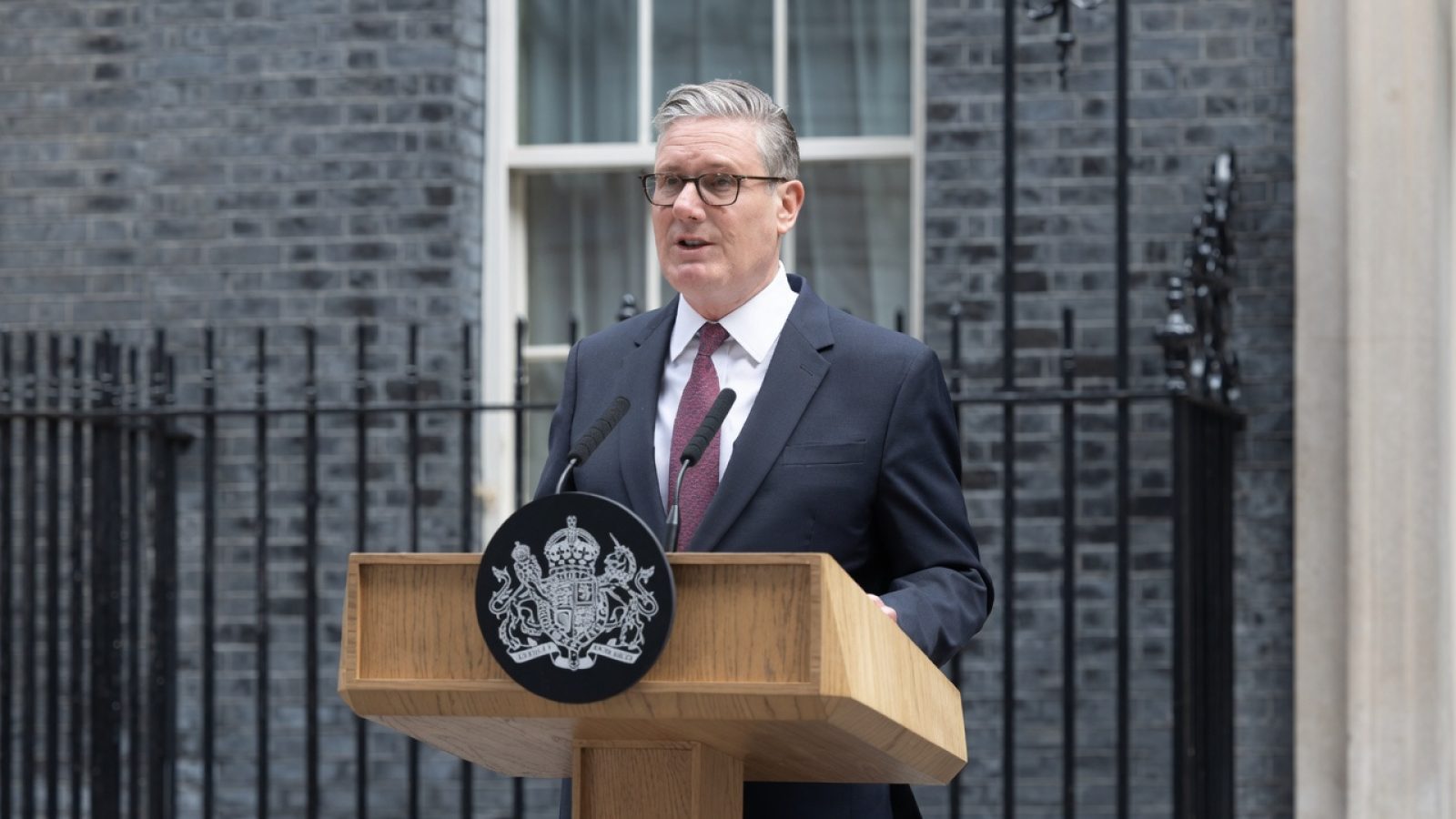
President Donald Trump called it over the weekend, and Keir Starmer made it official early Monday.
The U.K. prime minister resigned from office as he and his leftist Labour Party face a wave of backlash over immigration and a host of other issues plaguing British citizens.
Fox News provided an overview of the latest development:
“Every decision I’ve taken has been about putting the country I love first. That is why I will resign as leader of the Labour Party. I have spoken to his majesty the king this morning to inform him of my decision,” he said while delivering a statement outside of 10 Downing Street.
ADVERTISEMENTStarmer also acknowledged growing opposition within his own party, saying, “The question my party is asking now is whether I am best placed to lead us into the next general election. I have heard the answer of my parliamentary party to that question, and I accept that answer with good grace.”
Starmer said he would remain caretaker prime minister until Labour members choose a new leader in the coming weeks.
The announcement follows weeks of turmoil inside Britain’s ruling party after Labour lost roughly 1,500 council seats and control of more than 25 councils in local elections last month, according to reporting from U.K. outlets. The losses were fueled by major gains from Nigel Farage’s Reform UK party in Labour’s traditional strongholds and by Green Party advances in urban areas.
Starmer’s domestic troubles deepened after a damaging dispute with President Donald Trump over the Iran conflict earlier this year. The British prime minister initially resisted U.S. requests to use British bases during military operations against Iran, prompting Trump to criticize him publicly, saying: “This is not Winston Churchill that we’re dealing with,” on March 3.
But after initially drawing a hard line, Starmer later approved limited defensive cooperation with the U.S., angering anti-war lawmakers inside his own party while still failing to satisfy critics who accused him of indecision and weak leadership.
Public frustration over the episode surfaced in YouGov focus groups and polling commentary, where voters described Starmer as “weak,” “indecisive” and overly reactive to Washington.
The wildly unpopular politician didn’t find much sympathy among social media users:
For a history teacher, it’s worrying how dumb you come across as.
How can you think Starmer is a decent, humble man? Surely click bait?
Here’s a little help. Google-
Type Starmer and add each of these words individually to get answers.
Farmers
Pensioners
Immigration…— Tommo (@Time4Restore29) June 22, 2026
So … the party that put up Starmer who failed miserably now gets to choose a different loser to finish the job of ruining England ?
— RP McMurphy (@BuffaloBill2024) June 22, 2026
He was born.
Then he made English people the least important demographic in the country.
He demonised them as far right and has allowed our flag, traditions and culture to be used against us.
He tried to give our territory away out of guilt and self-loathing.
He has failed…
— Sudo Mass (@MemeDayz45) June 22, 2026
Here’s the full text of the post above:
He was born.
Then he made English people the least important demographic in the country.
He demonised them as far right and has allowed our flag, traditions and culture to be used against us.
He tried to give our territory away out of guilt and self-loathing.
He has failed and embarrassed us on the world stage consistently, strained our relationship with our biggest ally, and is trying to drag us back into the failing, flatlining EU against the democratic will of the people.
He has made the defence of Ukraine more important than the defence of this country.
He recognised Palestine out of pure ignorance and incompetence, inadvertently endangering the lives of British Jews.
ADVERTISEMENTHe failed to stop 71,000 small boat arrivals.
His chancellor has destroyed small- to medium-sized businesses by raising the minimum wage and making it impossible for them to hire people.
His policies have driven out more millionaires in the last two years than at any other time in history.
He is weak and traitorous.
ADVERTISEMENTHis achievements are giving people free breakfasts with our money, mostly funding proxy wars for a country that is not in NATO.
We are not in the EU.
The entire Labour Party is anti-British and completely compromised; they lack British culture and values as a whole.
He is also the most unpopular prime minister in British history.
So it is time for him to fuck off now.
Yahoo reported on Starmer’s unpopularity and what his resignation could mean for the crucial U.S.-U.K. relationship:
Starmer’s fall in popularity has been remarkable, particularly given the party’s huge general election victory in July 2024, which swept Labour to power for the first time since 2010. In hindsight, that victory was as much a result of the unpopularity of the Conservative government it replaced as of any overwhelming support for Labour or Starmer himself.
In the subsequent months, Starmer’s support in the polls has shrunk, with critics repeatedly highlighting poor economic growth as well as a number of policy reversals on key promises, including benefits, taxes and workers’ rights.
ADVERTISEMENTLabour MPs have also grown increasingly worried by the significant rise in popularity of the Reform Party, led by Nigel Farage, which many experts say now poses a genuine challenge at the next general election.
What does this mean for the relationship with the U.S.?
One of the most important diplomatic tests of any new prime minister will be forming a good relationship with Donald Trump.
Starmer and Trump’s relationship started well, with the prime minister scoring a surprise diplomatic victory in February 2025 when he presented the president with a letter from King Charles inviting him to the U.K. for an unprecedented second state visit in September of the same year.
However, the friendly relationship soured in recent months, most notably when the U.K. government refused to allow U.S. forces to use British military bases in the initial wave of attacks against Iran, which led to heavy criticism by Trump. Last week, Starmer announced a social media ban for under-16s, despite the Trump administration warning against such a move.
Here’s a clip of his announcement:
Watch live: My statement. https://t.co/MX7ga3FRGq
— Keir Starmer (@Keir_Starmer) June 22, 2026

Join the conversation!
Please share your thoughts about this article below. We value your opinions, and would love to see you add to the discussion!