

The Supreme Court handed down a unanimous ruling on June 18, 2026, that delivers a major win for the Second Amendment.
In United States v. Hemani, every justice agreed the government went too far in prosecuting a Texas man under a federal gun ban tied to drug use.
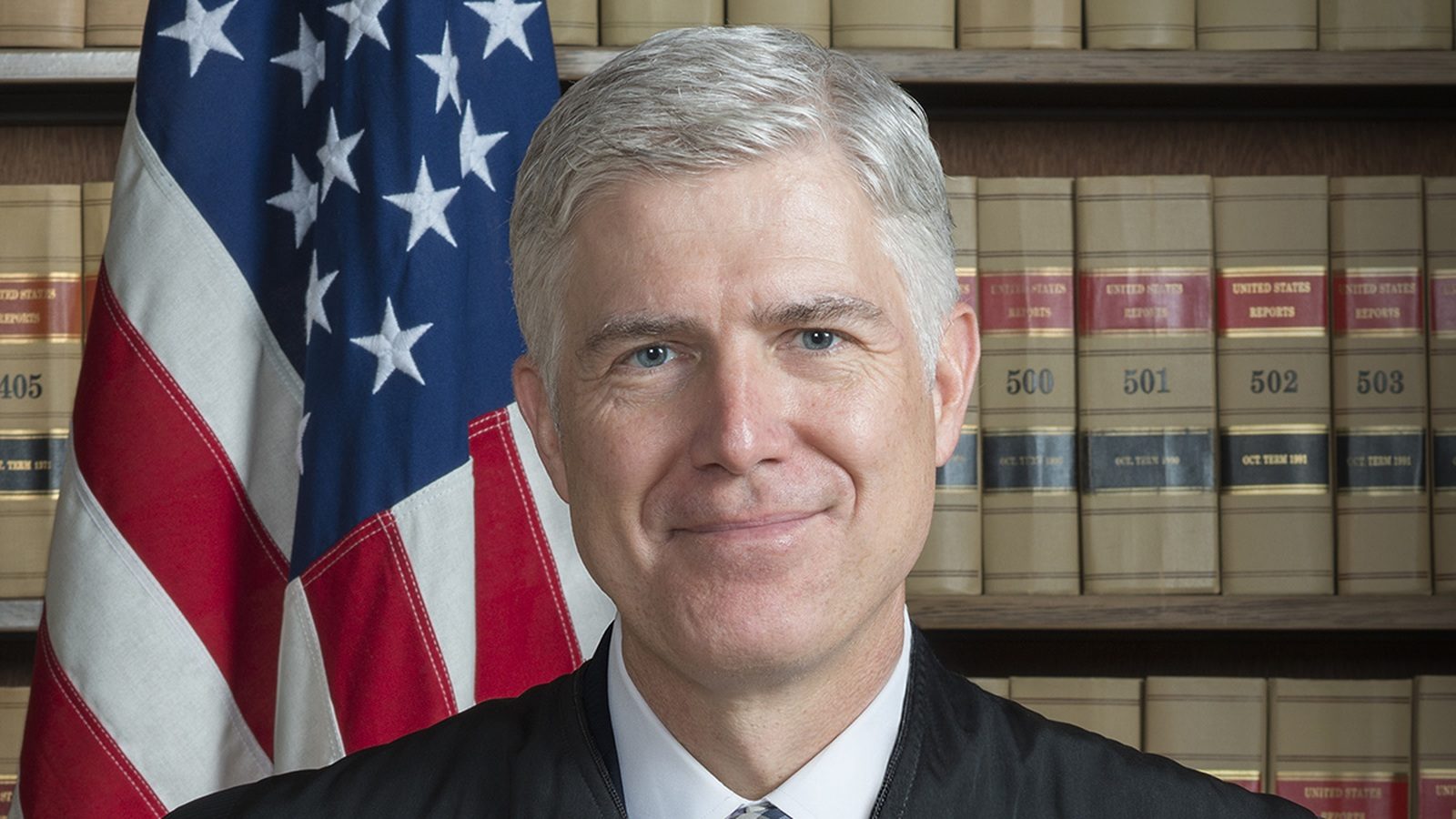
Justice Neil Gorsuch delivered the opinion of the Court.
The case involved Ali Hemani, a dual U.S.-Pakistan citizen born in Texas who admitted using marijuana roughly every other day and keeping a gun in his home.
Prosecutors charged him under 18 U.S.C. §922(g)(3), which bars unlawful users of controlled substances from possessing firearms.
BREAKING: Supreme Court unanimously strikes down federal gun ban for 'habitual' marijuana users, the same law that was used to prosecute Hunter Biden pic.twitter.com/oN0PeKgQbU
— Fox News (@FoxNews) June 18, 2026
The Supreme Court opinion lays out why this was such a big constitutional ruling. Hemani was not accused of trafficking drugs, brandishing the gun, threatening anyone, or committing a violent act with the firearm.
The government’s case rested on marijuana use and gun possession. The Court also noted that the government sought a penalty that could mean prison time and lifetime disarmament for a man accused of keeping a gun at home while using marijuana.
Gorsuch’s opinion walks through the district court dismissal, the government’s failed appeal at the Fifth Circuit, and the historical-tradition test the Court applies in Second Amendment cases. The key problem for the government was the automatic nature of the ban: no finding of danger, no showing of misuse, and no individualized proof that Hemani’s marijuana use made him unsafe with a firearm.
The Court put the holding bluntly: the prosecution was “inconsistent with the Second Amendment.”
That is the line that matters.
The justices pointed out how thin the government’s case was. Prosecutors did not claim Hemani was a drug addict.
They did not argue his marijuana use made him dangerous. They did not claim he used the gun for anything beyond keeping it at home.
For that, the government said Hemani could face “up to 15 years” in prison and be “disarmed for life.”
The vote was unanimous in Hemani’s favor, though the justices split on reasoning.
Gorsuch was joined by Chief Justice John Roberts and Justices Clarence Thomas, Sonia Sotomayor, Brett Kavanaugh, Amy Coney Barrett, and Ketanji Brown Jackson.
Thomas filed a concurrence. Jackson filed one joined by Sotomayor.
Justice Samuel Alito filed an opinion concurring in the judgment, joined by Justice Elena Kagan.
The New York Post highlighted the obvious political twist: this is the same gun statute used in Hunter Biden’s conviction. Biden was convicted in 2024 for lying about drug use while buying a gun, and the Hemani decision now narrows how aggressively the government can use the underlying unlawful-user provision.
The ruling does not wipe away every possible prosecution under the law. It does make clear that the government needs more than bare drug-use status before it can turn gun possession into a federal felony.
That makes the Hunter Biden comparison impossible to ignore, even though the cases are not identical. The broader political point is that a law many Democrats defended when it hit Biden is now being limited by a Supreme Court ruling grounded in gun rights.
Fox News framed the ruling as a unanimous strike against the federal gun ban for habitual marijuana users and connected it to the broader national fight over gun control. Its report also noted the important limiting point: the Court did not say armed drug addicts, intoxicated users, violent offenders, or dangerous people get a free pass.
The actual decision turns on whether the government can automatically strip someone of Second Amendment rights for drug use alone.
That distinction is why the ruling is strong without being reckless. It protects ordinary constitutional rights from a blanket federal rule while leaving prosecutors room to pursue cases with real danger, violence, intoxication, addiction, or firearm misuse.
The Court said the government fell short on Hemani’s facts.
This is big, but not "all marijuana users can all have guns now.” The Court held that the government cannot automatically prosecute someone merely because he regularly uses marijuana and possesses a gun. Rather, addiction, current intoxication, dangerousness, or misuse is the… https://t.co/GIu5MAY1sM
— James Reeves (@jjreeves) June 18, 2026
This is a real win for gun owners with an important legal boundary.
The opinion leaves room for prosecutions tied to addiction, current intoxication, dangerousness, misuse, or other facts the government can actually prove.

Conservative legal voices made the same point against the predictable panic from gun-control activists.
QUOTED: AAF's @AmySwearer
"Gun control activists will inevitably claim that the sky is falling. It isn’t," Amy Swearer, senior legal fellow at Advancing American Freedom, told Fox News Digital.
"The ruling still leaves the government room to disarm addicts or prosecute people… https://t.co/fmxt1n78UY
— Advancing American Freedom (@AmericanFreedom) June 18, 2026
The bottom line: the federal government cannot simply point to marijuana use and turn a gun owner into a felon.
If the government wants to take away a constitutional right, the Supreme Court just said it needs a lot more than that.

Join the conversation!
Please share your thoughts about this article below. We value your opinions, and would love to see you add to the discussion!