
It’s official: the U.S. and Iran have both signed a memorandum of understanding, in a huge step to end the war for good.
Originally, the agreement was set to be signed during a ceremony in Switzerland on Friday, but President Trump did not want to wait to get it done!
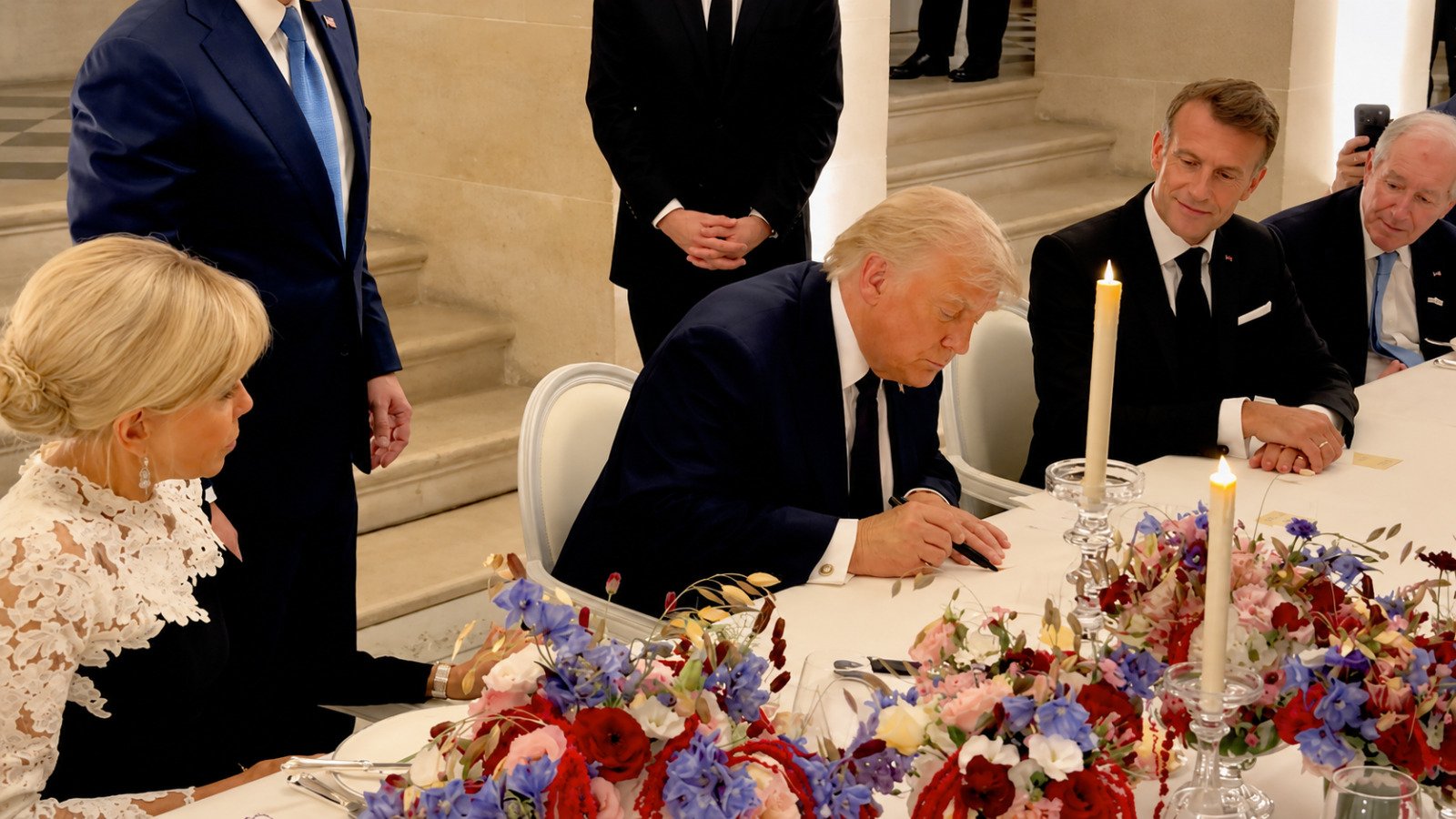
Instead, he signed the agreement in front of world leaders at the Palace of Versailles in France.
The White House just released footage of the moment, which you can watch right here:
Here’s another clip of President Trump talking to reporters after signing the deal:
"It's signed."
President Trump told reporters he signed the Iran memorandum of understanding in Versailles as he departed the palace following a dinner with French President Emmanuel Macron.
A White House official says a photo of the signed agreement was sent to Iran and the… pic.twitter.com/HVELS6RYVB
— Fox News (@FoxNews) June 17, 2026
The memorandum is now in effect.
Among all of the other terms, the agreement re-opens the Strait of Hormuz and imposes a 60-day ceasefire as negotiations continue for a long-term nuclear deal with Iran.
Here’s a breakdown of all the key provisions:
1. Immediate End to Hostilities
- The U.S., Iran, and their allies agree to cease military operations.
- Both sides commit to non-aggression and respect for each other’s sovereignty.
- The agreement is intended to lock in the current ceasefire and prevent renewed fighting.
2. Strait of Hormuz Reopens
- Iran agrees to restore commercial shipping through the Strait of Hormuz.
- The waterway is supposed to reopen fully within 30 days.
- Reopening the strait is a major objective because roughly a fifth of global oil shipments pass through it.
3. End of U.S. Naval Blockade
- The U.S. agrees to lift its naval blockade of Iranian ports.
- Maritime trade and energy exports are expected to resume.
4. Iran’s Nuclear Commitments
- Iran reaffirms it will not develop nuclear weapons.
- Iran agrees to “down-blend” enriched uranium under International Atomic Energy Agency (IAEA) supervision.
- Nuclear issues remain one of the central subjects for the 60-day follow-on negotiations.
5. No Changes During Negotiations
- While talks continue, both sides agree not to significantly alter the status quo.
- Iran is not supposed to advance its nuclear activities.
- The U.S. is not supposed to impose additional penalties that undermine negotiations.
6. Oil Export Waivers
- Iran receives waivers allowing oil exports to resume.
- Administration officials described these waivers as the primary major benefit Iran receives before a final agreement is reached.
7. Frozen Assets and Sanctions Relief
- The agreement establishes a framework for unfreezing Iranian assets and eventually lifting sanctions.
- However, there is disagreement over timing:
- Iran says relief should begin immediately.
- U.S. officials say significant relief depends on Iranian compliance.
8. Reconstruction Funding
- The draft references a potential $300 billion reconstruction and recovery package for Iran.
- Questions remain regarding where the money would come from and what conditions would apply.
9. Monitoring and Enforcement Mechanism
- An executive implementation mechanism would oversee compliance.
- The mechanism is intended to verify that both sides fulfill their obligations during the negotiation period.
10. Future UN Involvement
- Any final comprehensive agreement would be submitted to the U.N. Security Council for endorsement.
- The current MOU is only the first step toward that process.
11. Lebanon and Hezbollah Component
- The agreement includes provisions aimed at ending conflict in Lebanon.
- It calls for respect for Lebanon’s territorial integrity and places pressure on Iran to restrain Hezbollah.
- This has become one of the most controversial sections of the agreement.
12. 60-Day Negotiation Window
- The MOU creates a 60-day period for negotiating a comprehensive deal.
- Major unresolved issues include:
- Long-term nuclear restrictions
- Sanctions removal
- Regional security arrangements
- Verification procedures
- Many technical details are left for future negotiations.

Join the conversation!
Please share your thoughts about this article below. We value your opinions, and would love to see you add to the discussion!