

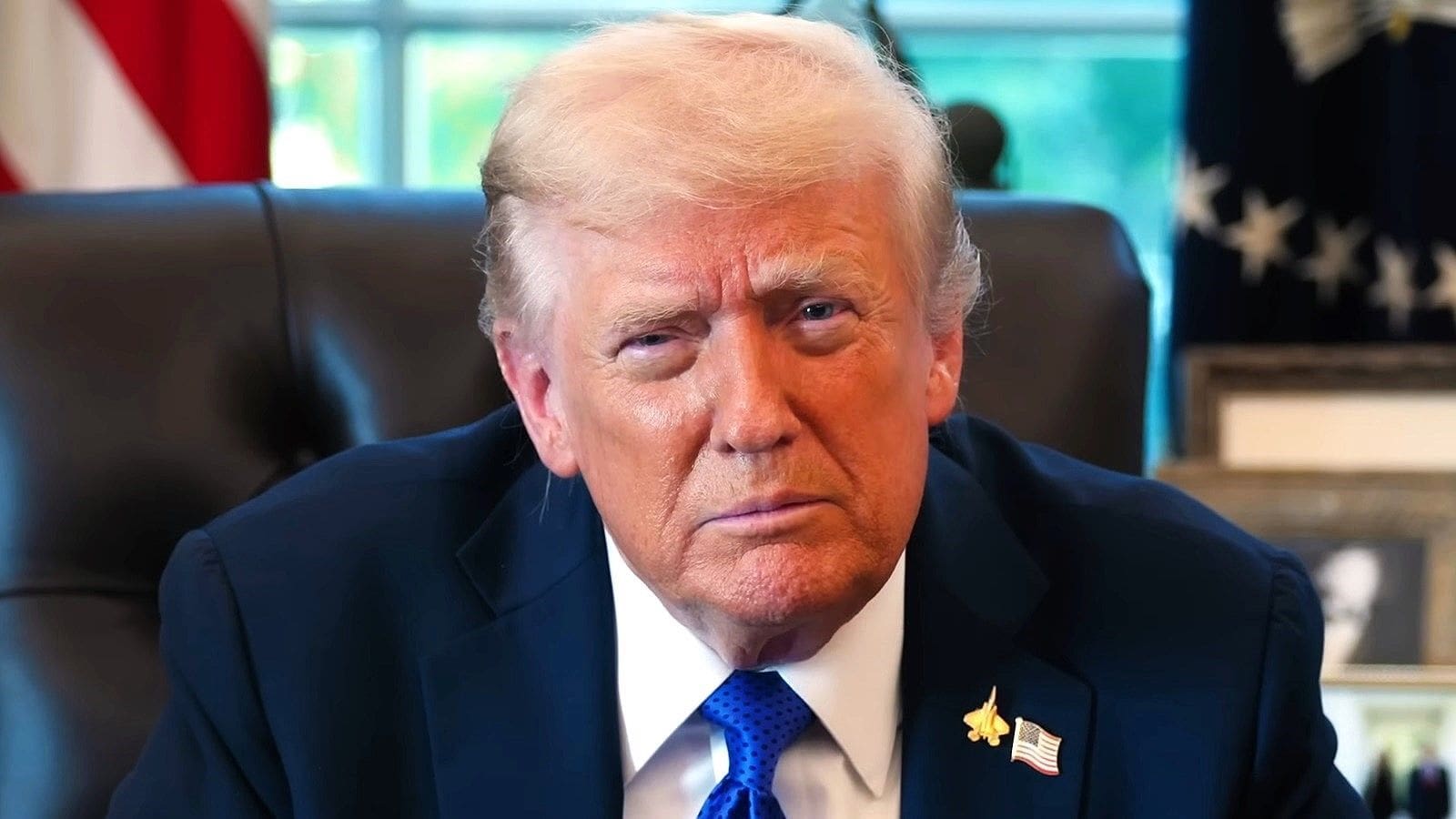
While the White House is championing an agreement to bring the military action in Iran to a peaceful conclusion, some in President Donald Trump’s own party are actively campaigning against the deal.
One voice of mild criticism in recent days has been Sen. Lindsay Graham (R-SC), who had been a supporter of Trump’s Middle East strategy.
In response to Graham’s apparent backtrack, the president offered a good-natured word of advice.
According to The Hill:
“I’ll have to talk to Lindsey. He’ll be in big trouble,” the president said at the G7 summit, when asked by reporters about Graham’s skepticism toward the deal.
“Lindsey’s good. Lindsey’s fine. He’s not skeptical,” the president added.
Following the news on Sunday that the U.S. and Iran had agreed to a framework deal to end the war, Graham celebrated the reopening of the Strait of Hormuz but expressed worry about the state of nuclear negotiations.
“I am somewhat concerned that Iran’s view of the agreement seems different than what the American negotiating team is claiming,” the South Carolina Republican wrote in a social media post.
Details about the deal, which is set to be finalized later this week, have trickled out on social media:
"Iran has agreed to never have a Nuclear Weapon!"
President Trump said Iran has agreed to permanently forgo nuclear weapons and pushed back on reports that the U.S. would pay Iran $300 million as part of the deal.
The statement comes as the administration touts a breakthrough… pic.twitter.com/pdcddNhCRV
— Fox News (@FoxNews) June 15, 2026
And Graham has since issued a statement outlining his support of the Trump administration’s general mission:
To me one of the most important things said by President Trump today is that it is his desire to expand the Abraham Accords, bringing historic stability and prosperity to the Middle East.
President Trump is correct in his analysis that this can only be achieved if the region…
— Lindsey Graham (@LindseyGrahamSC) June 16, 2026
Here’s the full text of his statement:
To me one of the most important things said by President Trump today is that it is his desire to expand the Abraham Accords, bringing historic stability and prosperity to the Middle East.
ADVERTISEMENTPresident Trump is correct in his analysis that this can only be achieved if the region believes Iran has been weakened or Iran has changed its behavior in terms of being a disruptive force and supporting terrorist organizations.
I sincerely hope the upcoming negotiations to forever foreclose Iran’s nuclear ambitions are a success. Due to President Trump’s actions, it is clear to me Iran and its proxies are incredibly weakened and their ability to generate another October 7 doesn’t exist, and there has been a major setback in their nuclear capability.
The ultimate win for taking on Iran is to open up a pathway to peace through Abraham Accord expansion and build on regional integration.
If the conflict with Iran yields this outcome, it will be one of the most successful military operations in American history.
Mr. President, you are right to keep your eye on the big prize: regional integration and lasting peace.
As for the other details in the memorandum of understanding, Vice President J.D. Vance recently indicated that it may be made public prior to Friday’s signing, per BBC:
While Trump had earlier suggested that details of the agreement were set to be published “pretty soon” after Friday’s ceremony, Vance told Fox News the US president might decide to release the agreement with Tehran before then.
Vance earlier told CNN’s Jake Tapper that the memorandum of understanding (MOU) was a very general document, adding that a lot of the details would be worked out during future negotiations.
ADVERTISEMENT“On a number of issues, we are going to have to figure this stuff out during the technical negotiation phase, but what the MOU does is set up a framework whereby the Iranians get the benefits of the bargain by meeting their obligations under the bargain,” he said.
In “paragraph one” of the document it is outlined that Iran will commit itself to “regional peace and stability”, Vance said, which he added included stopping the funding of “terrorist organisations”.
“Most importantly, they’re going to have a verifiable commitment to not building a nuclear weapon,” Vance said.
Here’s a clip from that interview:

Join the conversation!
Please share your thoughts about this article below. We value your opinions, and would love to see you add to the discussion!