

Two U.S. Army soldiers are alive after their AH-64 Apache helicopter went down near the Strait of Hormuz, and the way they came out of the water is a first for the American military.
A U.S. Navy sea drone found them, recovered them, and moved them to a spot where a helicopter could hoist them to safety.
The crash happened Monday during a patrol off the coast of Oman. Both crew members were rescued within about two hours and were reported in stable condition.
Newsmax posted the first wave of footage and details on June 9, 2026.
A U.S. Army Apache helicopter crashed while patrolling the Strait of Hormuz, with the two crew members successfully rescued within two hours of the incident. Both pilots are reportedly in stable condition. National Security Correspondent Carla Babb has the details on “National… pic.twitter.com/Up2l7uw082
— NEWSMAX (@NEWSMAX) June 9, 2026
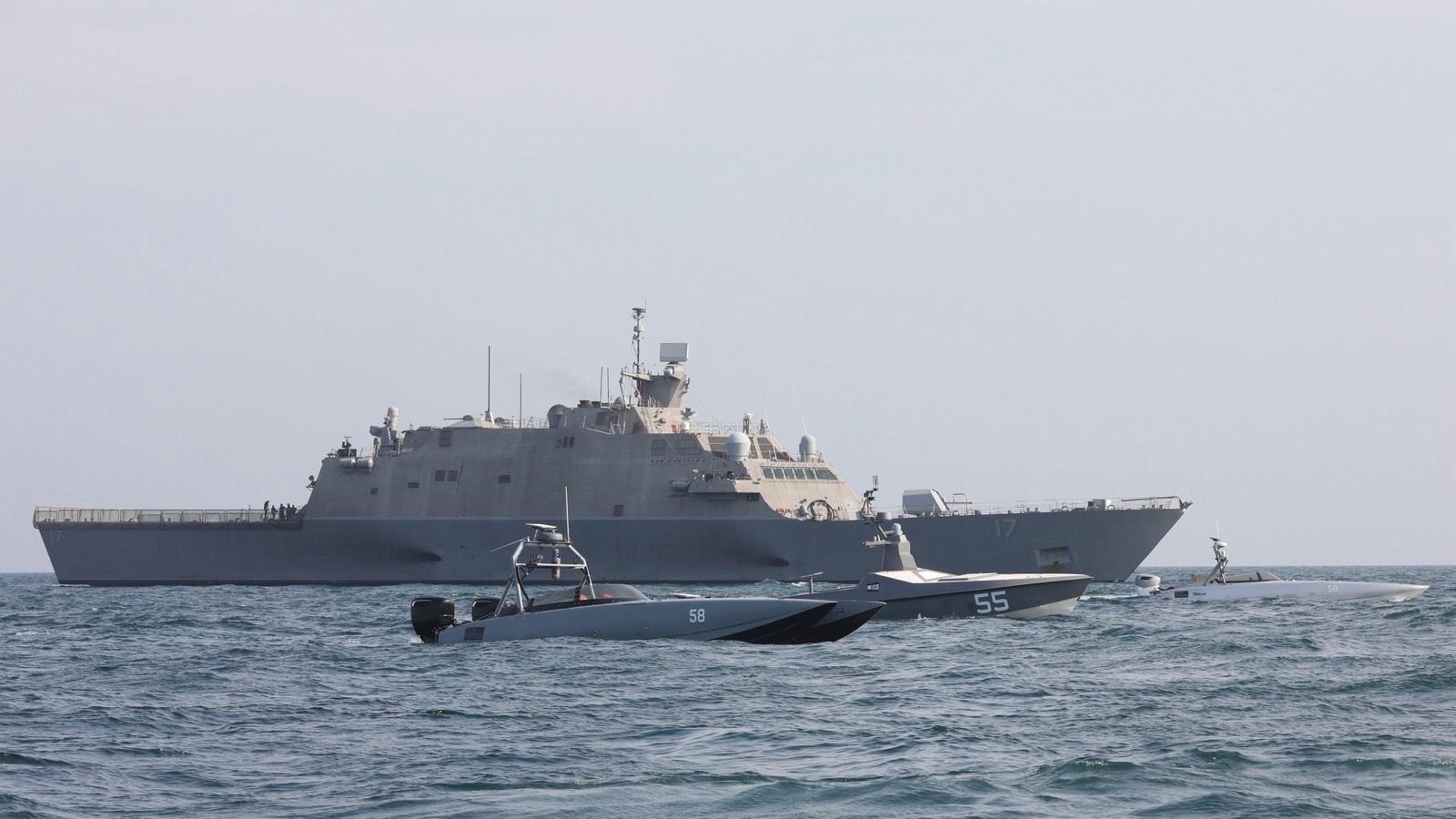
The new detail came from U.S. Central Command. The drone that assisted was a Navy Corsair unmanned surface vessel operated by 5th Fleet’s Task Force 59, the Bahrain-based unit built to push artificial intelligence and unmanned systems into Gulf operations.
DefenseScoop reported the technical heart of the story:
The American military deployed an autonomous Corsair maritime drone built by Saronic to find and recover two soldiers who were stranded near the Strait of Hormuz on Monday after their Army AH-64 Apache helicopter crashed during a patrol operation, U.S. Central Command spokesperson Capt. Tim Hawkins told DefenseScoop.
It marks the U.S. military’s first publicized use of an autonomous surface vessel to locate and retrieve downed aircrew in real-world warfare, following years of experimentation with different types of sea drones.
The surface drone that assisted in last night’s rescue of the Apache crew off the coast of Oman was a U.S. Navy Corsair unmanned surface vessel operated by U.S. 5th Fleet’s Task Force 59, Hawkins said.
The Corsair is a 24-foot autonomous surface vessel (ASV) that’s designed for rugged, long-duration missions. The drones can operate at speeds greater than 35 knots and carry up to 1,000 lbs over 1,000 nautical miles, according to Saronic’s product specifications.
The task force began fielding these drones in theater in late March, Hawkins told DefenseScoop.
CENTCOM spokesperson Capt. Tim Hawkins identified the vessel directly.
“The surface drone that assisted in last night’s rescue of the Apache crew off the coast of Oman was a US Navy Corsair unmanned surface vessel operated by US 5th Fleet’s Task Force 59. The task force began fielding these drones in theater in late March,” CENTCOM Capt. Tim Hawkins https://t.co/RmfCa7B8j3
— Joseph Haboush (@jhaboush) June 9, 2026
The sequence matters.
CBS News reported the drone carried the rescue forward:
The two crew members were rescued by a sea drone in the first such operation ever carried out by the U.S. military, officials told CBS News.
The surface drone rescued the soldiers and transported them to another location on the water where they were then hoisted up to a helicopter for further transport, according to a U.S. official.
The two U.S. Army soldiers on the Apache had been patrolling waters off the coast of Oman when the crash happened. They were rescued at about 7:30 p.m. Eastern time on Monday, within approximately two hours of their AH-64 Apache going down.
They were both in stable condition, CENTCOM said in its Tuesday statement on X, adding, the cause of the incident is under investigation.
The pair were rescued by an unmanned surface drone operated by a special department called Task Force 59, based within the U.S. Fifth Fleet in Bahrain, CENTCOM spokesperson Capt. Tim Hawkins told CBS News.
It was the first time a drone has been used for a water rescue, the officials said.
ADVERTISEMENT
An unmanned boat carried two American servicemembers across contested water until a helicopter could finish the job.
The Corsair is a 24-foot autonomous vessel built for long, rough missions. According to Saronic, it can run faster than 35 knots and haul more than 1,000 pounds over 1,000 nautical miles.
Task Force 59 only began fielding these drones in theater in late March. A few months later they were pulling pilots out of the Gulf.
Military Times reported the rescue was a joint effort.

Navy assets from Naval Forces Central Command, including Task Force 59, and the 82nd Airborne Division led the operation, with assistance from the Air Force.
CENTCOM confirmed the outcome in its own release and said the cause of the crash is still under investigation.
— U.S. Central Command (@CENTCOM) June 9, 2026
President Trump has already framed the larger picture around Iran and American resolve in those waters. That deterrence fight continues.
The practical lesson here is simpler and harder to argue with.
Unmanned systems have stopped being surveillance toys. In the Strait of Hormuz this week, one of them helped bring two Americans home alive.

Join the conversation!
Please share your thoughts about this article below. We value your opinions, and would love to see you add to the discussion!