

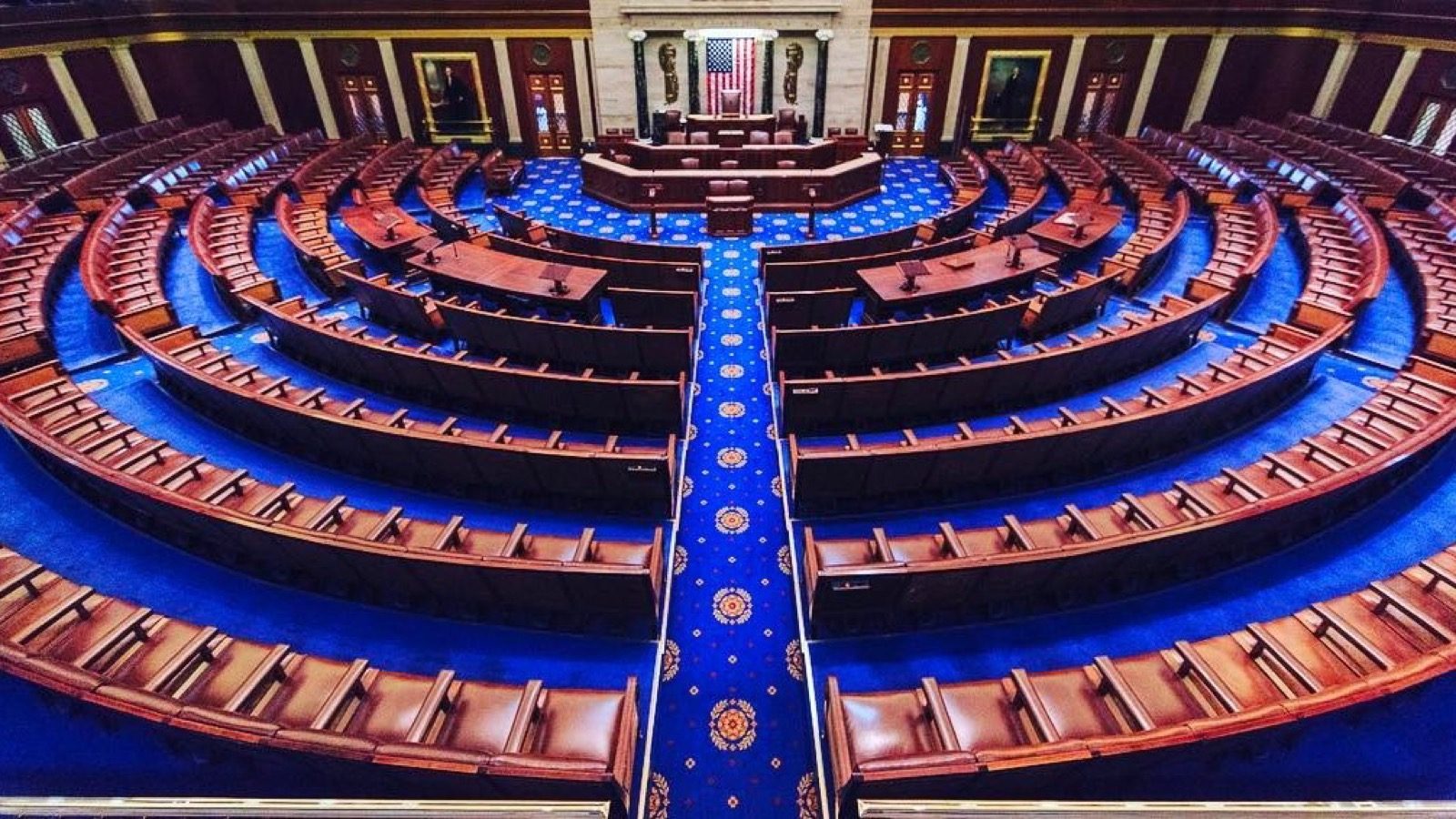
The House just moved another big Ukraine package out the door, and it took 18 Republicans to get it across the finish line.
On June 4, 2026, the chamber passed H.R. 2913, the Ukraine Support Act, on a vote of 226 to 195.
The official roll call was recorded at 8:08 p.m. Eastern. The bill passed.
Here is the part that should make MAGA voters sit up. While President Trump has spent recent weeks publicly pushing Russia and Ukraine toward talks and compromises, the House loaded up another aid-and-sanctions package and rammed it through.
Democrats supplied 207 yeas. Republicans split 18 yea, 194 nay.
Without those 18 Republicans, this thing does not pass.
The official tally comes straight from the Office of the Clerk, U.S. House of Representatives:
Roll Call 207 | Bill Number: H. R. 2913

Jun 04, 2026, 08:08 PM | 119th Congress, 2nd Session

Vote Question: On Passage

Ukraine Support Act

Vote Type: Yea-And-Nay

Status: Passed

VOTES

yea: 226

nay: 195

present: 0

not voting: 9

votes by party Party Yeas Nays Present Not Voting

Republican 18 194 0 5

Democratic 207 1 0 4

Independent 1 0 0 0

Total 226 195 0 9

All votes Representative Party State Vote

Bacon Republican Nebraska Yea

Bresnahan Republican Pennsylvania Yea

Carey Republican Ohio Yea

Fitzpatrick Republican Pennsylvania Yea

Garbarino Republican New York Yea

Gimenez Republican Florida Yea

Hurd (CO) Republican Colorado Yea

Joyce (OH) Republican Ohio Yea

Kiggans (VA) Republican Virginia Yea

LaLota Republican New York Yea

Lawler Republican New York Yea

McCaul Republican Texas Yea

Miller (OH) Republican Ohio Yea

Murphy Republican North Carolina Yea

Newhouse Republican Washington Yea

Thompson (PA) Republican Pennsylvania Yea

Turner (OH) Republican Ohio Yea

Wilson (SC) Republican South Carolina Yea
So who were the 18 Republicans? The Clerk’s records name them.
They are Bacon (NE), Bresnahan (PA), Carey (OH), Fitzpatrick (PA), Garbarino (NY), Gimenez (FL), Hurd (CO), Joyce (OH), Kiggans (VA), LaLota (NY), Lawler (NY), McCaul (TX), Miller (OH), Murphy (NC), Newhouse (WA), Thompson (PA), Turner (OH), and Wilson (SC).
One of those 18, Rep. Michael McCaul, defended the vote on X by calling it a “vote of conscience”:
I have always supported regular order. However, the members of the House of Representatives decided the Ukraine Support Act should come to the floor and be given a vote of conscience.
For the past four years, Russia has committed war crimes against the country of Ukraine — from…
— Michael McCaul (@RepMcCaul) June 4, 2026
The bill itself is sponsored by Democrat Gregory Meeks of New York. That is a tell about whose priorities this package serves.
The package carries real money and real pressure. The official text from Congress.gov lays out the structure:
H. R. 2913

To authorize support for Ukraine, and for other purposes.

SECTION 1. Short title; table of contents.

(a) Short title.—This Act may be cited as the “Ukraine Support Act”.

TITLE II—SECURITY ASSISTANCE

Sec. 201. Lend-lease authority.

Sec. 202. Direct loans and foreign military financing.

Sec. 203. Support for Baltic countries.

Sec. 204. Extension of Ukraine Security Assistance Initiative.

TITLE III—SANCTIONS AND EXPORT CONTROLS

Sec. 301. Sanctions trigger determination.

Sec. 302. Imposition of sanctions with respect to Russian financial institutions.

Sec. 303. Impositions of sanctions with respect to Russian oil and mining industry.

Sec. 304. Imposition of sanctions on certain persons affiliated with or supporting the Government of the Russian Federation.

Sec. 307. Rosatom sanctions.

Sec. 309. SWIFT sanctions.

Sec. 310. Russian sovereign debt sanctions.

Sec. 311. Imposition of sanctions on Russia-North Korea cooperation.

Sec. 312. Sanctions for kidnapping Ukrainian children.

Sec. 313. Imposition of dual-use export controls.

Sec. 314. Duties on the Russian Federation.

Sec. 315. Ending Russian oil import loophole.

SEC. 202. Direct loans and foreign military financing.

(a) Direct loans.—

(1) IN GENERAL.—Through fiscal year 2026, direct loans under section 23 of the Arms Export Control Act may be made available for Ukraine and North Atlantic Treaty Organization allies, notwithstanding section 23(c)(1) of the Arms Export Control Act, gross obligations for the principal amounts of which shall not exceed $8,000,000,000.
The big-ticket number is the loan authority. The text authorizes direct loans for Ukraine and NATO allies running into the billions through fiscal year 2026.
That is $8 billion in loan authority on its own, with additional security and reconstruction money spread across other sections of the bill.
Stack the sanctions provisions on top. The text hits Russian financial institutions, oil and mining, Rosatom, SWIFT, sovereign debt, and Russia-North Korea cooperation.
The timing is the problem.
President Trump has been working the leverage game, pressing both Moscow and Kyiv toward a deal that ends the killing. A fresh House package built around more money and a wall of new sanctions does not exactly hand him a stronger negotiating position.
It hands the other side of the table a reason to dig in.
The 194 Republicans who voted no read the room correctly. They understood that the President is trying to close out a war, not feed it.
Rep. Thomas Massie, who voted no, put the taxpayer argument in plain language:
I just voted against the Ukraine Support Act tonight. It sends over $9 billion of your dollars overseas, and includes $250 million for Radio Free Europe, a Cold War relic that benefits no American.https://t.co/BVmVFajN9I pic.twitter.com/6RS6r8v5UJ
— Thomas Massie (@RepThomasMassie) June 5, 2026
The 18 who voted yes will have to explain to their voters why they sided with Gregory Meeks and a near-unanimous Democrat caucus over the President’s diplomacy.
The vote is done in the House. But the leverage President Trump is building toward a settlement is the bigger game, and these 18 names are now on the record for working against it.

Join the conversation!
Please share your thoughts about this article below. We value your opinions, and would love to see you add to the discussion!