

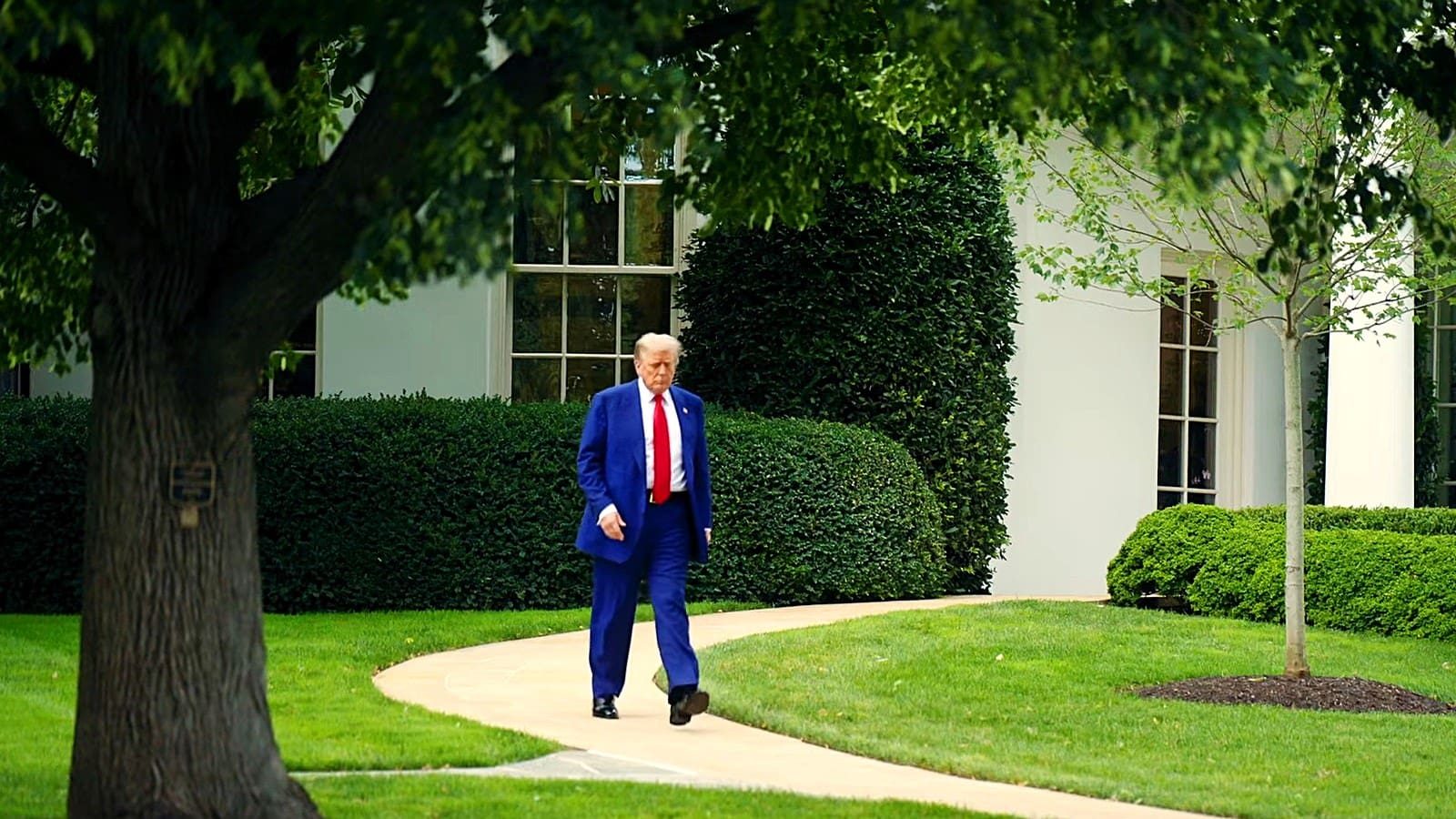
President Donald Trump announced late Friday that American forces and the Armed Forces of Nigeria executed a strike that killed Abu-Bilal al-Minuki, the man Trump described as the second in command of ISIS globally.
U.S. Africa Command confirmed the operation Saturday, saying its initial assessment found that multiple terrorists were killed, including al-Minuki and other senior ISIS leaders.
AFRICOM reported no civilian casualties in its initial assessment.
AFRICOM released footage of a strike in Nigeria that killed Abu-Bilal al-Minuki, identified as the second-in-command of ISIS in the region. pic.twitter.com/KO9cwnkCQN
— Open Source Intel (@Osint613) May 16, 2026
Trump called the mission meticulously planned and very complex. He said al-Minuki thought he could hide in Africa, but U.S. sources kept officials informed about what he was doing.
The president also said al-Minuki will no longer terrorize the people of Africa or help plan operations targeting Americans.
U.S. Africa Command said the strike was carried out in northeastern Nigeria on May 16 in coordination with the Government of Nigeria:
AFRICOM said the operation was conducted under the direction of the President of the United States and the Secretary of War.
The command’s initial assessment was that multiple terrorists were killed, including Abu-Bilal al-Minuki, identified by AFRICOM as the director of global operations for ISIS.
AFRICOM also said other senior ISIS leaders were killed during the operation.
The command reported no civilian casualties in its initial assessment.
The release framed the strike as part of continued U.S. cooperation with African partners against terrorist networks that threaten Americans, allies, and local civilians.
That official assessment gives the story its backbone: U.S. forces and Nigerian partners hit ISIS leadership in northeastern Nigeria, killed a figure tied to global operations, and avoided civilian casualties based on the command’s first review.
It also shows the operation was coordinated through government channels rather than presented as a loose battlefield rumor.
ADVERTISEMENT
The official language matters here. Trump gave the strongest public description of al-Minuki’s rank, while AFRICOM confirmed the operational role and the battlefield result.
U.S. AFRICOM releases footage of last night’s operation eliminating multiple high-value ISIS figures, including Abu Bilal al-Minuki in northeastern Nigeria. https://t.co/mNPfsdNrMQ pic.twitter.com/HuNQreWt8r
— Insider Wire (@InsiderWire) May 16, 2026
Al-Minuki was a regional battlefield figure with global reach. His role sat near the center of how ISIS manages operations and moves money to affiliates.
FDD’s Long War Journal added context on why the target mattered inside the broader ISIS structure:
FDD’s Long War Journal reported that the U.S. military and Nigerian forces killed Abu Bilal al Minuki, a top Islamic State leader, along with other commanders in northeastern Nigeria.
The report highlighted AFRICOM’s description of Minuki as the director of global operations for ISIS and as the group’s number two.
It also noted that a February 2026 United Nations Analytical Support and Sanctions Monitoring Team report identified Minuki as head of the Islamic State’s Al Furqan office.
That office was described as one of the regional structures used to help manage global affairs and move funds to Islamic State wings around the world.
ADVERTISEMENTThe context is important because ISIS does not only operate through battlefield commanders. It also depends on money movement, communications, regional offices, and command links that allow local affiliates to function as part of a broader network.
Removing a figure tied to that global architecture hits more than one camp in one country.
That turns the operation into more than a local battlefield win in West Africa.
Taking out the man tied to global operations and funding pipelines strikes at the connective tissue that keeps ISIS functional across continents.
It is a clean counterterrorism result: a high-value target identified, tracked, and eliminated through direct U.S.-African military cooperation with no reported civilian casualties.
That is the kind of outcome that only happens when the White House is willing to act and partners are willing to work together.

Join the conversation!
Please share your thoughts about this article below. We value your opinions, and would love to see you add to the discussion!