

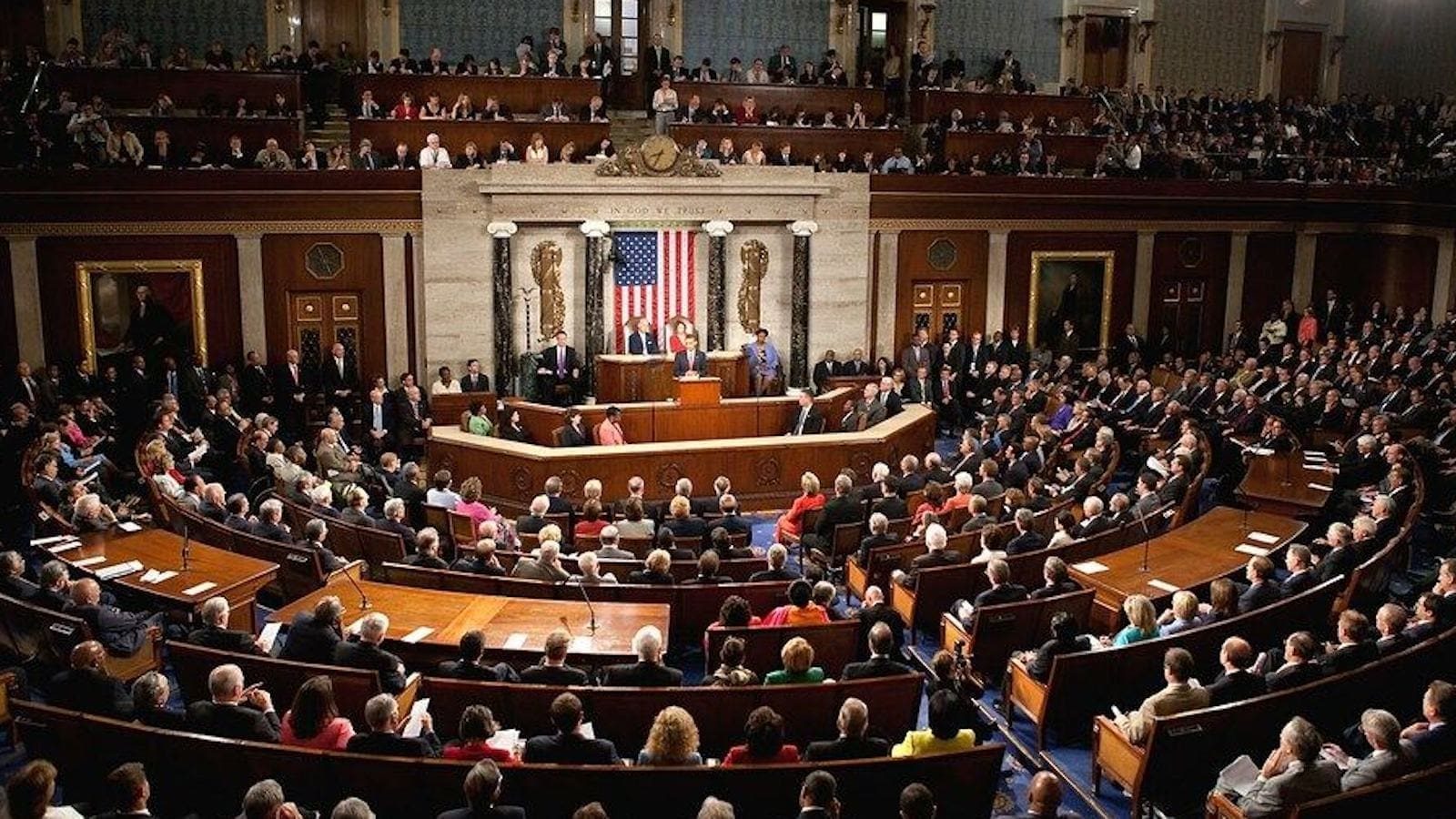
The United States Senate took a major step on Thursday toward confirming a massive slate of President Donald Trump’s executive branch nominees, voting 51-46 to invoke cloture on 49 appointees bundled together under Senate Resolution 690.
The package includes U.S. Attorneys, U.S. Marshals, ambassadors, and senior officials across the Departments of Defense, State, Transportation, Commerce, and Energy, among other agencies. It is one of the largest single-vote nominee advances in recent memory.
Eric Daugherty flagged the development on X, noting the significance of moving 49 Trump appointees forward “in one fell swoop.”
🚨 JUST IN: The US Senate has just ADVANCED a whopping 49 Donald Trump appointees in one fell swoop, 51-46
That includes US ATTORNEYS across America, crucial for law and order!
Get them fully confirmed ASAP 🇺🇸 pic.twitter.com/PFvksBhfk2
— Eric Daugherty (@EricLDaugh) May 14, 2026
The official Senate Cloakroom account confirmed the 51-46 cloture result shortly before Daugherty’s post started spreading.
Invoked, 51-46: Motion to invoke cloture on the en bloc nominations provided for under the provisions of S.Res.690.
— Senate Cloakroom (@SenateCloakroom) May 14, 2026
The procedural vehicle was Senate Resolution 690, which authorized en bloc consideration of all 49 nominations listed on the Executive Calendar. The resolution itself had a rocky path. It cleared an earlier cloture vote on April 30 by a vote of 51-46, then was formally adopted on May 11 in an even tighter 46-45 vote, with nine senators not voting.
The official GovInfo text of S.Res.690 shows exactly what was packed into the 49-nominee bundle:
GovInfo says S.Res.690 authorizes en bloc consideration in Executive Session of certain nominations on the Executive Calendar and states that it shall be in order to move to proceed to the en bloc consideration of 49 nominations. The first six listed are Andrew Benson for U.S. Attorney for Maine, William Boyle for U.S. Attorney for Eastern North Carolina, Kevin Holmes for U.S. Attorney for Western Arkansas, Brian David Miller for U.S. Attorney for Middle Pennsylvania, Richard Price for U.S. Attorney for Western Missouri, and Darin Smith for U.S. Attorney for Wyoming. The package later lists additional U.S. Attorney nominees for Middle Alabama, Western Louisiana, Northern Texas, Central Illinois, Utah, Northern Alabama, and Middle North Carolina. It also lists U.S. Marshal nominees for Northern Iowa, South Dakota, Maine, Western Louisiana, Eastern Missouri, Southern Florida, Montana, and Minnesota, plus senior administration, ambassadorial, transportation, energy, defense, commerce, development bank, and regulatory nominees.
Those are not ceremonial positions. U.S. Attorneys are the chief federal prosecutors in their districts. They lead enforcement of federal criminal and civil law, and they play a central role in carrying out the administration’s priorities on issues like illegal immigration, drug trafficking, and violent crime. U.S. Marshals handle fugitive operations, prisoner transport, witness security, and asset forfeiture.
In other words, getting Trump’s people into these seats means the President’s law-and-order agenda can actually be carried out at the ground level across the country.
The official Senate Roll Call Vote 114 page shows how narrow the adoption vote was before Thursday’s cloture step:
The Senate roll call page states the question was “On the Resolution (S. Res. 690).” The vote took place May 11, 2026, at 5:31 PM, and the official result was “Resolution Agreed to.” The measure title was “An executive resolution authorizing the en bloc consideration in Executive Session of certain nominations on the Executive Calendar.” The vote count was 46 yeas, 45 nays, and 9 not voting. The grouped vote summary shows all recorded yeas were Republicans, while the nays were Democrats and independents who caucus with Democrats. Several Republicans were not voting, including Bill Hagerty, Cindy Hyde-Smith, Ashley Moody, Lisa Murkowski, Pete Ricketts, and Jim Risch, but the GOP still had enough votes to carry the package. That vote put the 49-nominee structure in place before Thursday’s cloture vote moved the nominations another major step toward final confirmation.
The political split could not have been clearer. Every Democrat and Democrat-aligned independent who voted on S.Res.690 opposed the package structure. Republicans carried it anyway.
That matters because the nominee backlog has been one of the quiet pressure points of Trump’s second term. A president can sign orders, set priorities, and demand action from Washington, but an administration still needs confirmed officials in the field to prosecute cases, run federal districts, manage marshals offices, represent the United States overseas, and execute agency policy.
The cloture vote does not finalize confirmations. It limits remaining debate and sets up the final confirmation stage. But the hardest procedural hurdle has now been cleared. Without the en bloc mechanism, each of these 49 nominees could have consumed separate floor time, turning basic staffing into a slow-motion blockade.
By pushing the nominees together under S.Res.690, Senate Republicans cut through that bottleneck and moved dozens of Trump appointees closer to the finish line at once.
Now comes the part Daugherty emphasized: get them fully confirmed.
For Trump supporters, the stakes are simple. The law-and-order agenda does not run on speeches alone. It runs through U.S. Attorneys, U.S. Marshals, agency leaders, and executive branch officials who are actually in the job, holding the line, and carrying out the President’s mandate.

Join the conversation!
Please share your thoughts about this article below. We value your opinions, and would love to see you add to the discussion!