

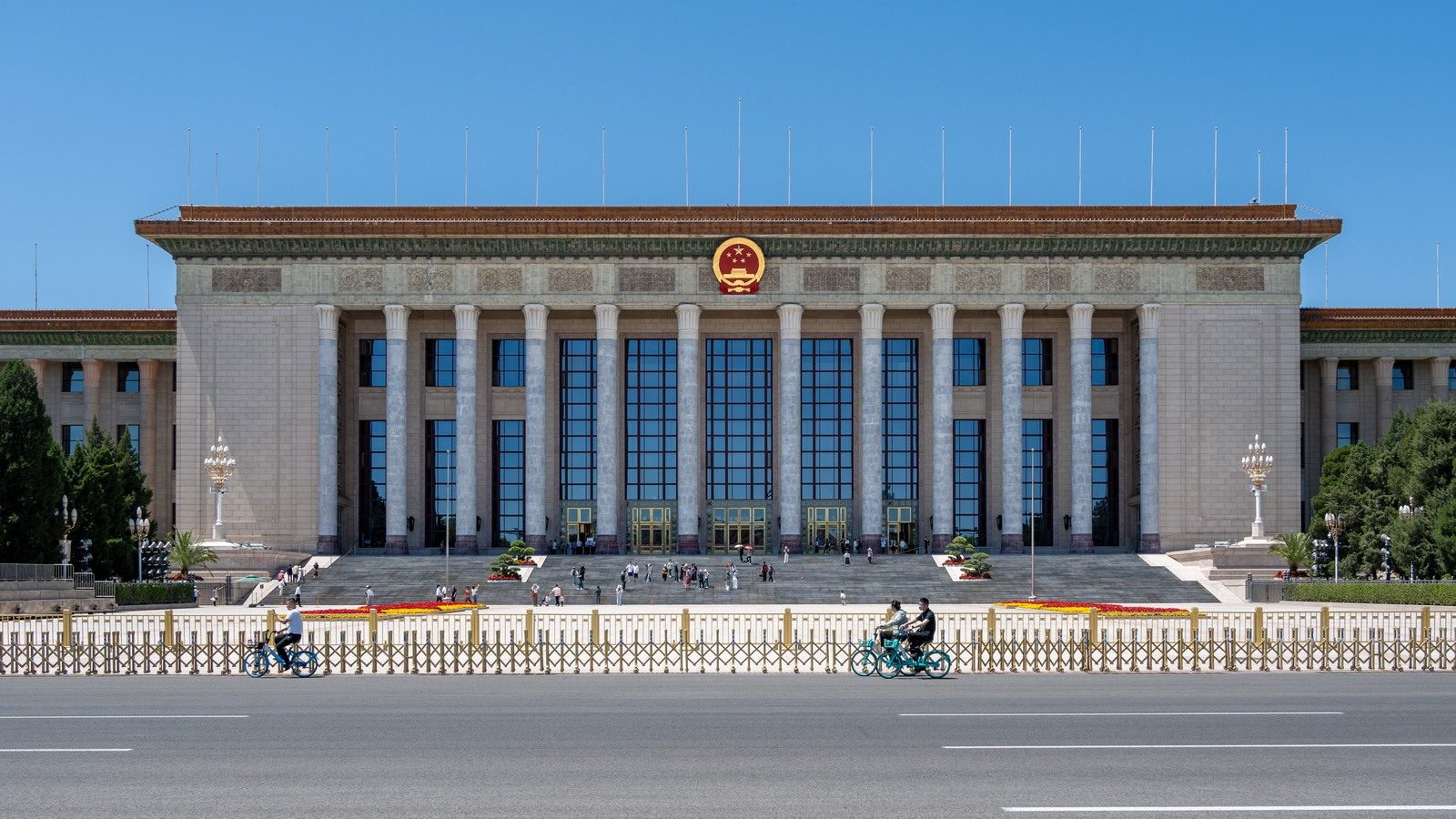
President Donald Trump and Chinese President Xi Jinping sat down Thursday morning in Beijing for a bilateral meeting that lasted roughly two hours, with the Iran war, Taiwan, the Strait of Hormuz, trade, and technology all on the table. The White House characterized the session as “good.” Xi’s government, through Chinese state media, issued a pointed warning about Taiwan that made clear just how high the stakes remain.
Neither side announced a sweeping deal. What they did produce were a set of public signals, a few points of reported agreement, and at least one flash of unmistakable tension.
From the Bilateral Meeting in Beijing:
President Trump had a good meeting with President Xi of China. pic.twitter.com/WaH8hR1ZV3
— The White House (@WhiteHouse) May 14, 2026
The meeting took place inside the Great Hall of the People. Both leaders opened with warm public remarks before the cameras left and the real conversation began. Xi told Trump that stable bilateral relations are good for the world and that the two countries should be partners, not rivals. Trump emphasized his personal relationship with Xi and said the United States is eager to do business with China.
Then the doors closed.
CBS News reported on the substance that emerged from behind those doors:
Xi had stern words for Trump on Taiwan, warning through Chinese state media of potential clashes and even conflicts if the issue is not handled properly. The closed-door session lasted roughly two hours and 15 minutes, while the White House described the meeting as good. The leaders began with warmer public language: Xi said a stable bilateral relationship is good for the world and that the two countries should be partners rather than rivals, while Trump emphasized his personal relationship with Xi and said the United States is eager to do business with China.
The Iran and Hormuz pieces were also central. A separate CBS live update said Trump and Xi agreed the Strait of Hormuz must remain open and that Iran can never have a nuclear weapon, according to a White House readout. That puts the two governments publicly aligned on two pressure points that reach far beyond the meeting room: the nuclear question in Iran and the shipping lane that carries a major share of the world’s oil.
That readout is significant. Getting Beijing to agree publicly that the Hormuz strait must stay open and that Iran cannot go nuclear puts China on the record alongside the United States on two issues that matter enormously to global energy markets and Middle East security. Whether Beijing follows through with action is the question that matters next.
Treasury Secretary Howard Lutnick added a revealing detail about the Hormuz discussion. According to AP, Lutnick said the Chinese side told U.S. officials they were not in favor of militarizing the Strait of Hormuz or implementing a tolling system there. That comment speaks directly to the ongoing tension around Iranian threats to shipping lanes and competing visions for who controls the world’s most important oil chokepoint.
On Taiwan, Xi’s language was the sharpest of the summit. Chinese state media relayed Xi’s warning that if Taiwan is handled well, U.S.-China relations will enjoy overall stability, but if it is not, the result could be clashes and even conflicts. That is a direct message aimed at American military posture in the Indo-Pacific and at any move Washington might make toward closer ties with Taipei.
AP provided the broader context for the summit:
The Beijing summit was framed as a push for stability between the United States and China, with Trump and Xi concluding their Thursday morning meeting after about two hours. Trump is expected to depart Beijing on Friday after a final private meeting with Xi. The agenda still runs through some of the most sensitive issues in the relationship: the Iran war, trade, technology, Taiwan, U.S. arms sales, rare earths, and the supply-chain leverage both countries have been using since last year’s tariff fight.
Trump wants China to buy more U.S. agricultural products and passenger planes, while also setting up a board or process to manage disputes before they spiral into another full trade war. Treasury Secretary Howard Lutnick said Chinese officials told the U.S. team that they were not in favor of militarizing the Strait of Hormuz and were not in favor of a tolling system there. That detail matters because Hormuz is the world’s key oil chokepoint, and China is one of the countries most exposed to instability in the Gulf.
ADVERTISEMENT
The trade dimension is enormous on its own. Trump has pushed hard for China to buy more American agricultural products and Boeing aircraft, and the creation of a management board to handle ongoing trade disputes would represent a structural change in how the two economies negotiate. None of that was finalized Thursday, but the framework is clearly being built.
🚨 EPIC! After a long and successful day in Beijing, President Trump has WALKED OUT of the State Banquet and is back at the hotel for the night
47 has been dealing all day and is set to KEEP PUSHING later tonight, US time 🔥
He’ll be meeting Xi again at around 11:30,… pic.twitter.com/UFSMevuTy4
— Eric Daugherty (@EricLDaugh) May 14, 2026
After the bilateral session and a full day of diplomacy, Trump attended a state banquet before returning to his hotel. He is scheduled to meet Xi again Friday morning for a final private session before departing Beijing.
The pomp of a state visit to Beijing is one thing. The real scoreboard is whether China changes its behavior on the issues that actually threaten American interests: buying American goods in serious volume, keeping the Strait of Hormuz open, holding the line that Iran never gets a nuclear weapon, and pulling back from military escalation over Taiwan. Trump got the face-to-face. Friday’s final meeting is where we find out what, if anything, got locked in.
What’s your perspective?

Join the conversation!
Please share your thoughts about this article below. We value your opinions, and would love to see you add to the discussion!