

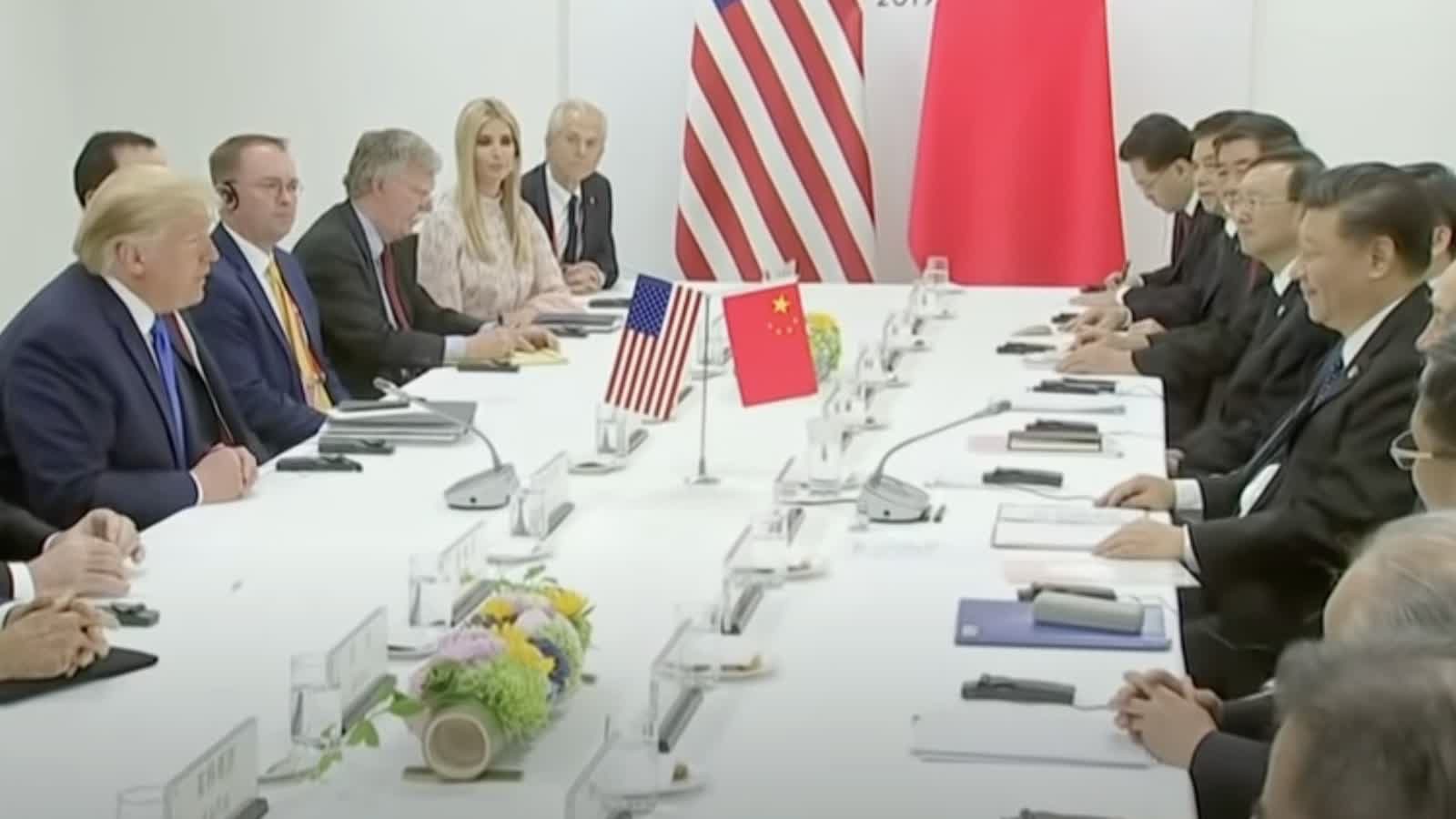
President Donald Trump is heading to China this week for what may be the most consequential bilateral summit of his presidency. He is expected to arrive in Beijing on Wednesday evening and sit down with Chinese President Xi Jinping on Thursday for a meeting that touches nearly every major fault line between the two superpowers.
The agenda is staggering in scope. Senior U.S. officials have previewed discussions on Iran, Taiwan, trade, artificial intelligence, nuclear weapons, critical minerals, aerospace, agriculture, and energy. No single Trump-Xi meeting has ever carried this many live issues at once.
White House spokeswoman Anna Kelly described the trip as one of “tremendous symbolic significance.”
US President Donald Trump and Chinese President Xi Jinping are set to discuss Iran, Taiwan, trade, artificial intelligence, and nuclear weapons during Trump’s two-day visit to China https://t.co/9zf6I8aJkM pic.twitter.com/GnvgA5VRlK
— Reuters (@Reuters) May 11, 2026
Trump is bringing leverage to Beijing that few American presidents have enjoyed. The unresolved Iran war, an escalating sanctions contest, a deepening AI race, and a critical minerals standoff all give Washington cards to play. Trump has long maintained that his personal relationship with Xi is more pragmatic than many China hawks in Washington appreciate, and he appears ready to test that proposition across the widest set of issues yet.
Semafor reported on the administration’s deliberate effort to manage expectations heading into the visit:
The Trump administration was tempering expectations before President Trump travels to China, even as senior U.S. officials previewed a packed agenda for his sitdown with Xi Jinping. Officials listed artificial intelligence, boards of trade and investment, and the Iran war among the issues the two leaders are expected to discuss, while stopping short of promising a major formal agreement. One senior official rejected talk of a massive Chinese investment program and said that was not on the negotiating table.
Blackstone chief Stephen Schwarzman, Citi CEO Jane Fraser, and other U.S. CEOs were expected to join Trump, with possible talk of aerospace, agriculture, and energy agreements but lower expectations for showy commercial announcements. Trump is expected to arrive in Beijing on Wednesday evening and participate in a bilateral meeting with Xi on Thursday. Officials said AI discussions could open a communications channel on safety and security while U.S. policy on Taiwan was not expected to change.
The decision to bring top American CEOs signals that Trump views the trip as an opportunity to press commercial openings even if no blockbuster investment package emerges. Schwarzman and Fraser represent sectors where the U.S. holds leverage: capital markets, global finance, and deal-making infrastructure that China still needs access to.
NEW: President Trump is heading to China for a high-stakes meeting with Chinese President Xi as tensions with Iran continue to simmer in the Middle East.@markpmeredith breaks down why President Trump’s visit to China is happening as Iran continues pushing back against U.S.… pic.twitter.com/RHWgZH0WvL
— Fox News (@FoxNews) May 11, 2026
Iran looms over everything. Washington and Beijing have been escalating a quiet sanctions war over Iran in the weeks leading up to the summit, making the Middle East another active front in the broader U.S.-China rivalry. The summit was once seen as a de facto deadline for stabilizing the Iran conflict, but the war remains unresolved as Air Force One prepares to touch down. That unfinished business gives Trump additional pressure to apply.
Axios described the week as a convergence of generational questions:
The China summit brings together three generational questions: war and peace in the Middle East, the trajectory of the U.S.-China relationship, and the rules that will govern the AI revolution. Axios reported that the meeting was once viewed as a de facto deadline for stabilizing the Iran war, but the conflict remained unresolved as Air Force One prepared to land in Beijing. That makes Iran more than a background issue. It puts China’s relationship with Tehran, energy flows, sanctions pressure, and Trump’s effort to end the war directly into the summit frame.
Axios also reported that Washington and Beijing have escalated a quiet sanctions war over Iran in the weeks leading up to the meeting, turning the Middle East into another front in their broader rivalry. Trump has long believed his personal relationship with Xi is more pragmatic than many China hawks understand. Officials are also expected to explore whether the two governments should open formal communications on AI safety and security risks, a concept the report compared to Cold War-style nuclear hotlines. In other words, the meeting is not simply about today’s headlines. It could shape how the two superpowers talk during future crises.
ADVERTISEMENT
That last point deserves attention. The idea of a dedicated AI communications channel between the U.S. and China would be the first formal mechanism of its kind, modeled on the nuclear hotlines that helped prevent catastrophic miscalculation during the Cold War. If Trump and Xi agree to stand one up, it would be a concrete deliverable even in a summit that the White House is not packaging around a single headline deal.
Trump and China’s Xi set for talks spanning Iran, nuclear, trade and AI https://t.co/EHqz6IdtI8 https://t.co/EHqz6IdtI8
— Reuters (@Reuters) May 10, 2026
The critical minerals question adds another layer. Both countries are weighing the extension of an existing rare earths deal, a subject with direct implications for American defense manufacturing, electronics, and the energy transition. China controls the majority of global rare earth processing, and any disruption to supply would ripple through U.S. industry almost immediately.
U.S. officials are signaling continuity on Taiwan policy while still making clear how much is packed into the Beijing meeting. Iran, nuclear weapons, artificial intelligence, trade, critical minerals, and Taiwan all sit inside the same strategic conversation, which means every gain in one area can shape the leverage Trump has in another.
No deal has been reached, and the White House is clearly not promising one. What Trump is doing is walking into a room with the leader of America’s chief strategic rival while holding more cards than usual and pressing on more fronts than any U.S. president has attempted in a single sitting. The results will speak for themselves by week’s end.
How do you appraise it?

Join the conversation!
Please share your thoughts about this article below. We value your opinions, and would love to see you add to the discussion!